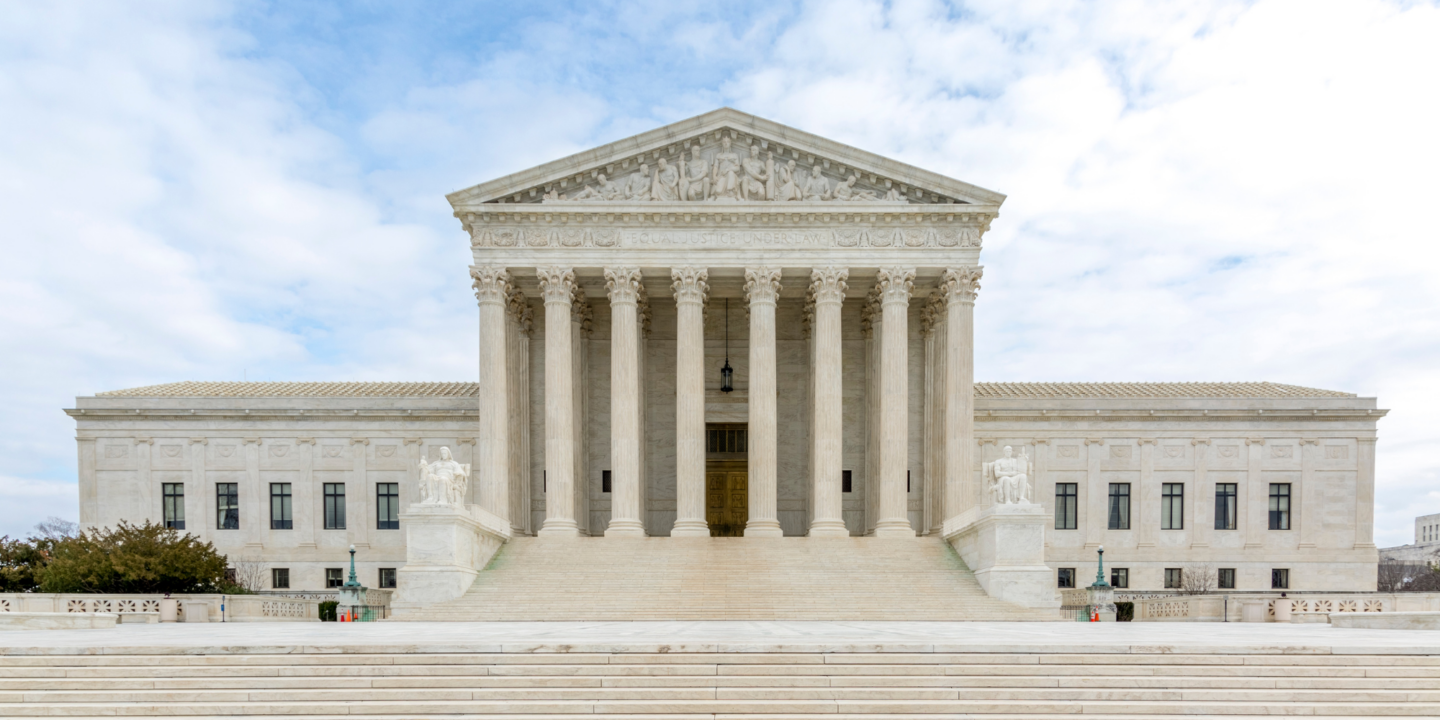
Today, the U.S. Supreme Court unanimously ruled in Cox v. Sony, affirming that broadband providers like Cox Communications can generally not be held liable for continuing to provide internet access to customers accused of copyright infringement. Public Knowledge previously filed an amicus curiae brief in the case, arguing that providers should not be forced to terminate users’ accounts based on unverified copyright infringement claims.
The brief explained that the Eastern District Court of Virginia misconstrued the law when it found that Cox was liable for secondary copyright infringement. The district court found that, by failing to swiftly disconnect users accused by mammoth record labels of copyright infringement, Cox itself became liable for those users’ actions – even though the statute says otherwise. A jury awarded $1 billion in statutory damages, the largest award of statutory damages for copyright infringement ever handed down, and the Fourth U.S. Circuit Court of Appeals upheld the decision. The Supreme Court decision today rejects this dangerous precedent that could have resulted in providers cutting off users more frequently, with less cause, in an effort to avoid the possibility of having to pay such hefty damages.
The following can be attributed to Meredith Rose, Senior Policy Counsel at Public Knowledge:
“Internet access is necessary to participate in modern society. Today’s decision laid to rest the idea that private actors – and not just any private actors, but record labels – can determine when customers deserve to be excluded from applying to jobs, paying bills, and getting an education. That view of the world is not only nonsensical and dated, but also fundamentally anti-democratic. Today’s decision is a long-overdue win for common sense.”
You may view the brief for more information.
Members of the media may contact Communications Director Shiva Stella with inquiries, interview requests, or to join the Public Knowledge press list at shiva@publicknowledge.org or 405-249-9435.
Facts Only
Actor: Cox Communications, Sony, Mammoth record labels, Eastern District Court of Virginia, U.S. Supreme Court
Event: Ruling in Cox v. Sony, liability for copyright infringement, termination of users' accounts
Timeline: Unspecified past (ruling and decision), present (overturned)
Location: United States
Executive Summary
Full Take
Analyzing this ruling through the lens of the A.R.C. framework:
1. STEELMAN — The Supreme Court's decision protects broadband providers from being held liable for copyright infringement committed by their customers, upholding the principle that private actors should not have the power to determine customer exclusion based on accusations of wrongdoing.
2. PATTERN SCAN — None detected
3. ROOT CAUSE — The case represents a clash between the rights of internet service providers and copyright holders, with the Supreme Court siding with the former in this instance due to concerns about potential overreach by private entities.
4. IMPLICATIONS — This ruling supports the principle of net neutrality and the open internet, as it prevents broadband providers from being held responsible for their customers' actions without evidence or due process. However, it could potentially embolden those who engage in copyright infringement online, depending on the enforcement actions taken by service providers.
5. BRIDGE QUESTIONS — How will this decision impact internet privacy and freedom? Will it lead to increased efforts to combat online piracy, or create a more permissive environment for such activity? What measures should be taken to ensure that copyright holders are protected while maintaining an open and fair internet?