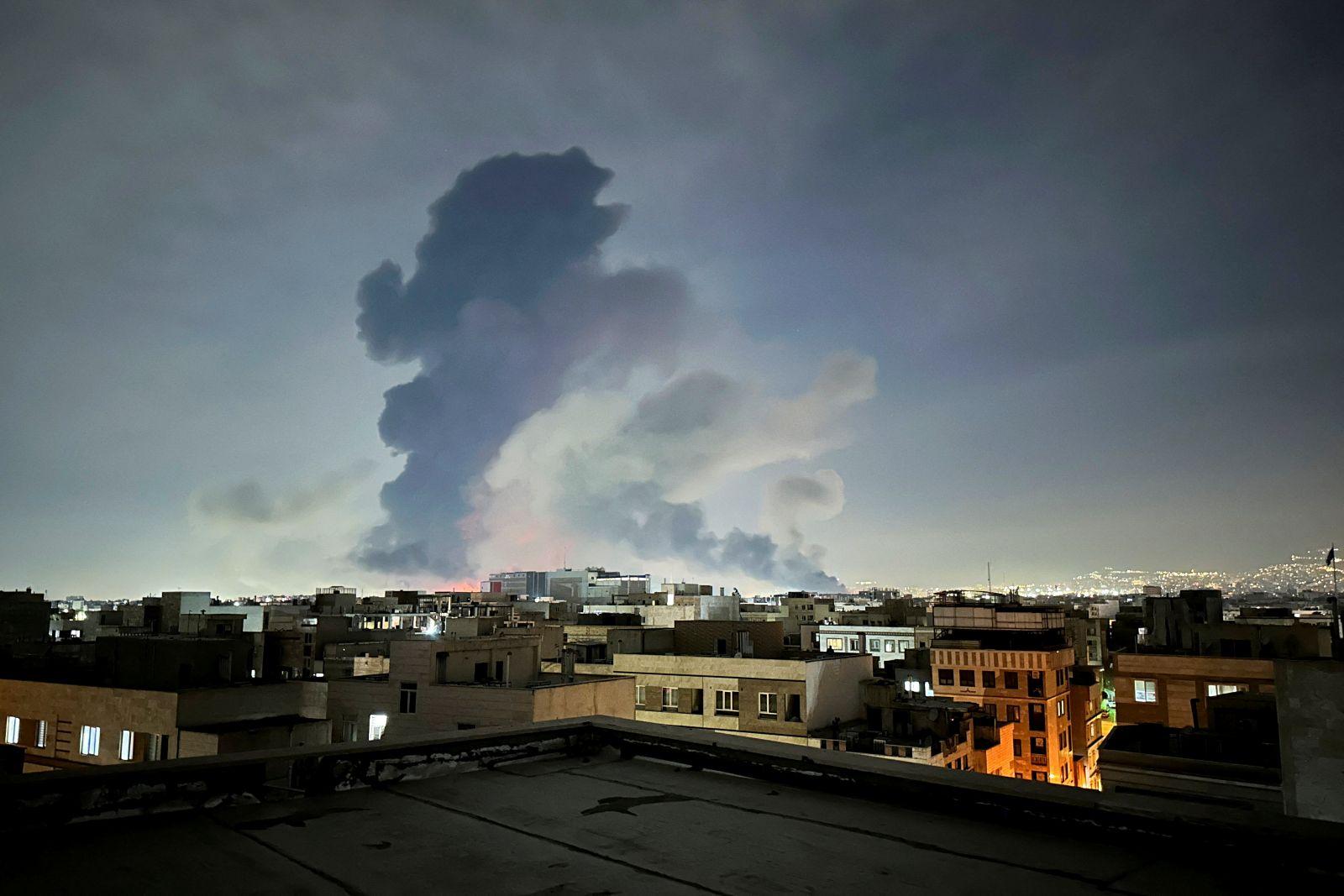
The beginning of Week 4 of the conflict in the Middle East has been marked by a roller coaster-like series of events, with Donald Trump on March 22 threatening to "obliterate" Iran's power plants if Tehran did not fully reopen the Strait of Hormuz in 48 hours, a significant escalation barely a day after he talked about "winding down" the war.
The following day, oil prices went down after Trump announced on Truth Social that he had ordered the postponement of military action against Iran, claiming the US and the Islamic Republic had very good and productive conversations for a complete resolution of the conflict. Iran has since denied negotiating with the US, calling it fake news.
Please refresh the following article for daily updates on the Middle East conflict and its impact on global oil prices.
Day 24
Trump said on Monday, March 23, that he gave instructions to postpone any military strikes against Iranian power plants for five days, just hours ahead of a deadline that threatened further escalation in the conflict now in its fourth week.
In a post on Truth Social, Trump said that the US and Iran have had "VERY GOOD AND PRODUCTIVE" conversations with Iran over the past two days about a "COMPLETE AND TOTAL RESOLUTION OF HOSTILITIES IN THE MIDDLE EAST."
After Trump made the announcement, the price of US crude fell 8.58% to $89.80 a barrel, and Brent fell to $101.89 per barrel, down 9.14% on the day.
The Dow Jones Industrial Average rose 1,021.70 points, or 2.24%, to 46,599.17, the S&P 500 rose 136.26 points, or 2.09%, to 6,642.74, and the Nasdaq Composite rose 493.02 points, or 2.28%, to 22,140.63.
Day 25
Iran, on Tuesday, March 24, denied that it had engaged in negotiations with the US, after Trump postponed a threat to bomb Iran's power grid because of what he described as productive talks with unidentified Iranian officials.
"No negotiations have been held with the US, and fake news is used to manipulate the financial and oil markets and escape the quagmire in which the US and Israel are trapped," Iranian parliament speaker Mohammad Baqer Qalibaf said.
On the same day, Iran was reported to have launched multiple waves of missiles at Israel, after Donald Trump postponed a threat to bomb the Islamic Republic's power grid because of what he described as productive talks with Iranian officials.
The missiles triggered air raid sirens in parts of Israel, including Tel Aviv, where blasts from interceptions were heard. In one attack, homes in northern Israel were damaged by falling debris following an interception. No deaths were reported.
After oil prices went down on Trump's step-back, they were about 3% higher again on Tuesday, around $103, on concern over supply shortages. –reports from Reuters
Facts Only
Actor: Donald Trump, Iran, Israel
Event: Threats of military action, negotiations, missile launches
Timeline: Week 4 (March 22 - March 25)
Location: Middle East (Iran, Israel)
Executive Summary
Full Take
Analyzing the article, it's clear that the conflict between the US and Iran continues to escalate, with Trump's threats and subsequent postponement of military action creating a volatile situation. The denial of negotiations by Iran and the reported missile launches further complicate matters. The rise and fall of oil prices suggest that the global market is closely monitoring these developments and is sensitive to any changes in the supply of oil.
Patterns detected: ARC-0043 Motte-and-Bailey, ARC-0024 Ambiguity (Trump's conflicting statements about the war and negotiations).
The conflict's root cause can be traced back to the US's withdrawal from the Iran nuclear deal in 2018, leading to increased tensions. The implications are far-reaching, with potential repercussions for the global economy and geopolitical stability.
Bridge questions: How will the ongoing conflict between the US and Iran impact the global oil market? What role do other regional and global powers play in mediating or escalating the conflict?
A coordinated influence campaign might attempt to exploit the tension for political gain, spreading misinformation or exaggerating events to further escalate the conflict. However, the actual content does not align with such a playbook, indicating a more organic development of events rather than a coordinated effort.
Sentinel — Human
The article shows signs of a structured narrative, but its coordination indicators are somewhat concerning due to the conflicting information it presents. While the stylometric and fabrication signals are within acceptable ranges, the coherence signals suggest a potential reliance on a formulaic framing. The human signals point towards a human-written origin, but the coordination issues warrant caution.