Skip to content
Chimera readability score 71 out of 100, Expert reading level.

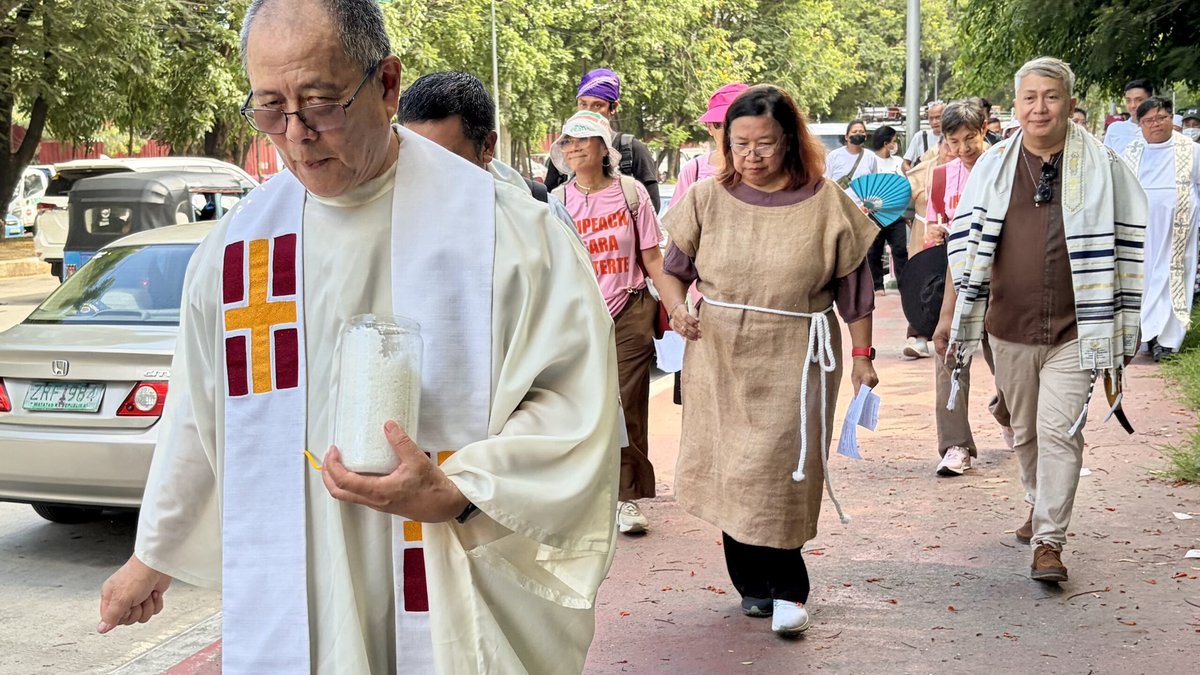
MANILA, Philippines – Trumpets blared, the smoke of incense billowed, and three men in white vestments marched around the Senate while sprinkling it with holy water and exorcised salt.
Filipino activist priest Father Robert Reyes, 71, led two other priests in exorcising the Philippine Senate on Saturday, two days before senators began the historic impeachment trial of Vice President Sara Duterte.
The clergy conducted this minor exorcism after Reyes said, in a press conference three weeks ago, that “the Senate is full of demons” and that “it is possessed.”

Facts Only

* Father Robert Reyes, 71, led two other priests.
* The event involved exorcising the Philippine Senate.
* The actions included sprinkling the Senate with holy water and exorcised salt.
* The exorcism took place on Saturday.
* This occurred two days before the impeachment trial of Vice President Sara Duterte began.
* Father Reyes previously stated that "the Senate is full of demons" and that it was "possessed."

Executive Summary

Filipino activist priest Father Robert Reyes, along with two other priests, performed an exorcism of the Philippine Senate on Saturday. This action occurred two days prior to the impeachment trial of Vice President Sara Duterte. The clergy conducted this rite following a previous statement made by Reyes three weeks earlier regarding the belief that "the Senate is full of demons" and that it was possessed.

Full Take

The narrative juxtaposes a specific religious act—an exorcism—with a highly political event—the impeachment trial of a Vice President. The framing suggests a causal or symbolic link between perceived spiritual affliction of the institution and political proceedings. This functions as an appeal to a framework where political conflict is framed through supernatural, moral, or spiritual lenses. The process relies on establishing an extreme claim ("Senate is full of demons") as a prerequisite for the subsequent action. The implications suggest that addressing political instability requires spiritual intervention, potentially delegitimizing secular legal processes by invoking religious authority over governmental bodies. The underlying pattern involves using powerful, emotive language to reframe institutional crises into matters requiring extraordinary, non-secular solutions, shifting focus from policy and law to metaphysical possession. What specific cultural or historical assumptions about the relationship between faith, governance, and perceived corruption are being leveraged here? How does this narrative position religious authority in relation to secular judicial processes during periods of intense political polarization?

Sentinel — Human

Confidence

The text reads like a piece of journalistic reporting, employing descriptive language to recount a specific religious action and its context.

Signals Detected
low severity: Variable sentence structure and evocative, specific imagery suggest human narrative flow.
low severity: The text is direct and focuses on a singular, albeit unusual, event without excessive hedging or forced balance.
low severity: The narrative flows logically from action to stated rationale (Reyes's claim). No obvious template matching.
Human Indicators
Use of vivid, sensory detail ('Trumpets blared, the smoke of incense billowed') which adds texture beyond pure informational reporting.
The focus on a specific, unusual event provides an idiosyncratic emphasis common in feature or report writing.