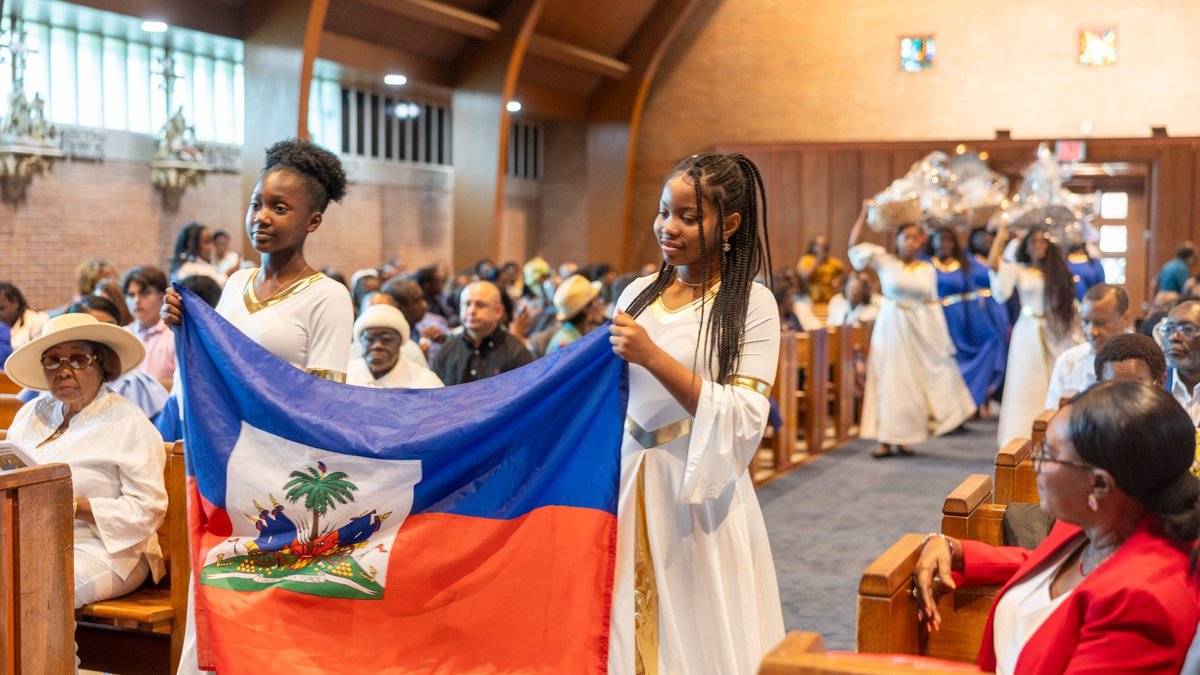
The Trump administration wasted no time after a Supreme Court affirmation on June 25 of White House authority to terminate temporary protected status for some 350,000 Haitian and 6,100 Syrian immigrant-residents. On July 1, the U.S. Customs and Immigration Services issued a communique to employers around the country advising that employment authorization for Haitian T.P.S. holders would likely end on July 10 when their T.P.S designation is lifted. It is not clear what comes next.
Many T.P.S. holders have been working and building lives in the United States for years; they have homes and families and established businesses and communities. Figuring out how to live underground and hide out from the increasingly aggressive tactics of Immigration and Customs Enforcement agents may be preferable for many over a return to Haiti or Syria to rebuild lives in those troubled countries. That will no doubt be especially true of T.P.S. holders with U.S.-born children.
“Ending TPS for Haitians and Syrians is neither merciful nor just,” Anna Gallagher, the executive director of CLINIC, the Catholic Legal Immigration Network, Inc., wrote in a statement to America. “These are our neighbors, parishioners, coworkers and longtime members of our communities who have built lives here lawfully while conditions in their home countries remain extraordinarily dangerous.”
Reacting to the court’s ruling, Bishop Brendan J. Cahill, chair of the U.S. Conference of Catholic Bishops’ Committee on Migration, said in a press statement that the T.P.S. revocation represented “a moral crisis when returning [immigrants] to their country of origin is not a safe or reasonable option.”
“If we are truly to affirm the God-given dignity of every human person,” Bishop Cahill said, “we as a nation cannot turn a blind eye to such an injustice and the impossible choices it will create for families and communities.”
Bishop Cahill urged President Donald Trump to use the option of “deferred enforced departure,” which would place a hold at the president’s discretion on deportation proceedings against Haitian residents. “Forcibly sending families to dire conditions is a legacy all leaders should seek to avoid,” Bishop Cahill said.
J. Kevin Appleby is a senior fellow at the Center for Migration Studies in New York. “It’s a troubling time really for our country,” he told America, “but also for Haiti because [it is] not ready to receive hundreds of thousands of [returning] Haitians and keep them safe.”
Deportations, he fears, “certainly will start happening,” but he does not believe the Department of Homeland Security under its new chief, former Oklahoma Senator Markwayne Mullin, is likely to repeat the disastrous “Minneapolis strategy of swarming communities,” employed by his predecessor.
“They learned their lesson from Minnesota; they won’t have big immigration sweeps, at least not right away,” Mr. Appleby said. He expects ICE raids and removals will follow a less high-profile approach.
“That’s even more troubling in some ways than the very public displays of enforcement that they began with in 2025 and in early 2026,” Mr. Appleby said, “because it’s harder to track [and] it’s harder to hold them accountable to due process protections.”
Haitians living in the United States had first received a T.P.S. designation after a devastating earthquake rocked Haiti in 2010. Since then, T.P.S. has been extended multiple times over different administrations as political and security conditions in Haiti deteriorated.
In February, then-Department of Homeland Security Secretary Kristi Noem decided that conditions in Haiti no longer warranted temporary protected status, ordering that hundreds of thousands of U.S. residents should be returned to Haiti. That decision was held off by lower court rulings until it was allowed to proceed on technical grounds by the Supreme Court.
But it is difficult to square Ms. Noem’s assessment with any objective measure of reality in Haiti, the most impoverished nation in the Western Hemisphere.
According to the United Nations, at least 26 heavily armed gangs control about 90 percent of Haiti’s capital city Port-au-Prince and surrounding areas, “fomenting terror… through violence, summary executions, extortion and kidnappings for ransom and preventing commerce by blocking the free flow of goods.”
More than 1.5 million Haitians have been displaced by violence, and U.N. sources report that gang violence in Haiti has claimed more than 2,300 lives so far this year. More than 5,500 were killed by gangs in 2025.
On June 16, U.N. Secretary General António Guterres visited the new headquarters of the U.N.-sponsored Gang Suppression Force outside Port-au-Prince. “For the first time in many years, there’s finally some light at the end of the tunnel,” Mr. Guterres said.
“Haiti has a chance to turn a corner—but only if the international community assumes its responsibilities,” he said. “Let’s be clear: Gangs have been terrorizing Haiti. Institutions have been weakened, but the biggest disgrace is indifference, the indifference of a world that has looked away.”
A large Haitian community in Springfield, Ohio, became a flashpoint during the 2024 U.S. election campaign after Mr. Trump and vice presidential candidate JD Vance amplified racist stories about the community. In a statement released on June 22, anticipating the Supreme Court decision, Ohio bishops said they were “deeply grieved by the situation of our Haitian neighbors,” protesting “a moral and social failure unfolding before our eyes.”
“As many parts of their home country suffer from incessant violence and utter despair, those in Ohio and elsewhere in the U.S. may be forced to abandon familial stability, jobs, and community due to policy decisions,” the bishops said. “We find no moral justification for terminating their Temporary Protected Status [TPS] without an alternative way to adjust their immigration status.”
The bishops report that Haitian families have built “upstanding lives” in Ohio. “They work hard, support their families, worship God regularly, and seek to live in peace.”
“Haitian parents who have children in Ohio,” the bishops said, “could face excruciating decisions about whether to allow their children to remain in the U.S. or take their children with them into an uncertain future.”
“We talk about [ending T.P.S.] in legal terms, but at the end of the day, it’s a moral question for the nation,” Mr. Appleby says. “What kind of country are we…to send such a vulnerable group back to such dangerous situations?”
Decades of fumbled or indifferent policies toward Haiti continued through both Democratic and Republican administrations, he points out. “We do have to take some responsibility here for the conditions in Haiti and can’t just send them back without some effort to help stabilize that country.”
The church asks—has asked for decades—that Congress pass comprehensive immigration reform that offers groups like Haitians, Ukrainians and now Venezuelans a chance to earn citizenship over time.
“How do we create a system where we can have legal pathways and discourage illegal immigration?” Mr. Appleby asks. “That’s what we need to look at, and we’ve been trying for the last 25 years and it hasn’t happened, but maybe out of the ashes of this administration there’ll be some momentum toward it in the years ahead.”
In the meantime, an emergency measure, supported by U.S. bishops, that requires the secretary of Homeland Security to extend Haiti’s T.P.S. designation to 2029 has already passed the House and is under consideration in the Senate.
In a statement to America, David Spicer, the director of policy and engagement for the U.S.C.C.B.’s Secretariat of Migration, said the current dilemma faced by Haitian, Syrian and other T.P.S. holders “underscores exactly why immigration reform is so desperately needed.”
Political commentators and members of the Trump administration have lately taken to point out, Mr. Spicer said, that “the ‘T’ in ‘TPS’ stands for ‘temporary.’” That may not be the “gotcha” they believe it is, he suggested.
“Unfortunately, many people, including some policymakers…operate under the mistaken belief that people can simply ‘get in line’ to receive permanent legal status in the United States. That is generally not the case,” he said.
“The vast majority of immigrants want to follow a legal process,” he said, “they want to do things the ‘right way.’ But what are people to do when no such process is realistically available to them, even after they’ve been positively contributing to our society for several years and there is nothing to return to in their country of origin?”
The legalistic logjam preventing regularization of residency in America “is a defining characteristic of our current immigration system,” he said, “and it is why the bishops of the United States have repeatedly urged Congress to pursue meaningful reforms, as only Congress is empowered to do.”
And Americans may wish to keep in mind that a merciful approach to the residency of thousands of Haitians offers reciprocal benefits. Mike Lawler, a GOP House member from New York who is a co-sponsor of the bill to extend T.P.S., noted in a press release that more than 100,000 of the Haitian residents now threatened with deportation work in the nation’s health care sector “as nurses, home health aides, direct support professionals, and other essential caregivers.”
“Removing these workers would deepen existing healthcare staffing shortages while disrupting care for patients nationwide,” he said.
And in Springfield, the dispersal of the Haitian community could be devastating to a local economy that had just been finding its feet again.
“To say that we’re going to rip those people up and send them out of this country is not in the self-interest of the United States,” Ohio’s Gov. Michael DeWine told local media. “I certainly wish the Trump administration would take a look at this.”
“Springfield is a city that is coming back,” he said. “If you listen to Mayor Rob Rue, if you listen to any leaders of the community, what they will tell you is that these Haitians were filling jobs that needed to be filled, and they are responsible, at least in part, for the economic upturn of the community.”
Mr. Spicer of the U.S.C.C.B. concludes: “A just response to these human realities—and the needs of American communities—cannot simply be to increase restrictions on immigration.”
“The common good,” he said, “demands thoughtful, balanced solutions that respect the God-given dignity of all involved, citizens and immigrants alike. That is the challenging but unavoidable responsibility entrusted to our elected officials.”
More from America
- The result of dismantling asylum and TPS will be measured in lives
- The Supreme Court’s Immigration Rulings Reveal a Profound Moral Failure
- What ICE plans to do with billions in funding
- Catholic bishop defends immigrants after Trump falsely claims Haitians in Ohio are ‘eating pets’
A deeper dive
- America at 250: Freedom and the Common Good
- The Origins, Consequences, and Uncertain Legacy of the Trump Administration’s Humanitarian, Refugee, and Immigration Policies: A Comprehensive Analysis
- Clinic: Temporary Protected Status (TPS) and Deferred Enforced Departure (DED)
- Call on the U.S. Senate to Protect Our Haitian Neighbors
- Haiti’s Troubled Path to Development
The Weekly Dispatch takes a deep dive into breaking events and issues of significance around our world and our nation today, providing the background readers need to make better sense of the headlines speeding past each week. Last time: ‘Diversity doesn’t diminish us’: A visit to Lady Liberty as the Supreme Court rules on birthright citizenship.
For more news and analysis from around the world, visit Dispatches. This week: Argentine Catholic priests join hunger strike to protest Milei government and How churches can respond to Europe’s historic heatwave.
Sentinel — Human
The text functions as a piece of advocacy journalism, weaving factual background with impassioned commentary from various stakeholders on the implications of immigration policy changes for vulnerable communities.