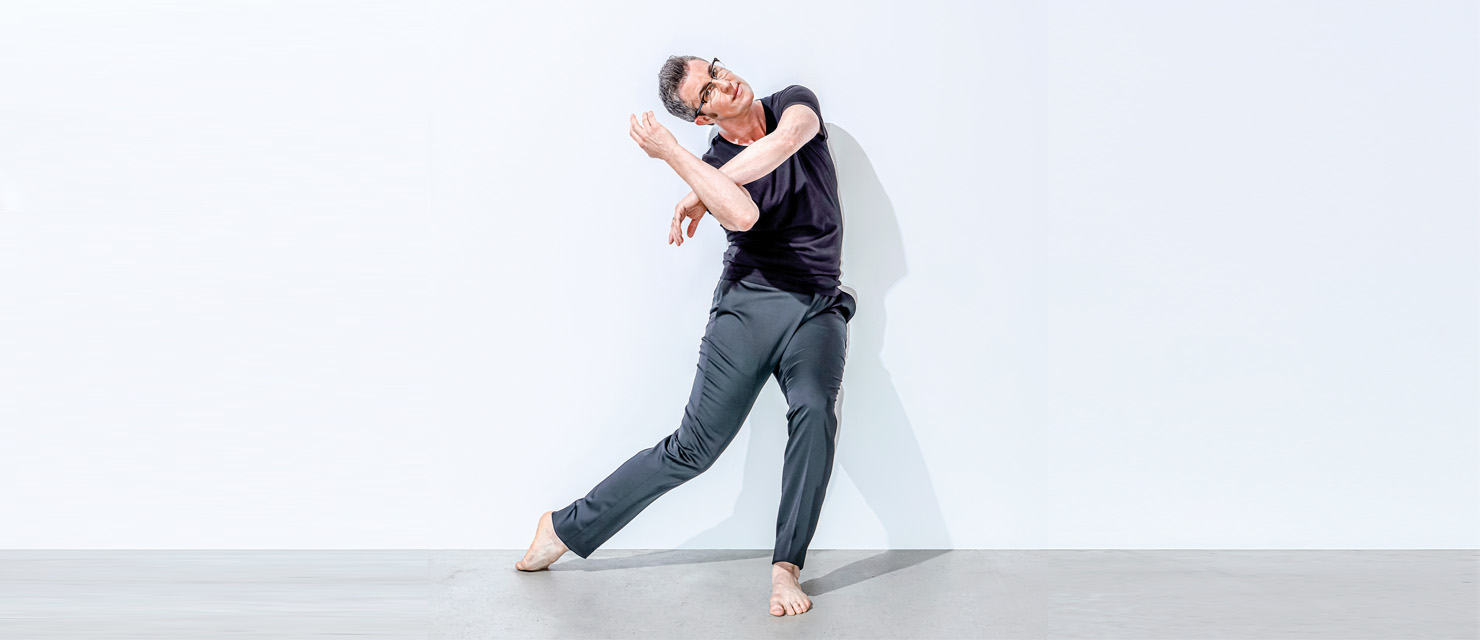
Throughout his trailblazing career, Sean Dorsey has consistently let community lead the way. In the 1990s, the choreographer, dancer, writer, educator, and activist recognized an urgent need for support among his fellow transgender and gender-nonconforming artists, whose work was continuously passed over for funding and institutional support. In response, Dorsey and a group of Bay Area–based artists founded Fresh Meat Productions in 2002 to create a platform for trans, gender-nonconforming, and allied artists. The organization’s inaugural event, Fresh Meat Festival, took place that June. Bringing together performers working across a wide range of disciplines, the festival has since become a pillar of the community. Now, Dorsey is preparing for the festival’s 25th anniversary June 19–21, as well as working on a new work for his eponymous company that will premiere in full next April.
Has the Fresh Meat Festival’s mission evolved over the years?
It’s always been about removing barriers to access, investing in trans and gender-nonconforming and queer artists, and creating joyful cultural spaces where our communities are seen, valued, and connected. We build and sustain belonging by pairing structural change with free programs, paying artists well, and prioritizing access-centered design and unapologetic joy.
As a deaf/hard-of-hearing and disabled artist, access plus joy is a magical combination to experience. Because our festival is by, of, and for our communities, we continue to be responsive to the moments we find ourselves in. The festival is a sacred, beloved space that is brimming with love.
What are some of the benefits of a festival structure?
I love a festival structure! It’s like a yummy meal with lots of small plates. Audiences get treated to a huge range of genres and energies, and get to enjoy appetizers (new or emerging talent) along with dessert (returning artists who audiences love, premiering new work). In any given year, you might get to experience taiko, voguing, bachata, bomba, live music, modern dance, hip hop, theater, solo storytelling, and then a 40-member trans choir, all back to back. It also makes for a fantastic mix of audiences—a gorgeous blend of generations and communities, sitting shoulder to shoulder.
What encourages you to keep the festival—and your broader practice—going every year, especially in the face of such a relentless news cycle?
It’s really important for the dance community to understand that trans people are experiencing a literal state of emergency all over the country. In many states now, I could be put in jail for simply using a men’s bathroom. Keeping trans people out of public bathrooms is really about keeping us out of public spaces. I cannot express the level of fear, terror, and anxiety we are experiencing. So, this drives me onward: In these terrifying times, communities need Fresh Meat Productions’ programs and spaces more than ever before.
I am also inspired to keep going in my own artistic practice every time an audience member comes up to me in tears, every time a trans youth thanks me and says they never saw themselves in dance before they saw Sean Dorsey Dance, every time I experience barriers in the dance field—I am driven to keep being part of the change I want to see in the world.
Do you have any new works in development?
I’m in the studio right now building a new work with my company. We Choose Each Other is a real-time response to this moment of emergency. From day one, transgender communities have been named as a number-one target for legal, physical, and social persecution. Trans and queer people—my people—are experiencing unimaginable violence, erasure, harm, and fear. The project asks: How do we activate collective care while living through harm, loss, and trauma?
Facts Only
Sean Dorsey is a choreographer, dancer, writer, educator, and activist.
In 2002, Dorsey co-founded Fresh Meat Productions with Bay Area artists.
Fresh Meat Productions launched the Fresh Meat Festival in June 2002.
The festival supports transgender, gender-nonconforming, and allied artists.
The 25th anniversary of the Fresh Meat Festival is scheduled for June 19–21, 2025.
The festival features diverse disciplines, including taiko, voguing, modern dance, theater, and live music.
Fresh Meat Productions prioritizes paying artists well and designing accessible, joy-centered programs.
Dorsey is developing a new work, *We Choose Each Other*, set to premiere in April 2026.
The new work responds to the current state of emergency for transgender communities.
Dorsey identifies as a deaf/hard-of-hearing and disabled artist.
Transgender people face legal and social persecution, including bathroom access restrictions in multiple U.S. states.
Fresh Meat Productions’ programs aim to counter fear and erasure by creating inclusive cultural spaces.
Executive Summary
Sean Dorsey, a choreographer, dancer, and activist, founded Fresh Meat Productions in 2002 to support transgender, gender-nonconforming, and queer artists who faced systemic barriers in funding and institutional recognition. The organization’s flagship event, the Fresh Meat Festival, launched the same year and has since grown into a vital cultural space, celebrating its 25th anniversary in June 2025. The festival showcases a diverse range of artistic disciplines, from dance and theater to music and storytelling, fostering intergenerational and cross-community connections. Dorsey’s work emphasizes accessibility, equitable pay for artists, and unapologetic joy as tools for building belonging and resilience.
Beyond the festival, Dorsey is developing a new dance work, *We Choose Each Other*, which responds to the current political and social emergency facing transgender communities. The piece explores collective care amid escalating legal and physical persecution, reflecting the urgent need for spaces like Fresh Meat Productions. Dorsey’s commitment is fueled by both the immediate threats to trans existence—such as laws criminalizing basic rights—and the transformative impact of art on marginalized audiences, particularly youth who see themselves represented for the first time.
Full Take
**Steelman:** The Fresh Meat Festival’s 25-year legacy underscores the power of art as both resistance and refuge. By centering transgender and gender-nonconforming artists, the festival doesn’t just platform marginalized voices—it actively dismantles barriers to participation, from financial compensation to physical accessibility. Dorsey’s framing of the festival as a "sacred, beloved space" highlights its role in countering systemic erasure, especially as anti-trans legislation escalates. The festival’s structure—a curated mix of genres and generations—mirrors the diversity of the communities it serves, while the emphasis on joy as a political act challenges narratives of trans existence as defined solely by trauma.
**Pattern Scan:** The narrative leans into emotional resonance (e.g., audience members in tears, trans youth finding representation) without veering into manipulation. The urgency of the "state of emergency" for trans people is contextualized with specific examples (bathroom laws), avoiding vague fear appeals. However, the framing of art as a direct counter to legislative violence could risk oversimplifying structural change—though the source acknowledges this tension by pairing cultural work with calls for systemic shifts. No overt distortion or bad faith is detected; the claims are grounded in lived experience and observable policy trends.
**Root Cause:** The festival’s endurance reflects a broader paradigm: art as survival strategy. The unstated assumption is that cultural visibility can shift material conditions—a belief rooted in queer and trans liberation movements. Historically, this echoes the use of performance spaces (e.g., ballroom culture, drag scenes) as sites of both celebration and organizing. The current moment, however, tests this model’s limits, as legal attacks on trans rights intensify.
**Implications:** For human dignity, the festival’s model offers a blueprint for how marginalized communities can reclaim agency through creativity. The costs, however, are borne by artists navigating precarity—Dorsey’s dual role as creator and advocate illustrates the labor of sustaining such spaces. Second-order consequences include the risk of tokenization if institutions co-opt "inclusivity" without addressing root inequities.
**Bridge Questions:**
How might the festival’s access-centered design be scaled or adapted for other marginalized artistic communities?
What metrics (beyond anecdotal impact) could measure the festival’s success in countering systemic erasure?
If legal persecution worsens, can cultural spaces alone provide sufficient protection, or must they evolve into more overtly political organizing hubs?
**Counterstrike Scan:** A bad-actor playbook might exploit the festival’s emotional narratives to polarize audiences—e.g., framing it as "divisive" or "political indoctrination." However, the content focuses on artistic expression and community care, not partisan messaging. The alignment with a hypothetical attack is minimal; the festival’s mission is transparent and rooted in material support, not manipulation.
Patterns detected: none
Sentinel — Human
This text displays strong human authorship characterized by a highly personalized, passionate, and idiosyncratic voice, suggesting it is reflective of lived experience rather than machine generation.