Honest, paywall-free news is rare. Please support our boldly independent journalism with a donation of any size.
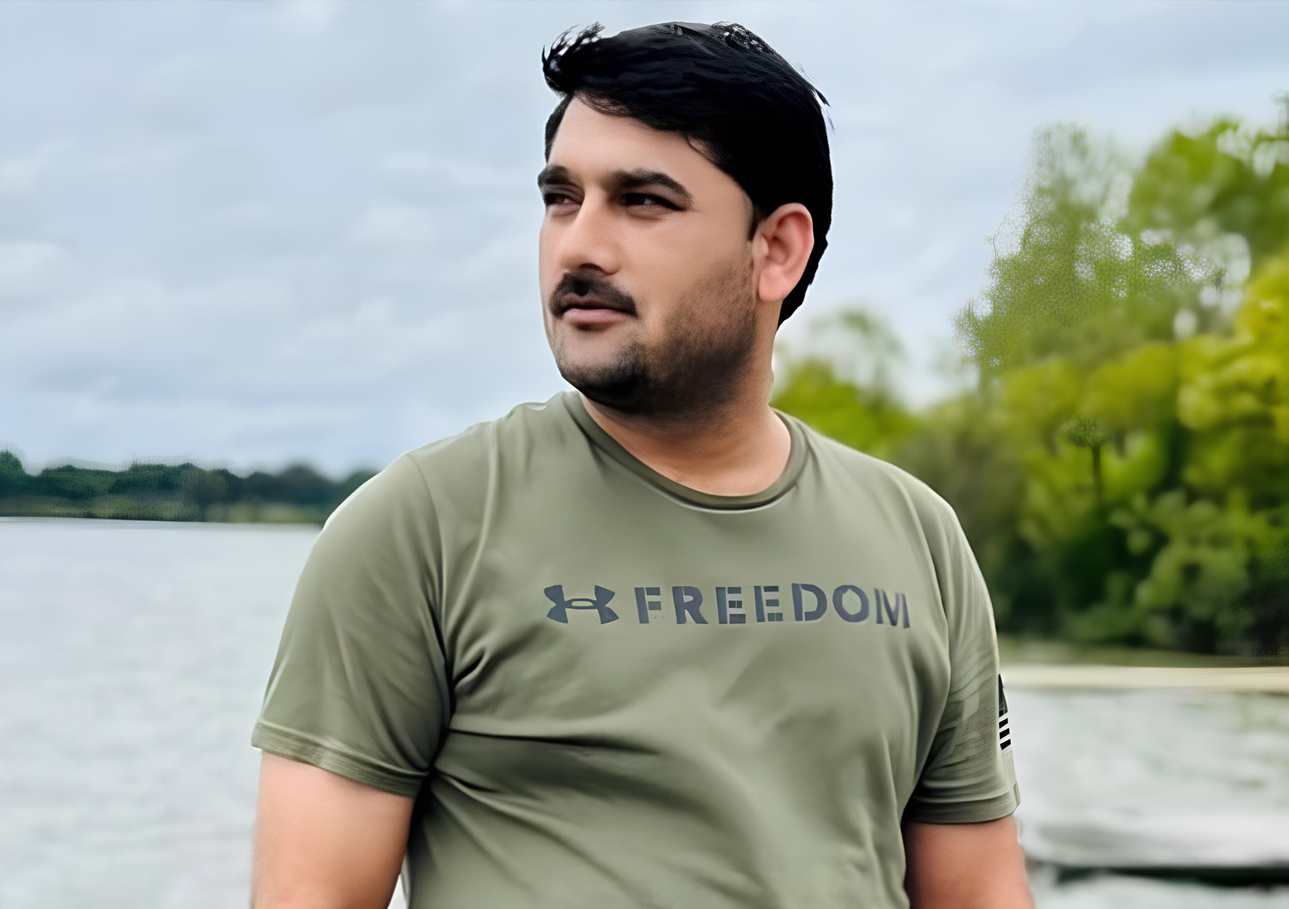
On March 13, multiple Immigration and Customs Enforcement (ICE) agents in unmarked vehicles surrounded Mohommad Nazeer Paktyawal in front of his home in Texas as he prepared to drive his children to school. The 41-year-old father of six children, who had served alongside the 3rd Battalion of the U.S. Army Special Forces in Afghanistan, died in ICE custody the next day, leaving his family in shock, and U.S. veterans of prior Middle East wars outraged.
According to a statement issued by ICE, Paktyawal was transported to a hospital on March 13 after complaining of shortness of breath and chest pains. Paktyawal’s wife says she told officers during the arrest that he uses a rescue inhaler for asthma, but his death the following day remains under investigation. Shawn VanDiver, a Navy veteran and founding president of #AfghanEvac, a group that advocates for refugees of the U.S. war on Afghanistan, said Paktyawal was healthy before ICE agents arrested him in front of his children on a school day.
“But one fact is clear: it is not normal for a healthy 41-year-old man to die within a day of being taken into government custody,” VanDiver said in an email to reporters on Monday. “Mr. Paktyawal survived our war in Afghanistan and trusted the United States enough to rebuild his life here.”
According to #AfghanEvac, Paktyawal joined the Afghan special forces in 2005 and fought alongside U.S. Army Special Forces for years in Paktika Province, one of the most dangerous areas of Afghanistan, during the U.S. occupation. When President Joe Biden ordered a chaotic withdrawal of U.S. forces in August 2021, the U.S. evacuated Paktyawal and his family along more than 124,000 Afghans who assisted the U.S. and faced reprisals from the Taliban, the militants who fought the U.S. for years before taking control of the country.
“His family deserves answers,” VanDiver said. “The American public deserves answers. The U.S. service members who fought alongside Afghan partners deserve answers.”
At least 41 people have died in ICE custody since President Donald Trump returned to office and launched a brutal crackdown on refugees and immigrants, and at least 12 have died in ICE custody in 2026 alone. In comparison, about 26 people died in ICE custody during all four years of the Biden administration, which worked to reduce the population of ICE’s detention system during the COVID-19 pandemic.
In contrast, the number of people jailed by ICE while they wait to see an immigration judge has skyrocketed from under 40,000 on any given day to roughly 70,000 under Trump’s policies. Civil rights groups, lawmakers, and families report medical neglect, inedible food, and other abuses inside massive immigration jails and prison camps — and the Trump administration is racing to build more.
In boilerplate language attached to press releases, ICE and its parent agency, the Department of Homeland Security (DHS), claim that immigration detainees are not denied medical care. However, Paktyawal’s wife later told #AfghanEvac that federal agents refused her attempts to pass along a rescue inhaler that Paktyawal relied on to breathe during emergencies.
“His wife says she told officers during the arrest that he needed it,” VanDiver said on social media on March 17. “She says she tried to give them the inhaler. She says they refused.”
#BREAKING
— Shawn VanDiver (@shawnjvandiver) March 17, 2026
New developments in the death of Mohommad Nazeer Paktyawal.
A 41-year-old Afghan ally died less than 24 hours after entering ICE custody.
We now know he relied on an inhaler for breathing issues.
Another #AfghanEvac 🧵 pic.twitter.com/kY4CHMMS9R
Since October, ICE has delayed payments to third-party medical providers such as doctors and dentists within its system of immigration jails for months despite ample funding from Trump and Congress. Multiple immigrants with serious health conditions have filed lawsuits alleging they were denied needed care while imprisoned by ICE.
“The fact that [Paktyawal] survived the Taliban but couldn’t survive ICE paints a dark picture of the morbid effectiveness of institutional violence,” wrote Austin Kocher, an assistant professor and immigration data researcher at Syracuse University, in a March 15 blog post.
According to #AfghanEvac and family members, Paktyawal was arrested on March 13 at 7:00 am and later called his family and reported feeling unwell. In a statement, DHS also said Paktyawal complained of shortness of breath during the intake process at an ICE field office in Dallas. ICE took Paktyawal to the hospital at 11:45 pm, and his family was told he was still alive at 8:00 am the next day. Four hours later, the family learned Paktyawal — a son, husband, brother, and father — had died.
In a statement, Paktyawal’s family said his children watched as he was surrounded by federal agents and taken away, a moment that “will stay with them forever.”
“We still cannot understand how this happened,” the family said on March 15. “He was only 41 years old and was a strong and healthy man. His children keep asking when their father will come home.”
DHS said Paktyawal entered the U.S. under the Biden administration’s Operation Allies Refuge, a hasty effort to resettle Afghan war allies in the U.S. that became the largest noncombatant evacuation operation in U.S. military history. The operation suffered from logistical problems from the start and came under fire from Republicans who demanded that refugees be heavily vetted for potential security risks, further complicating the relocation process for tens of thousands of people.
Catholic Charities sponsored Paktyawal’s application for asylum, which was pending at the time of his death. Paktyawal also held a work permit and a Social Security number, according to #AfghanEvac, but he was arrested under Trump’s push for mass deportations. The Trump administration is notorious for blaming its own failures on Biden-era policies. On social media, DHS claimed Paktyawal “provided NO RECORD of military service” and said his “criminal history includes arrests for fraudulent use of food stamps and theft.” VanDiver said both claims are dubious.
In the U.S., defendants are considered innocent until proven guilty, and ICE’s statement provides no indication that Paktyawal’s arrests resulted in criminal convictions. Echoing previous statements on individuals who died in custody, ICE appears to be painting Paktyawal as a “criminal alien” based on charges that were likely dropped.
VanDiver said ICE’s claim that Paktyawal provided no record of military service in Afghanistan is also dubious. DHS does not maintain the relevant records, so ICE would have needed to check with other departments to confirm Paktyawal’s service.
“Documentation of Afghan partners typically sits with the Department of Defense, the State Department, and the Special Immigrant Visa and Chief of Mission processes,” VanDiver said. “Claims that there is ‘no record’ often reflect a failure to check those interagency systems.”
Such a failure occurred in the case of Sayed Naser Noori, an Afghan ally who worked as an interpreter for U.S. troops during the war but was arrested by ICE in California during a routine check-in and jailed for months before a judge ordered his release. VanDiver said that at the time, DHS publicly stated there was no record of Noori’s service with the U.S. military, but that claim later proved incorrect after the right documents were identified.
Instead of casting blame on the Biden administration and Paktyawal himself, VanDiver said the government should be explaining how a “41-year-old father of six died less than 24 hours after entering ICE custody.”
“Right now the government appears focused on discrediting a man who cannot defend himself while the central question remains unanswered,” VanDiver said.
An urgent appeal for your support: 9 Days to raise $50,000
Truthout relies on individual donations to publish independent journalism, free from political and corporate influence. In fact, we’re almost entirely funded by readers like you.
Unfortunately, donations are down. At a moment when independent journalism is urgently needed, we are struggling to meet our operational costs due to increasing political censorship.
Truthout may end this month in the red without additional help, so we’ve launched a fundraiser. We have 9 days to hit our $50,000 goal. Please make a tax-deductible one-time or monthly donation if you can.
Facts Only
* Mohommad Nazeer Paktyawal, 41, died in ICE custody on March 14, 2026.
* He was surrounded by ICE agents on March 13, 2026, while taking his children to school.
* Paktyawal served with the 3rd Battalion of the U.S. Army Special Forces in Afghanistan.
* He had a rescue inhaler for asthma.
* His wife stated he was healthy and that the agents refused to accept the inhaler.
* ICE transported him to a hospital after he complained of shortness of breath and chest pains.
* The death remains under investigation.
* At least 41 people have died in ICE custody since 2017.
* At least 12 have died in ICE custody in 2026.
* Paktyawal’s family is in shock.
* #AfghanEvac advocates for refugees of the U.S. war on Afghanistan.
Executive Summary
Full Take
Sentinel — Likely Human
This article presents a relatively detailed account of the death of Mohommad Nazeer Paktyawal in ICE custody, incorporating multiple perspectives and raising serious concerns. While it leans heavily on anecdotal evidence and relies on framing arguments, the article’s use of direct quotes and emotional details suggests human authorship, making synthetic generation less likely.