By — Terry Tang, Associated Press Terry Tang, Associated Press By — Joseph B. Frederick, Associated Press Joseph B. Frederick, Associated Press Leave your feedback Share Copy URL https://www.pbs.org/newshour/nation/new-yorks-newly-identified-underground-railroad-passage-is-under-threat Email Facebook Twitter LinkedIn Pinterest Tumblr Share on Facebook Share on Twitter New York's newly identified Underground Railroad passage is under threat Nation Mar 27, 2026 5:05 PM EDT NEW YORK (AP) — A newly identified Underground Railroad passageway once used by enslaved people fleeing to freedom is putting the spotlight on a New York City museum and its struggle against a proposed neighboring development. Staff at the Merchant's House Museum — an upper crust family home built in 1832 in Manhattan's NoHo district — last month revealed that researchers can now explain the passageway's historical purpose because they recently discovered that the home's original owner was an abolitionist. Historians and Black activists hail it as the first "intact" Underground Railroad site found in New York in over 160 years. READ MORE: Slavery exhibit returns to Philadelphia's Independence Mall after Trump administration ordered its removal The discovery has substantially raised the museum's foot traffic, along with hopes of staving off a possible nine-story mixed-use building next door because building it could damage the walls and foundation of the adjacent historic site. Educate your inbox Subscribe to Here’s the Deal, our politics newsletter for analysis you won’t find anywhere else. Enter your email address Subscribe Form error message goes here. Thank you. Please check your inbox to confirm. "What our engineers are saying is that there really is no way that a building of that size is built immediately next door to the museum without causing significant structural damage to our historic building," said Emily Hill-Wright, the museum's director of operations. The New York City's Landmarks Preservation Commission has been weighing whether to approve the development. Consultants and architects working on the project say the museum should not be heavily impacted. READ MORE: UN calls for reparations to remedy the historical wrongs of trafficking enslaved Africans Revelations about the newly explained passageway come as an executive order by President Donald Trump is being used to remove references and imagery of slavery from the nation's museums, parks and landmarks. New York-based civil rights activist Al Sharpton has cast the fate of the Merchant's Museum House as a fight for Black and American history. "When engineers tell me that an African American heritage site is in danger of structural compromise or any other sort of irreversible damage, I listen," Sharpton said in a statement last week. A passageway, believed to have been used as part of the Underground Railroad, is hidden in the base of a dresser inside the Merchant's House Museum in New York on Feb. 19, 2026. Photo by Max Touhey/ Merchant's House Museum via AP The Merchant's House Underground Railroad passageway lies beneath a 2-foot-by-2-foot wooden hatch hidden under a dresser drawer in the second floor hallway. It goes down a 15-foot (4.5 meters) shaft with a built-in ladder. The passageway was first found in the 1930s as the home was being turned into a museum, but it wasn't until 2024 that it came to light the home's first owner, Joseph Brewster, was an abolitionist. READ MORE: Harvard ends legal battle over early photos of enslaved people, agrees to relinquish images "It's not a dumbwaiter. It's not a laundry chute," Hill-Wright said. "We're able to sort of cross off all of these other theories about what this might have possibly been used for." The findings have drawn preservationists, history buffs and the general public. "February was our highest month for visitors in over a year," Hill-Wright said. "You almost get choked up because it is a very visceral experience to see it with your own eyes." The Underground Railroad network was established by Harriet Tubman, who herself escaped slavery in 1849 and ended up living in Philadelphia. The operation is credited with facilitating the escape of numerous enslaved Black men and women. Tubman used her experiences as a scout, spy and nurse for the Union Army during the Civil War and personally guided 150 Black soldiers on a gunboat raid in South Carolina. At the time the Brewster home was built, assisting someone through the Underground Railroad was against the law in New York City. There would have been "severe penalties," said Jacob Morris, director of the Harlem Historical Society. There are documented cases of abolitionists getting attacked for protecting enslaved escapees. "Bounty hunters were all over the place in New York City. They made their living on catching freedom-seeking Blacks," Morris said. "If you got caught helping Blacks escape from slavery, a mob could come and burn down your house and beat you up. And maybe even tar and feather you or worse." Tang reported from Phoenix. A free press is a cornerstone of a healthy democracy. Support trusted journalism and civil dialogue. Donate now By — Terry Tang, Associated Press Terry Tang, Associated Press By — Joseph B. Frederick, Associated Press Joseph B. Frederick, Associated Press
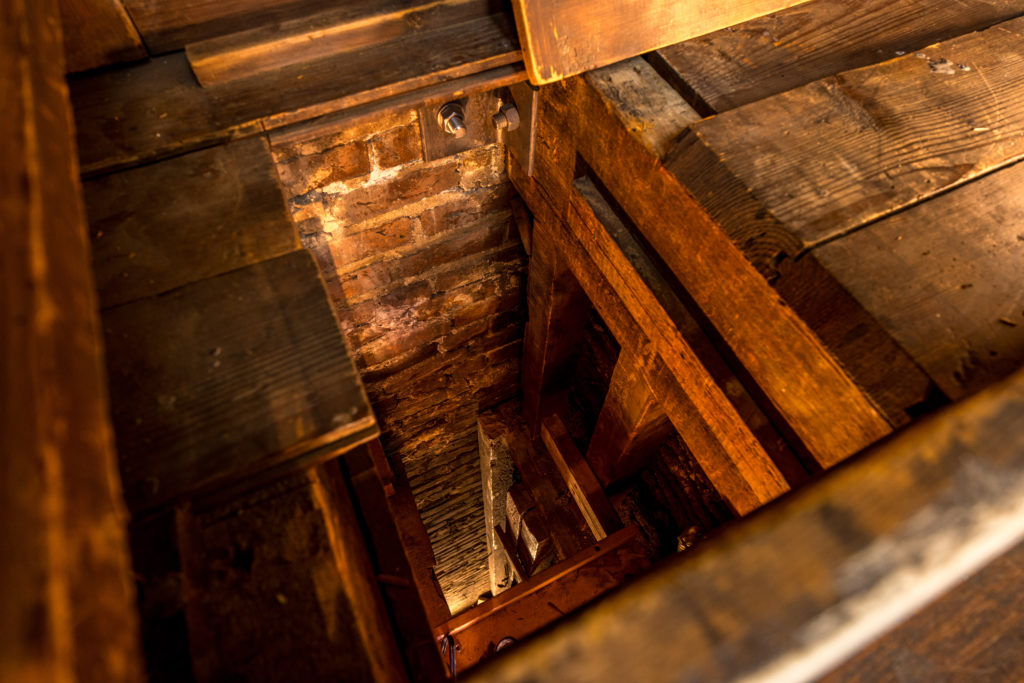
NEW YORK (AP) — A newly identified Underground Railroad passageway once used by enslaved people fleeing to freedom is putting the spotlight on a New York City museum and its struggle against a proposed neighboring development. Staff at the Merchant's House Museum — an upper crust family home built in 1832 in Manhattan's NoHo district — last month revealed that researchers can now explain the passageway's historical purpose because they recently discovered that the home's original owner was an abolitionist. Historians and Black activists hail it as the first "intact" Underground Railroad site found in New York in over 160 years. READ MORE: Slavery exhibit returns to Philadelphia's Independence Mall after Trump administration ordered its removal The discovery has substantially raised the museum's foot traffic, along with hopes of staving off a possible nine-story mixed-use building next door because building it could damage the walls and foundation of the adjacent historic site. Educate your inbox Subscribe to Here’s the Deal, our politics newsletter for analysis you won’t find anywhere else. Enter your email address Subscribe Form error message goes here. Thank you. Please check your inbox to confirm. "What our engineers are saying is that there really is no way that a building of that size is built immediately next door to the museum without causing significant structural damage to our historic building," said Emily Hill-Wright, the museum's director of operations. The New York City's Landmarks Preservation Commission has been weighing whether to approve the development. Consultants and architects working on the project say the museum should not be heavily impacted. READ MORE: UN calls for reparations to remedy the historical wrongs of trafficking enslaved Africans Revelations about the newly explained passageway come as an executive order by President Donald Trump is being used to remove references and imagery of slavery from the nation's museums, parks and landmarks. New York-based civil rights activist Al Sharpton has cast the fate of the Merchant's Museum House as a fight for Black and American history. "When engineers tell me that an African American heritage site is in danger of structural compromise or any other sort of irreversible damage, I listen," Sharpton said in a statement last week. A passageway, believed to have been used as part of the Underground Railroad, is hidden in the base of a dresser inside the Merchant's House Museum in New York on Feb. 19, 2026. Photo by Max Touhey/ Merchant's House Museum via AP The Merchant's House Underground Railroad passageway lies beneath a 2-foot-by-2-foot wooden hatch hidden under a dresser drawer in the second floor hallway. It goes down a 15-foot (4.5 meters) shaft with a built-in ladder. The passageway was first found in the 1930s as the home was being turned into a museum, but it wasn't until 2024 that it came to light the home's first owner, Joseph Brewster, was an abolitionist. READ MORE: Harvard ends legal battle over early photos of enslaved people, agrees to relinquish images "It's not a dumbwaiter. It's not a laundry chute," Hill-Wright said. "We're able to sort of cross off all of these other theories about what this might have possibly been used for." The findings have drawn preservationists, history buffs and the general public. "February was our highest month for visitors in over a year," Hill-Wright said. "You almost get choked up because it is a very visceral experience to see it with your own eyes." The Underground Railroad network was established by Harriet Tubman, who herself escaped slavery in 1849 and ended up living in Philadelphia. The operation is credited with facilitating the escape of numerous enslaved Black men and women. Tubman used her experiences as a scout, spy and nurse for the Union Army during the Civil War and personally guided 150 Black soldiers on a gunboat raid in South Carolina. At the time the Brewster home was built, assisting someone through the Underground Railroad was against the law in New York City. There would have been "severe penalties," said Jacob Morris, director of the Harlem Historical Society. There are documented cases of abolitionists getting attacked for protecting enslaved escapees. "Bounty hunters were all over the place in New York City. They made their living on catching freedom-seeking Blacks," Morris said. "If you got caught helping Blacks escape from slavery, a mob could come and burn down your house and beat you up. And maybe even tar and feather you or worse." Tang reported from Phoenix. A free press is a cornerstone of a healthy democracy. Support trusted journalism and civil dialogue. Donate now
Facts Only
Actors: Merchant's House Museum, New York City Landmarks Preservation Commission, developers of a proposed mixed-use building
Event: Discovery of an Underground Railroad passageway in the Merchant's House Museum
Date: Not specified (likely 2023 or later)
Location: Manhattan, New York City
Executive Summary
Full Take
This situation exemplifies the tension between development and preservation of historical sites. The discovery of the Underground Railroad passageway in the Merchant's House Museum adds significant cultural value to the property, which may impact its future as a potential construction site. This raises questions about the role of historical sites in urban development and the value we place on our shared history versus modern progress.
Patterns detected: ARC-0024 Ambiguity (the article does not specify the exact nature of the proposed development, potentially leaving room for interpretation)
In a coordinated influence campaign, bad actors might attempt to exploit this situation by rallying support for or against the development, using emotional appeals or distorted information to sway public opinion. It is essential to critically evaluate arguments surrounding this issue and consider multiple perspectives before making informed decisions.
Questions for further inquiry: What is the exact nature of the proposed development? How might modern urban development strategies balance historical preservation with economic growth? What other historic sites are at risk due to similar development pressures?
Sentinel — Human
While the article shows signs of human authorship, it is likely that a synthetic text generator was used to assist in editing or formatting. However, the personal voices and stylistic fingerprints of the human authors are evident.