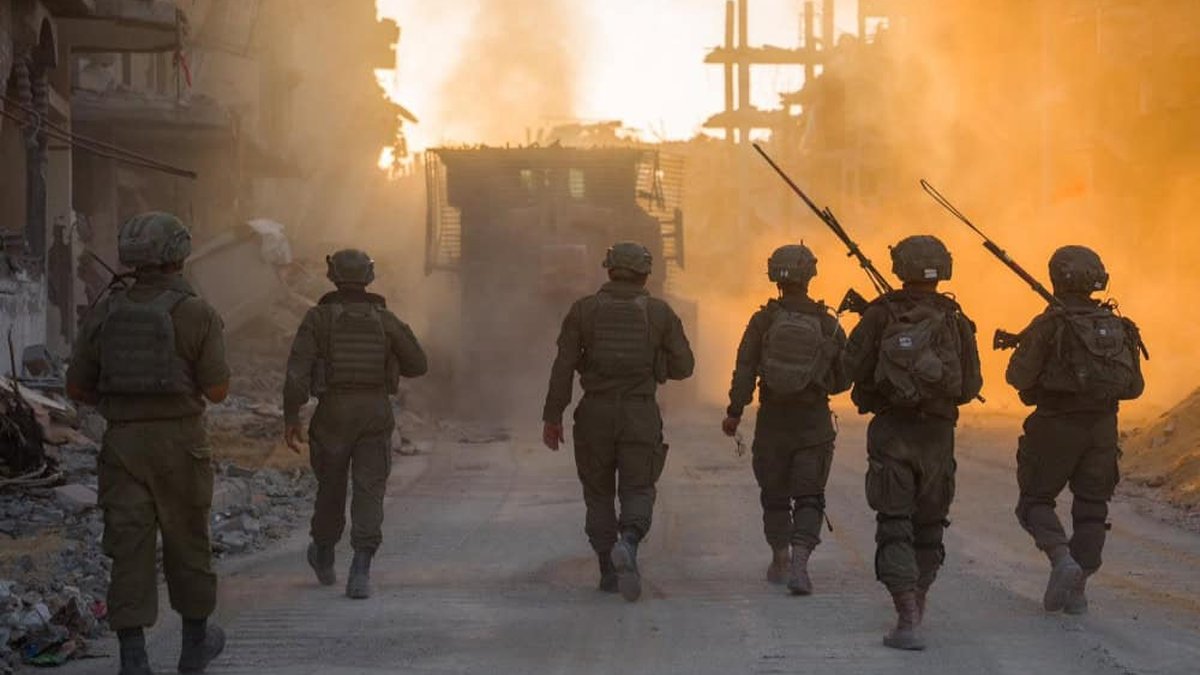
On July 8, the US-led Board of Peace announced that it would soon establish a “pilot zone” in southern Gaza. Planned for Tel Sultan, near Rafah, the goal of the zone would be to move unarmed civilians who have been vetted for Hamas affiliations to the Israeli-controlled side of the Gaza Strip, separated by the Yellow Line. In the first portion of July, there was an increase in Israeli strikes and reported ceasefire violations as Hamas and other groups attempt to reconstitute forces in the area under Hamas control.
The Tel Sultan pilot zone is planned to be the first of many. The International Stabilization Force (ISF)—for which several countries have committed to send troops but have yet to do so—would police the zone with non-lethal weapons. The National Committee for the Administration of Gaza (NCAG) would govern the area, establish humanitarian services, and offer an alternative to Hamas rule.
Board of Peace officials hope the Tel Sultan zone can host tens of thousands of civilians. If the test area is successful in separating Hamas from unarmed Palestinian civilians, more zones could follow.
These zones would not necessarily include full reconstruction. Instead, similar to Section 17 of US President Donald Trump’s 20-point peace plan, they would allow for “temporary rehabilitation” in areas away from Hamas’s control. Israeli control of the Gaza Strip, which now accounts for close to 70 percent of its total area, would not be diminished, though the Israel Defense Forces (IDF) are not planned to have contact with the Palestinian population in these zones.
Residents would be free to leave a zone and return to other areas of Gaza, though returning would require vetting. Should Hamas continue to refuse to disarm, as required by the 20-point plan, the NCAG would assume full control over these new zones.
In Hamas’s part of the Yellow Line, the IDF continued hitting terrorists attempting to reconstitute the terror group, reporting 13 ceasefire violations and strikes on several groups between June 30 and July 9:
- On June 30, the IDF and Shin Bet intelligence agency announced that they killed Talal Jabbar Muhammad Abd al Al, who they said “filled a series of roles” in Palestinian Islamic Jihad (PIJ). Al “commanded a terror cell that raided into the territory of the State of Israel” during the October 7 massacre and “took part in holding the hostages” in southern Gaza, according to the IDF.
- Also on June 30, the IDF announced that it eliminated Ali Kheid Mohamad Sathitan, “commander of a Nukhba platoon” of PIJ. Sathitan “infiltrated the territory of the State of Israel during the October 7 massacre” and “attempted to advance terrorist attacks against IDF forces and civilians of the State of Israel,” according to the Israeli military.
- Later the same day, the IDF and Shin Bet said that they killed Muhammad Fathi Abd al Hay Abu Fakhir, commander of Hamas’s “Yabna” Battalion of the Rafah Brigade. Abu Fakhir had recently been “recruiting new terrorists,” “leading their training,” and “attempting to restore the battalion’s capabilities, with the aim of harming IDF forces,” according to the Israeli military, which added that he was “a veteran commander in Hamas,” “one of the senior figures” in the group’s supply department, and “a key figure” in its weapons-smuggling network for about 20 years.
- On July 1, the IDF said that it killed four Hamas military wing members in northern Gaza who were “advancing terror plots against IDF forces.” The four were Wael Mahmoud Ali al Bad and Muazz Muhammad Hassan Ahmad, two “anti-tank operative[s]” in Hamas’s military wing; Samih Abu Kamil, a Hamas “platoon commander;” and Akram Ashraf Hamad al Bad, a “sniper operative.” The IDF also said that it destroyed “launch shafts and launchers” used by Hamas.
- Also on July 1, the IDF and Shin Bet said that they eliminated Adel Jahad Muhammad Asfour, “a squad commander” in Hamas’s military wing. Asfour had “advanced sniper plans and IED placements against IDF forces” during the war and had recently attempted “to rebuild the capabilities” of Hamas while advancing attacks “in the immediate timeframe,” according to the IDF.
- On July 3, the IDF and Shin Bet said that they killed Muhammad Naim Jundiya, “head of military security” for Hamas’s Shejaiya Battalion. Jundiya served as “head of a Nukhba squad” that raided Kibbutz Nahal Oz and “took part in the abduction of Captain Daniel Perez” during the October 7 massacre, according to the Israeli military. The IDF also said Jundiya was responsible for holding Yotam Haim, Samer al Talalqa, and Alon Shmeriz “in Hamas captivity in an underground tunnel” and had recently tried to advance attacks against Israeli forces.
- On July 5, the IDF said that it killed Muhammad Najib Ashur, “commander of a Nukhba company” in Hamas’s military wing, and Taamir Saeed Abu Nahal, “head of a cell” in Hamas’s military wing. Both men were “involved in advancing terror plots against IDF forces” and were killed after “posing a threat” to Israeli troops, according to the Israeli military.
- On July 6, the IDF said that it struck five terrorists who “attempted to rehabilitate an underground terror infrastructure” in northern Gaza, west of the yellow line. The IDF said that Hafez Hafez Abdallah al-Houjari, “a Nukhba terrorist” in Hamas’s Eastern Jabalia Battalion, was killed in the strike, and that “hits were identified on additional terrorists.”
- Also on July 6, the IDF said that it killed Fadi Falah Aashur Daghmash, “a commander in the training division” of Hamas’s military wing. Daghmash “led various training activities,” including training Hamas’s Nukhba force “in the years leading up to the October 7 massacre,” and was “one of the managers of the fighting” against Israeli forces in Gaza and tried “to restore the capabilities” of Hamas, according to the IDF.
- On July 7, the IDF and Shin Bet said that they killed Ahmed Yahya Ibrahim Botash, “commander of a Nukhba squad” in Hamas. Botash “advanced terror plots against” Israeli forces “throughout the war and also recently,” according to the IDF. In a separate strike, the IDF said it killed Hamuda Abu Daka, “commander in the military intelligence unit” of Hamas, who was “engaged in gathering intelligence on IDF forces” for “directing and executing terror plots.”
- On July 8, the IDF said that it killed Muhammad Imad al Rahman Abu Taima, “head of a Nukhba cell” in Hamas’s military wing. Taima “raided Kibbutz Nir Yitzhak” during the October 7 massacre and later “commanded a Nukhba cell in ambushes” against Israeli forces, according to the IDF. The Israeli military said he had recently been “promoting additional terror plots,” “maintaining the terrorists’ readiness,” and “attempting to recruit new terrorists.”
- On July 9, the IDF and Shin Bet said that they killed Abu Salam, “a field commander” who previously served as “commander of the western company in Khan Yunis.” Salam “infiltrated the territory of the State of Israel” during the October 7 massacre and “took part in the abduction of Israeli civilians to the Gaza Strip,” according to the IDF, which also said he “took part in holding them in captivity” in southern Gaza. The Israeli military added that he had recently advanced “additional terror plots,” including an attempt “to rehabilitate combat means” intended to harm Israeli forces.
- Later the same day, the IDF said that it killed Rashid al Kaki, “head of a department in the production apparatus” of the Popular Front for the Liberation of Palestine-General Command (PFLP-GC). Kaki “played a central role” in the group’s production apparatus, which the IDF said is responsible for “the production and supply of all combat means” to the group’s military wing. In a separate strike, the IDF also killed Abdullah Bahaa al Din Razq al-Suti, whom it identified as “a sniper operative” in Hamas’s military wing.
Facts Only
* On July 8, the US-led Board of Peace announced plans to establish a "pilot zone" in southern Gaza, planned for Tel Sultan near Rafah.
* The goal of the pilot zone is to move unarmed civilians vetted for Hamas affiliations to the Israeli-controlled side of the Gaza Strip, separated by the Yellow Line.
* The International Stabilization Force (ISF) would police the zone with non-lethal weapons.
* The National Committee for the Administration of Gaza (NCAG) would govern the area and establish humanitarian services.
* These zones are planned for "temporary rehabilitation" away from Hamas control, not full reconstruction.
* Israeli control over the Gaza Strip is not expected to be diminished, and the IDF is not planned to contact the Palestinian population in these zones.
* Residents would have the freedom to leave a zone and return after vetting.
* If Hamas refuses disarmament, the NCAG would assume full control over the new zones.
* Between June 30 and July 9, the IDF reported 13 ceasefire violations and strikes against groups attempting to reconstitute forces in areas under Hamas control.
* Specific killings reported between June 30 and July 9 include Talal Jabbar Muhammad Abd al Al, Ali Kheid Mohamad Sathitan, Muhammad Fathi Abd al Hay Abu Fakhir, four Hamas military wing members on July 1, and several other individuals linked to Hamas operations.
Executive Summary
The US-led Board of Peace plans to establish a "pilot zone" in southern Gaza, specifically Tel Sultan near Rafah, intended to relocate unarmed civilians vetted for Hamas affiliations to the Israeli-controlled side of the Yellow Line. The International Stabilization Force (ISF) is planned to police this zone using non-lethal weapons, while the National Committee for the Administration of Gaza (NCAG) will govern the area and provide humanitarian services as an alternative to Hamas rule. Officials hope this zone can accommodate tens of thousands of civilians, with the expectation that success in separating civilians could lead to further zones. These zones are intended for "temporary rehabilitation" away from Hamas control, not full reconstruction, and Israeli control over the Gaza Strip remains unchanged; the Israel Defense Forces (IDF) are not planned to interact with the Palestinian population within these zones. Residents would have the option to leave a zone and return after vetting. If Hamas refuses disarmament, the NCAG is positioned to assume full control over these areas.
In the context of the Yellow Line, Israeli strikes occurred between June 30 and July 9, during which time the IDF reported 13 ceasefire violations and strikes against groups attempting to reconstitute forces in Hamas-controlled territory. Specific incidents noted include the killing of Talal Jabbar Muhammad Abd al Al, Ali Kheid Mohamad Sathitan, Muhammad Fathi Abd al Hay Abu Fakhir, four Hamas military wing members on July 1, and several other individuals involved in organizing or leading activities within Hamas structures between June 30 and July 9.
Full Take
The framework described outlines a structural attempt at spatial separation contingent upon vetting and governance by an external body (NCAG), suggesting a strategy focused on managing the population rather than achieving immediate territorial or political shifts. The proposal for "temporary rehabilitation" alongside maintaining Israeli control over the majority of the territory introduces a crucial tension: spatial management without substantive sovereignty change. The mechanism relies on establishing zones governed by a transitional authority, which creates an inherent vulnerability regarding enforcement and long-term legitimacy, especially when the ultimate power structure (Hamas) remains a factor in the security calculus for residents returning or remaining within these zones.
The detailed reporting of specific killings and actions against Hamas figures during the specified timeframe juxtaposed with the planning for civilian relocation highlights a divergence between military action and proposed administrative solutions. The fact that the framework depends on separating civilians from Hamas, yet concurrently acknowledges ongoing conflict and armed resistance by other groups, raises questions about the viability of the promised separation as a purely humanitarian endeavor versus a security operation. Furthermore, the contingency where the NCAG assumes control if Hamas refuses disarmament points to a scenario where political will is superseded by administrative decree, which implies a power dynamic heavily weighted toward external intervention regarding internal governance.
The pattern here involves using physical boundaries (Yellow Line) and administrative structures (zones, ISF, NCAG) to impose order amidst persistent armed conflict. The implicit assumption is that controlled separation mitigates the violence, but this ignores the broader context of control and resistance already established on the ground. This structure moves from kinetic action against armed groups (as detailed in the military reports) to administrative segregation, suggesting a complex attempt to redefine control over space rather than resolving the core political disputes fueling the conflict.
Bridge Questions: What mechanisms will be put in place to ensure the vetting process is free from bias and corruption? How does the planned "temporary rehabilitation" reconcile with the security realities of post-conflict governance? If Hamas refuses disarmament, what are the specific constitutional or legal frameworks underpinning the NCAG's assumed control over these zones?
Sentinel — Human
The content appears to be a factual journalistic report detailing proposed humanitarian zones alongside specific, chronologically ordered military incidents and casualties, characteristic of detailed news reporting.