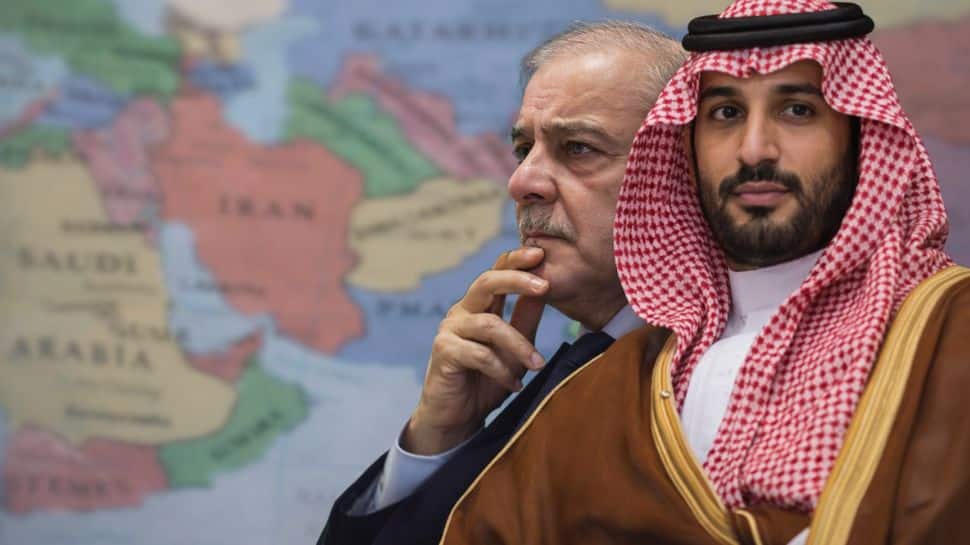
Pakistan’s mediation role in Iran-US war comes with a Saudi catch | Explained
The mutual defence agreement declares that any attack on Saudi Arabia or Pakistan will be treated as an attack on both, triggering a coordinated military response. But Islamabad might risk its ‘brotherly’ nation, Iran, with which it shares a more than 900 km border.
Trending Photos
When Pakistan signed the ‘Strategic Mutual Defence Agreement’ with Saudi Arabia on September 17, 2025, last year, it might not have imagined the challenges it would come with.
Just six months down,Pakistan stands at a crossroads, caught between two “brotherly” nations and risking everything, from internal divisions and the loss of key allies to the dangers along its 900‑km border with Iran.
Islamabad’s rush to mediate in the Iran-US-Israel war is more of avoiding war at its own doorstep.
The world’s illusion of a peaceful West Asia was burst on February 28 when the US and Israel launched strikes on Iran, which they called ‘pre-emptive’. In retaliation, Iran targeted all of West Asia, from US bases to energy infrastructures.
The war has since unravelled in an asymmetric form, with Iran’s retaliatory strikes on its neighbours catching US President Donald Trump off guard. Publicly, Trump has acknowledged that the scale and breadth of Iran’s cross‑border attacks were unexpected, saying he and his team were “shocked” by how Tehran expanded the conflict beyond a strictly US–Iran axis and into the wider Gulf region.
The Peace Broker Islamabad
Pakistan has worked hard to position itself as a back‑channel link between Washington and Tehran.
The diplomatic push began when Pakistan’s army chief, Field Marshal Asim Munir, spoke directly with US President Donald Trump on Sunday.
The following day, Prime Minister Shehbaz Sharif held a call with Iranian President Masoud Pezeshkian and offered Islamabad as a potential venue for truce talks, according to a Financial Times report.
Along with Pakistan, Turkey, and Egypt have been involved in back‑channel diplomacy between the US and Iran for some time, but their mediation efforts have intensified in recent days as Middle East tensions have escalated and triggered a global energy crisis.
This comes after Tehran rejected a 15‑point US peace plan aimed at de‑escalating the conflict.
But what worries Pakistan goes beyond its role as a “peace broker”; its strategic posture, geography, and tilt toward the US and Saudi Arabia could backfire badly, given its heavy energy dependence on Tehran.
Pakistan’s Saudi conundrum
Pakistan has a ‘strategic mutual defence agreement’ signed in September 2025, after India’s Operation Sindoor in May 2025.
The mutual defence agreement declares that any attack on Saudi Arabia or Pakistan will be treated as an attack on both, triggering a coordinated military response.
But Islamabad might risk its ‘brotherly’ nation, Iran, with which it shares a more than 900 km border.
If Saudi Arabia invokes the mutual defence agreement, Pakistan will be compelled to join the Iran war directly, and will have dire consequences.
With already jolting with a war at its northern border with Afghanistan, can Ismababad afford another war?
Islamabad’s risk of internal spillover
Pakistan hosts the world’s second‑largest Shia Muslim population, which witnessed nationwide protests the day after US and Israeli strikes killed Iran’s Supreme Leader, Ayatollah Ali Khamenei, on February 28.
Estimates indicate that at least 20–23 people were killed and over 100 injured across cities like Karachi, Islamabad, Skardu, and other urban centres, as pro‑Iran and Shia‑led demonstrations erupted in outrage at his killing.
Crowds gathered near the US consulate in Karachi, where protesters attempted to breach diplomatic compounds and clashed with security forces, triggering a brutal police and paramilitary response.
The violence underscored how anger over Khamenei’s assassination spilt into Pakistan’s streets, deepening internal tensions and raising fears of further spillover from the West Asia war.
The prospect of a prolonged war in Iran spilling across the border is one of Islamabad’s greatest concerns, particularly as Pakistan is already locked in a tense standoff with the Afghan Taliban and has already faced fuel disruptions linked to the Iran war.
The risk for total energy fallout?
If Pakistan is drawn into a direct war with Iran, the risk of total energy fallout becomes very real.
Isolation at the Strait of Hormuz, where a large share of global oil and much of Pakistan’s energy imports pass, could choke off fuel supplies, shutting down power plants, transport, and industry.
Even a partial blockade or heightened security environment in the Gulf can spike prices and trigger severe shortages in Pakistan, a country already heavily dependent on imported oil.
Domestically, an energy crisis can quickly spiral into a broader political and social collapse.
Fuel shortages hit agriculture, manufacturing, and public transport, deepening unemployment and inflation.
Public anger over power cuts and black markets can fuel unrest, weaken the government, and fracture the political system, turning an external conflict into an internal breakdown.
In that scenario, “total fallout” is not just economic, but political and security‑related as well.
Apart from domestic fallout, a large Shia population ticking like a time bomb and compulsion to choose sides, Pakistan’s geography also plays a vital role.
900 km border with Iran and Balochistan risk
Pakistan shares a direct border with Iran of more than 900 km, running through one of the most sensitive and strategically critical parts of Balochistan.
Balochistan is already Islamabad’s weakest flank, plagued by separatist insurgency, smuggling routes, and porous security, making it the most likely conduit for cross‑border spillover if conflict erupts with Iran.
Any escalation could translate into increased militant activity, attacks on infrastructure, and greater pressure on Pakistani forces, turning this long southern border into a front line rather than a back door.
With so much at risk, Pakistan’s mediation and ‘peace broker’ role becomes more of a compulsion than a choice; it will give Islamabad global recognition and push it closer to the US.
Stay informed on all the latest news, real-time breaking news updates, and follow all the important headlines in india news andworld News on Zee News.
Live Tv
Facts Only
September 17, 2025: Strategic Mutual Defense Agreement signed between Pakistan and Saudi Arabia
Any attack on Saudi Arabia or Pakistan triggers a coordinated military response according to the agreement
More than 900 km border between Pakistan and Iran
Pakistan shares strategic concerns about the escalating Iran-US conflict
US and Israel launched strikes on Iran, which retaliated against West Asia
Protests erupted in Pakistan over the killing of Ayatollah Ali Khamenei, Iran's Supreme Leader
Executive Summary
Full Take
By mediating in the Iran-US conflict, Pakistan is seeking to avoid war at its own doorstep. However, this role could have dire consequences if Saudi Arabia invokes the mutual defense agreement, potentially pulling Pakistan into direct conflict with Iran. The long border shared by the two countries poses a risk of cross-border spillover and increased militant activity in Balochistan.
The protests in Pakistan following Khamenei's death highlight the country's heavy Shia Muslim population and the potential for internal unrest if drawn into direct conflict with Iran. Moreover, an energy crisis could lead to a political and social collapse in Pakistan due to disruptions in agriculture, manufacturing, public transport, unemployment, and inflation.
This situation underscores the challenges Pakistan faces as it navigates its role as a potential mediator between the US and Iran while managing its strategic partnership with Saudi Arabia and its energy dependence on Iran.