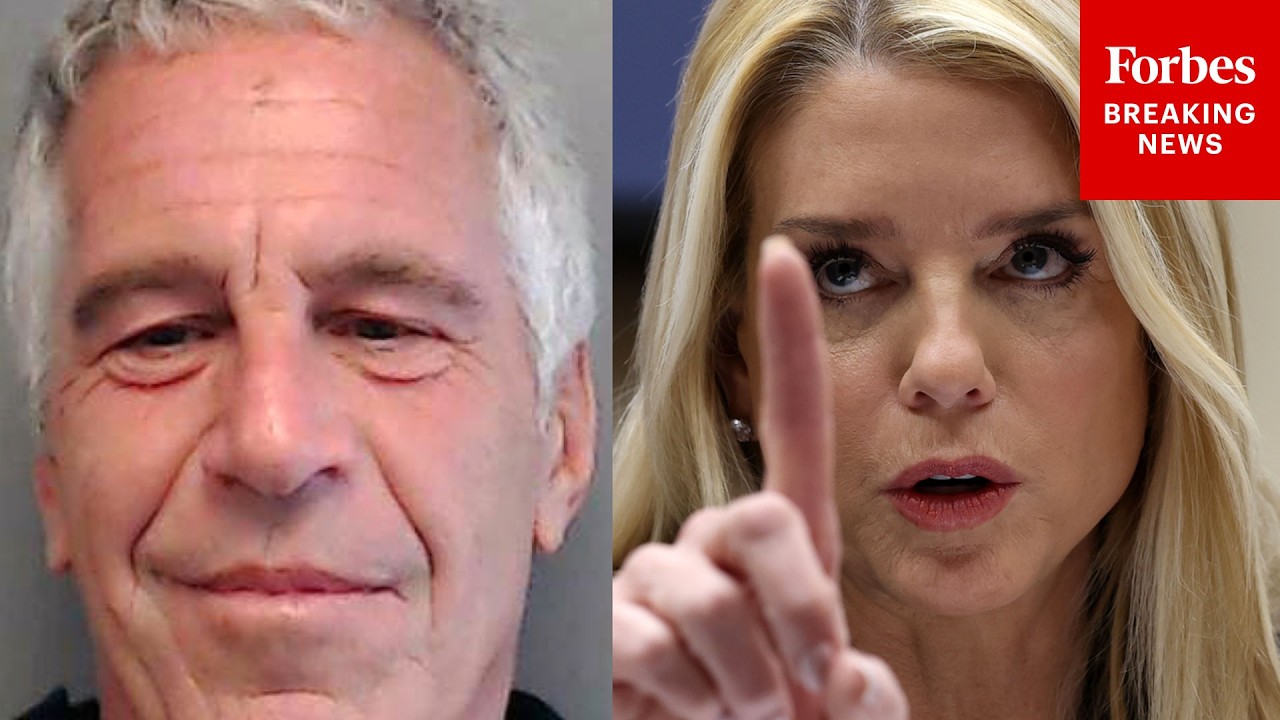
Title: BREAKING NEWS: Pam Bondi Still Subpoenaed Over Epstein—Here's What She Must Tell Us: DWS
Channel: Forbes Breaking News
Published: 2026-04-03
Duration: 12:21
Views: 17,016
Description:
On "Forbes Newsroom," Rep. Debbie Wasserman Schultz (D-FL) responded to the firing of Attorney General Pam Bondi, the ongoing effort to release the Epstein Files, and what's next for the Trump DOJ.
Stay Connected
Forbes Breaking News on X: https://x.com/ForbesTVNews
Forbes Breaking News on TikTok: https://www.tiktok.com/@forbestvnews
More From Forbes: http://forbes.com
Facts Only
Rep. Debbie Wasserman Schultz (D-FL) appeared on "Forbes Newsroom."
The segment discussed the firing of Attorney General Pam Bondi.
The topic included the ongoing effort to release the Epstein Files.
Bondi is still subpoenaed in relation to the Epstein case.
The discussion took place on April 3, 2026.
The video duration was 12 minutes and 21 seconds.
The video had 17,016 views at the time of the description.
The channel is Forbes Breaking News.
The segment was published on Forbes' platforms, including X and TikTok.
The conversation focused on what Bondi must disclose regarding Epstein.
The broader context involved the Trump administration's Department of Justice.
Wasserman Schultz represents Florida's Democratic Party.
Executive Summary
Full Take
The strongest version of this narrative frames the Epstein case as a critical test of accountability for powerful figures, with Bondi's subpoena symbolizing the public's demand for transparency. Wasserman Schultz's comments align with a broader push to uncover institutional failures in handling high-profile cases, particularly those involving elite networks. The focus on Bondi—who has faced prior scrutiny for her office's decisions—serves as a proxy for larger questions about justice, political influence, and media scrutiny.
Patterns detected: ARC-0024 Ambiguity (the framing of "what's next for the Trump DOJ" leaves room for speculative interpretations), ARC-0043 Motte-and-Bailey (the broader critique of institutional failures could retreat to a narrower focus on Bondi's actions if challenged).
Root cause: The narrative assumes that systemic failures in the Epstein case are emblematic of deeper corruption, with unstated assumptions about the role of political power in shielding elites. This echoes historical patterns of scandals involving wealthy individuals and the legal system's uneven application of justice.
Implications: For human agency, this underscores the tension between public demands for accountability and the institutional barriers that protect powerful actors. The beneficiaries of this narrative are those advocating for transparency, while the costs fall on figures like Bondi, who become focal points for broader grievances. Second-order consequences may include increased politicization of legal processes or erosion of trust in institutions.
Bridge questions: What evidence would shift the focus from Bondi to systemic reforms? How might partisan dynamics distort the pursuit of justice in this case? What perspectives from legal experts or Epstein's victims are missing from this discussion?
Counterstrike scan: A coordinated influence campaign would amplify partisan divisions, framing the Epstein case as a weapon against political opponents while obscuring structural issues. The actual content does not fully match this pattern, as it centers on accountability rather than overt partisan attacks. However, the ambiguity in framing could be exploited to polarize audiences further.