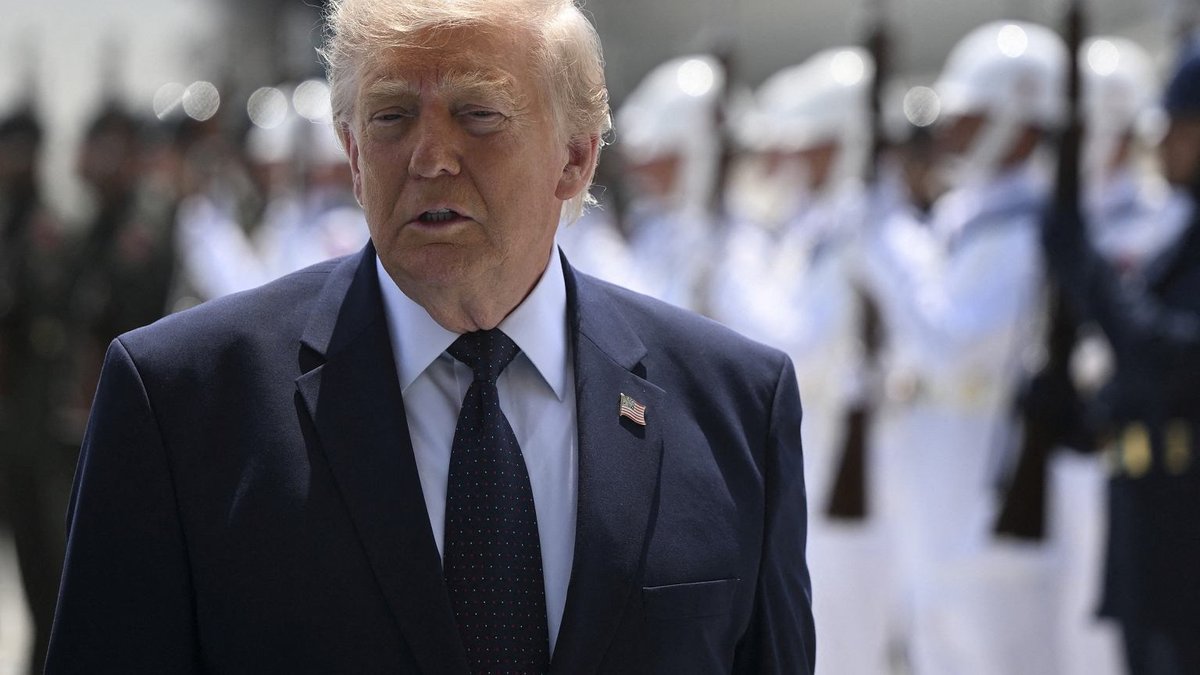
Podczas dwustronnego spotkania przed szczytem NATO w Ankarze Donald Trump ocenił, że Dania nie inwestuje wystarczająco w rozwój Grenlandii, a jednocześnie ostrzegł, że położenie wyspy zyskuje na znaczeniu, w miarę jak Chiny i Rosja zwiększają swoją obecność w Arktyce.
Prezydent USA stwierdził, że Grenlandia nie przynosi Danii żadnych korzyści, a Kopenhaga nie wydaje pieniędzy, by realnie wesprzeć wyspę, mimo że ma ona kluczowe znaczenie dla Stanów Zjednoczonych. Po raz kolejny podkreślił, że Grenlandia powinna znajdować się pod kontrolą Stanów Zjednoczonych, a nie Danii. Stwierdził, że terytorium to ma kluczowe znaczenie strategiczne dla amerykańskiego bezpieczeństwa. Dodał jednak, że "to zaszkodziłoby jego relacjom z NATO".
Trump w przeszłości odmawiał wykluczenia użycia siły militarnej w celu przejęcia Grenlandii. Jednak podczas Światowego Forum Ekonomicznego w Davos na początku tego roku w dużej mierze przeszedł do postulowania długoterminowego porozumienia ramowego. Mimo to urzędnicy jego administracji nadal nie wykluczają bardziej zdecydowanych działań, argumentując, że Grenlandia ma zasadnicze znaczenie dla bezpieczeństwa narodowego USA.
W lutym 2026 roku premier Grenlandii Jens-Frederik Nielsen ostrzegał, że Stany Zjednoczone "poszukują sposobów na przejęcie własności i kontroli" nad wyspą, choć wcześniej odrzuciły wariant przejęcia jej siłą militarną. Nielsen podkreślał wówczas, że Grenlandia "jest dziedzictwem" mieszkańców wyspy i "nie można jej kupić ani sprzedać", zwracając uwagę, że terytorium to jest członkiem NATO za pośrednictwem Danii, a naruszanie granic i suwerenności państw grozi, jego zdaniem, "podziałem świata".
Sam Trump w styczniu mówił w rozmowie z "New York Post", że USA "będą mieć wszystko, czego zapragną" w sprawie Grenlandii, wspominając o "kilku interesujących rozmowach". Wcześniej, podczas przemówienia w Davos, zadeklarował rezygnację z użycia siły militarnej do przejęcia wyspy, argumentując zarazem, że kontrola USA nad Grenlandią miałaby zapobiec ekspansji Rosji i Chin w regionie. Kwestię tę komentował też sekretarz generalny NATO Mark Rutte, wskazując na rosnące znaczenie Arktyki dla bezpieczeństwa sojuszu oraz na wzmożoną aktywność Rosji i Chin w regionie.
Od wtorku w Ankarze trwa dwudniowy szczyt NATO. Danię reprezentują premierka Mette Frederiksen, szef dyplomacji tego państwa Lars Lokke Rasmussen oraz minister obrony Jeppe Bruus.
Rząd Danii ogłosił we wtorek decyzję o zakupie od USA dwóch samolotów rozpoznawczych Poseidon P-8, które będą patrolować arktyczne obszary Grenlandii oraz północnego Atlantyku.
Facts Only
* Donald Trump assessed that Denmark does not invest enough in Greenland's development.
* Trump warned that the location of the island gains significance as China and Russia increase their presence in the Arctic.
* The U.S. President stated that Greenland does not bring benefits to Denmark.
* Trump suggested Greenland should be under the control of the United States for its strategic importance to U.S. security.
* The Prime Minister of Greenland warned in February 2026 that the United States was seeking ways to gain ownership and control over the island, while emphasizing that the territory is an inheritance and cannot be bought or sold.
* The Prime Minister of Greenland noted that the territory is a NATO member through Denmark, and violating borders threatens the "division of the world."
* In January, Trump mentioned U.S. intentions regarding Greenland, referencing "interesting talks" and the desire for control.
* The Secretary General of NATO, Mark Rutte, pointed to the growing importance of the Arctic for the alliance and increased activity by Russia and China.
* Denmark announced the purchase of two U.S. Poseidon P-8 reconnaissance aircraft for patrolling Arctic areas.
Executive Summary
Full Take
The narrative frames a dynamic tension between sovereign claims, geopolitical opportunity, and security alignment within the broader context of the Arctic. The conflict centers on an assertion of territorial or strategic control—Greenland's status versus U.S./NATO strategic interests against potential expansion by competing powers. The sequence of statements from Trump, Nielsen, and Rutte reveals a struggle to define the legal and practical status of high-latitude territories. Trump’s stated desire for control, tempered by his earlier reluctance regarding military force, suggests an attempt to leverage strategic narratives to shape international relations, shifting from tacit agreement on shared interests (Davos framework) to more assertive demands. The subsequent announcement by Denmark to acquire U.S. surveillance assets introduces a tangible, material element into the abstract geopolitical discourse, moving potential claims toward operational reality.
The underlying pattern suggests that in contested peripheral regions like the Arctic, rhetoric regarding sovereignty—whether framed as inheritance, strategic necessity, or territorial possession—is used to establish leverage for external actors. The implication is that appeals to shared security (NATO/U.S. interests) often mask a deeper contest over ownership and future governance. The move from philosophical debate about boundaries to tangible military hardware acquisition indicates an escalation where geopolitical concerns are being translated into concrete security infrastructure, raising questions about whose sovereignty ultimately dictates operational reality in these increasingly contested zones.
Bridge Questions: If territorial claims are framed as historical inheritance, what legal or customary international law principles should govern the exercise of state control over territories deemed strategically vital to larger alliances? How does the stated tension between denying ownership (Nielsen) and pursuing acquisition (Trump/Danish purchase) reflect existing frameworks for managing post-colonial or disputed Arctic territories? What are the long-term implications for defining sovereignty when external powers seek to merge security imperatives with territorial claims?
Sentinel — Human
The text appears to be a compilation of facts surrounding recent diplomatic discussions, exhibiting the structure and flow typical of news reporting rather than synthetic generation.