Tenzin Nyidon
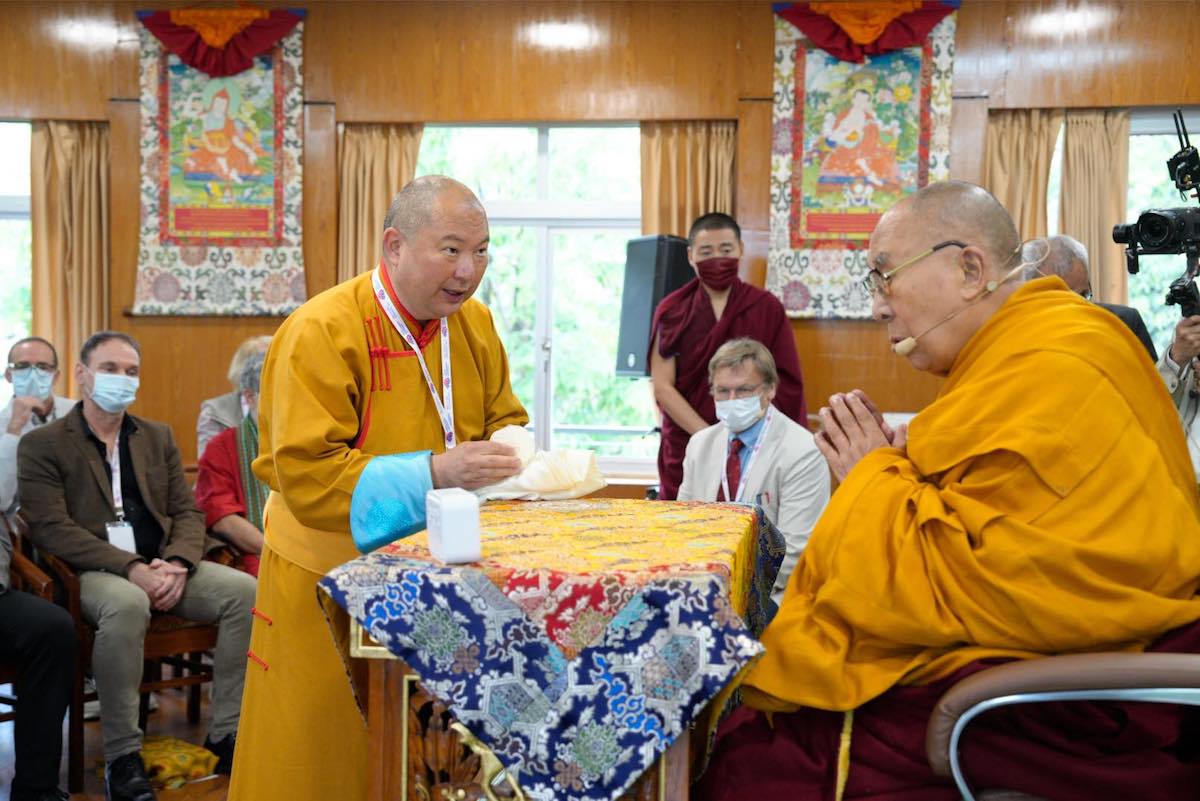
DHARAMSHALA, May 13: Telo Tulku Rinpoche on Monday announced the conclusion of his tenure as the official representative of 14th Dalai Lama and the Central Tibetan Administration in Russia, bringing to a close more than a decade of service in one of the Tibetan administration’s most diplomatically sensitive assignments.
In a statement shared on his social media platform on May 11, he said the day marked his “final day” serving in the role, reflecting on what he described as “the greatest honour and privilege” of his life.
Appointed as the honorary representative of the Dalai Lama in October 2014 and assuming office in February 2015, Telo Rinpoche served two full terms spanning 11 years. His appointment was considered significant as he became the only non-Tibetan to hold the position representing both the Dalai Lama and the CTA to Russia, Mongolia, and CIS countries at the Tibet Culture & Information Centre (Office of Tibet) in Moscow, Russia.
“When I was first appointed as honorary representative of H.H. the Dalai Lama in October 2014 and took office in February 2015, I could not have fully imagined the journey ahead,” he wrote.
Expressing gratitude to the Tibetan spiritual leader, he thanked the nonagenarian leader “for the trust and the opportunity to serve,” while also acknowledging Drepung Gomang Monastery, where he said he spent his formative years under the guidance of teachers and fellow monks who shaped his life.
He also extended appreciation to colleagues and staff of the CTA for their “tireless dedication” and friendships cultivated during his years in office, as well as supporters who contributed to the success of Tibetan initiatives and programs internationally.
Despite the conclusion of his formal tenure, Telo Rinpoche emphasized that his commitment to the Tibetan cause would continue. “While my formal term concludes today, my commitment does not. I will continue to support, advocate for, and stand with the Tibetan people. This is a journey that never truly ends,” he stated.
Telo Rinpoche, who is widely known as the Shajin Lama (Head Lama) of Kalmykia and a prominent Buddhist figure in Russia, has long played a key role in fostering ties between Tibetan and Buddhist communities in the region. He concluded his message by expressing hope of reconnecting with supporters and colleagues in the future in an informal capacity, saying he was certain their paths would cross again soon.
The future of his position had also come under discussion during the budget session in 2025 of the 17th Tibetan Parliament-in-Exile, where parliamentarians deliberated on the status of the His Holiness the Dalai Lama and CTA’s representation in Russia. Rinpoche has reportedly been operating remotely from Mongolia since 2023 after being designated a “foreign agent” by Russian authorities after opposing the Ukraine invasion. Lawmakers considered the possibility of appointing a replacement to ensure in-person representation in the region; however, his tenure was extended in 2025 amid difficulties in finding a suitable successor and the limited Tibetan presence in Russia and neighbouring areas.
Facts Only
* Telo Tulku Rinpoche announced the conclusion of his tenure as the official representative of the 14th Dalai Lama and the Central Tibetan Administration (CTA) in Russia.
* He served in this role for eleven years, beginning his appointment as honorary representative in October 2014 and assuming office in February 2015.
* He served as the representative at the Tibet Culture & Information Centre in Moscow, Russia.
* He was the only non-Tibetan to hold this position representing the Dalai Lama and the CTA in Russia, Mongolia, and CIS countries.
* Rinpoche thanked the Dalai Lama and acknowledged Drepung Gomang Monastery for his guidance.
* Rinpoche expressed appreciation to the colleagues and staff of the CTA and international supporters.
* Rinpoche stated that his commitment to the Tibetan cause would continue despite the conclusion of his formal term.
* The future of representation was discussed in the 2025 budget session of the 17th Tibetan Parliament-in-Exile.
* Rinpoche has reportedly been operating remotely from Mongolia since 2023 after being designated a “foreign agent” by Russian authorities.
Executive Summary
Full Take
The narrative frames the conclusion of an official tenure as a personal reflection on a lifelong commitment, juxtaposing formal political status with enduring spiritual dedication. The tension lies between the officially concluded role, which was a diplomatic assignment involving sensitive relationships, and the sustained personal commitment emphasized by Rinpoche. This structure suggests that institutional change or political pressure (such as the designation as a "foreign agent") does not negate the internal, moral imperative of the representative.
The context of the position—being the sole non-Tibetan representative to Russia and CIS countries—highlights the complex dynamics of mediation and cultural representation in highly sensitive geopolitical spaces. When a diplomatic role concludes, the subsequent discussion around replacement and remote operation indicates that the functional reality of representation is separate from the formal structure. The fact that parliamentarians deliberated on representation in 2025 suggests an ongoing, unresolved systemic issue regarding the status of the Dalai Lama and CTA’s voice in the region, which necessitates continuous negotiation rather than a clean termination of a representative's service.
The potential pattern involves using the narrative of a respected figure's transition to validate broader systemic concerns about representation and autonomy. The focus shifts from the diplomatic exit to the indefinite personal commitment, subtly repositioning the conflict from a political loss to an existential spiritual journey. This pattern avoids addressing the structural and legal mechanisms that govern representation, instead leaning into emotional and spiritual appeals to maintain engagement, which allows the issue to persist outside of concrete accountability measures.
Sentinel — Human
This analysis is based on a news report structure and content typical of human-written geopolitical reporting, focused on a specific individual and their tenure.