This story was originally published by Montana Free Press and is republished here by permission.
There are nearly 400 school districts scattered across Montana, a state with just over a million people. Roughly 176,000 of those residents are school-aged children. Outside of major cities like Billings or Bozeman, school districts exist to serve some of the state’s smallest, most remote communities, from Lima to Westby. Across Montana, a number of forces are contributing to declining enrollment in public schools, forcing some to close. For particularly rural areas, a school closure has a domino effect — on students, families and the future of a town or county.
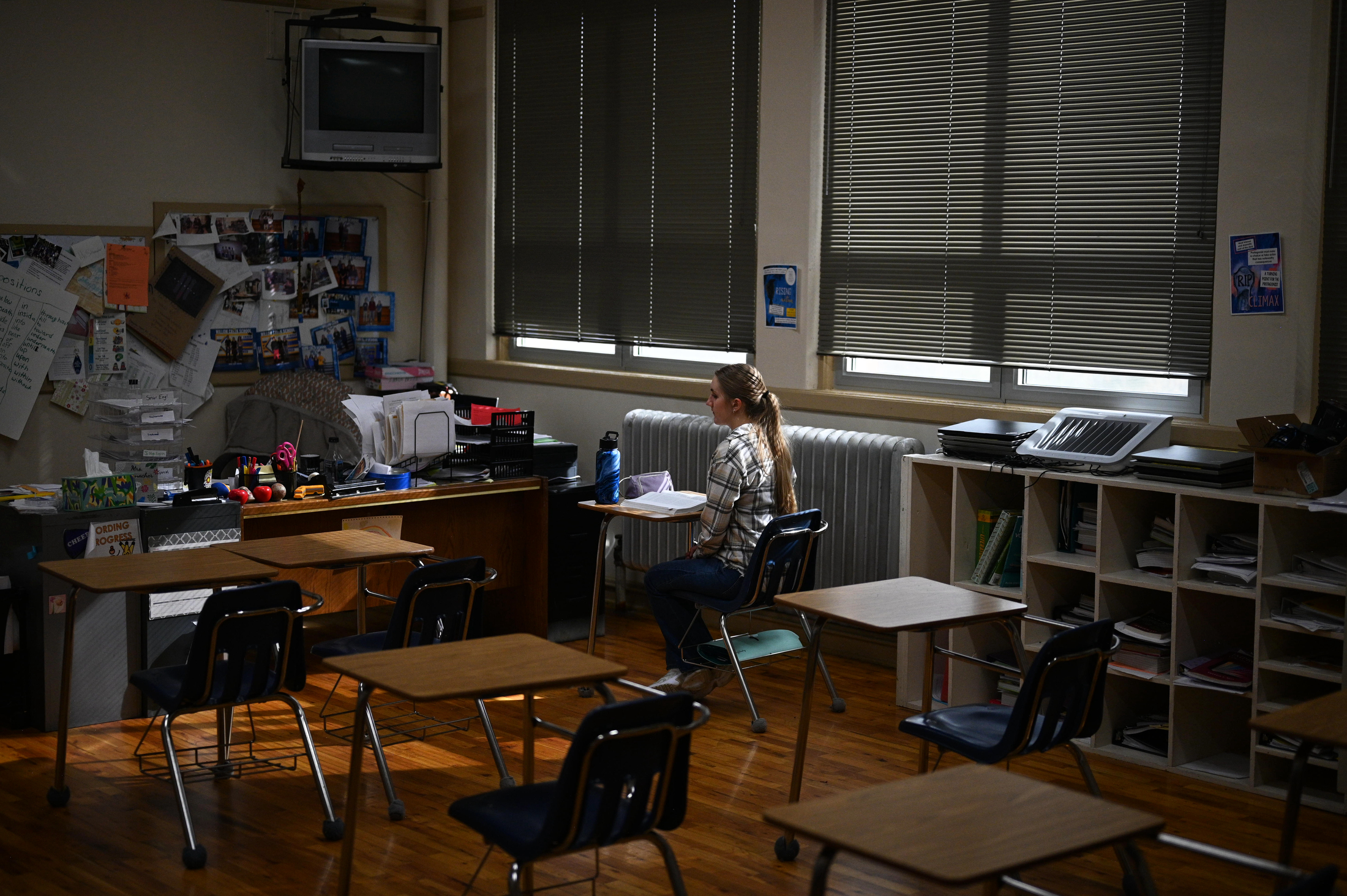
I grew up in a more urban area, graduating with a class of 500 other students. In this project, I wanted to celebrate some of Montana’s smallest graduating classes. Over 5 months and many miles in the car, I worked to understand what it means to be one person in a class of one, two or three. Stories about rural American communities in the media often portray tropes of a hard life that is disappearing. They are written off as monoliths. In the face of this, I wanted to encapsulate the vibrancy of community, connection and day-to-day life in three small graduating classes. The students I met are also grappling with what it means to leave the places that are, for many of them, the only school building and home they’ve ever known. In this project, they’re on the verge of entering the future and deciding who they want to become — whether that be 40 minutes or four hours away.
Lima, class of three
Town population: 221 • High school population: 13
Senior class trip: They drove to the Pacific Northwest with Mr. Greg Iverson, their English teacher and superintendent, exploring areas near the Cascades and Washington coast.
Graduating class tradition: The graduating class gets to pick out the color of their ceremonial gowns. One year, when the graduating class was made up of three boys, they chose camo. This year, graduates chose black.
How they deal with sports: No schools are close enough to co-op with any other school. Instead, administrators pull kids up from 8th grade to fill out the team. During Kalen Martinell’s junior year, they didn’t have enough boys for a basketball team. He drove to Dillon everyday to practice and play there.
Proximity to a big box store: One hour and thirty minutes (the Walmart in Rexburg, ID).
Gus Huntsman, senior
Kalen Martinell, senior
Luke Wendt, senior
Rapelje, class of two
Town population: Approx. 96-117 • High school population: 12
Senior class trip: Students decided to save the funds they’d raised for their annual trip — the proceeds of a pop-up coffee bar they ran every other Friday morning for the school year — to help pay for college expenses.
Graduating class tradition: Unlike other graduating classes, the two seniors of 2026, Rosy Nick and Ben Broyles, said they never developed a tradition, per se. “We were not very close,” Rosy said. “I am sorry, we are a pretty boring class.”
How they deal with sports: They co-op with Reed Point, another town about a 40 mile drive southwest.
Proximity to a big box store: A little under an hour (the Walmart in Laurel).
Rosy Nick, senior
Ben Broyles, senior
Willow Creek, class of one
Town population: 162 • High school population: 7
Senior class trip: Tori Schumacher went to Washington, D.C, this year. Also in attendance: her English teacher (mom) and dad.
Graduating class tradition: Designing and painting a brick in the school hallway to represent their time there.
How they deal with sports: Co-ops with Whitehall, about 26 miles west, for team sports, or they compete alone in track and cross country.
Proximity to a big box store: A little over thirty minutes (the Target in Bozeman).
Sentinel — Human
The text exhibits strong human literary characteristics, blending a reflective personal essay with localized facts and anecdotes to explore thematic concerns about rural life.