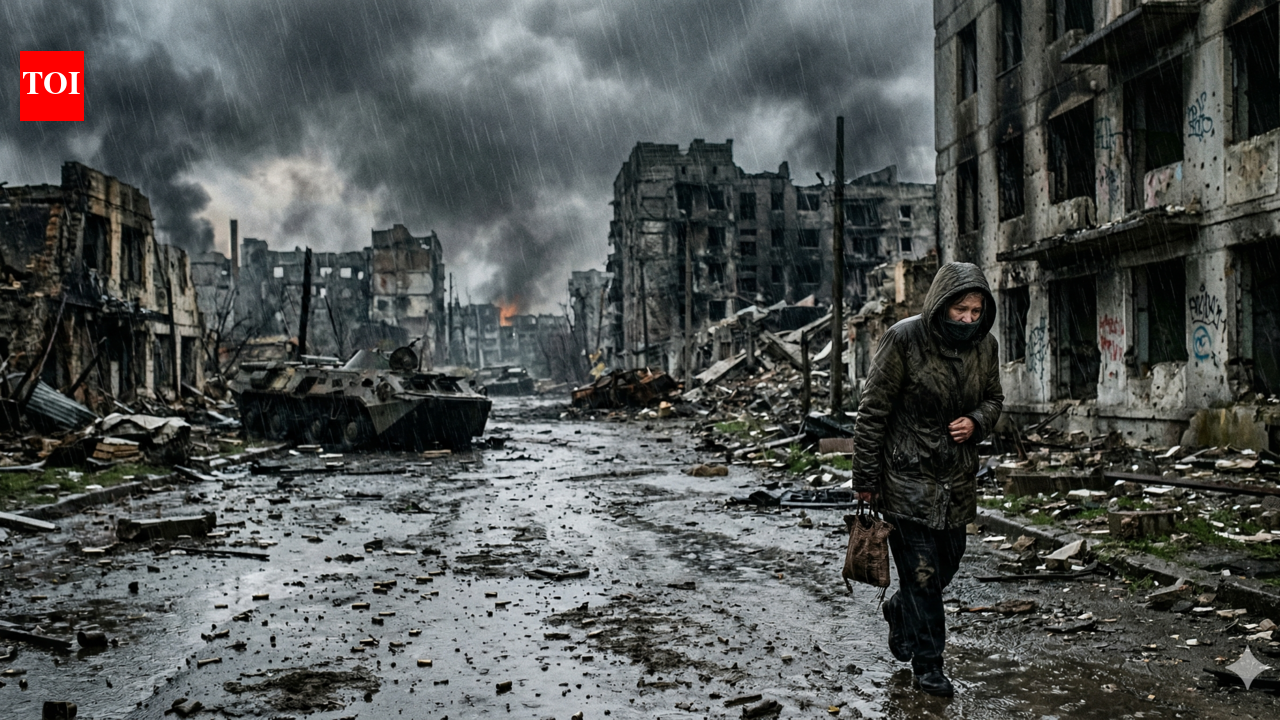
Of course, war can be understood in terms of its immediate human cost, but its impact on the environment can be just as significant, and in many ways, even longer lasting. Beyond the direct damage caused on the battlefield, war can be understood as a force that changes the very air we breathe and the rainfall that comes from the sky. From the oil fires that bring darkness in the middle of the day, to the chemicals that change the rainfall, the impact of war on the weather can be unsettling, and it's not just random chance: explosions, burning, and chemicals can affect the weather in very real ways, and understanding this can help us understand war as not just a political phenomenon, but an ecological one as well.
How warfare triggers ‘acid rain’ formation
One of the most impactful ways that war affects the weather is through the formation of acid rain.
This is caused by war equipment, blasts, and fires that release gases such as sulphur dioxide (SO₂) and nitrogen oxides (NOx) into the atmosphere. When these gases combine with water vapour, they produce sulphuric and nitric acids, which fall back to the ground as a form of acid rain.
According to scientific studies done by the Sec. Environmental Policy and Governance on pollution caused by war, “NOx and SO₂ gases emitted… contribute to acid rain and environmental degradation.”
This implies that areas with heavy war activities are likely to experience this weather phenomenon.
Acid rain has negative impacts on the environment, such as harming trees, rivers, and animals. It also has negative impacts on humans, especially when it occurs in the form of a thick fog, which irritates the eyes and lungs. This is a war weather phenomenon that is quiet and lingers.
Toxic fog and ‘Black Skies’ in conflict zones
War can also result in thick, noxious fog that functions as an artificial form of weather. As reported by the United Nations, a compelling case of this was witnessed in Iraq, where burning oil wells produced thick smoke that filled the atmosphere, resulting in the formation of a “fog of war” that “blots out the sun” and covers the area in thick soot.
In some cases, fires that result from the use of chemicals can produce large quantities of pollutants. During one such event, tens of thousands of tonnes of sulphur dioxide were released into the atmosphere on a daily basis, resulting in the formation of noxious gases that combine with the moisture present in the atmosphere.
Such conditions not only affect visibility; they also affect the temperature, exposure to the sun, and quality of the atmosphere, thereby changing the microclimate of the area.
Chemical warfare and atmospheric contamination
Contemporary warfare has also seen more intricate changes in the atmosphere, including the use of chemicals and industrial damage. Chemicals used during warfare can stay in the air, land, and water and slowly seep into the atmosphere through a process of evaporation. Based on environmental research previously mentioned, warfare contributes to “extensive use of hazardous substances, chemicals, and heavy metals that contaminate” the environment. These chemicals can travel through the air and mix with clouds, affecting the nature of rain.
Sometimes, the chemicals fall into the water and eventually return to the atmosphere, forming a cycle of pollution. A study on the Tigris River carried out by the University of Stuttgart, Germany, during a time of conflict recorded alarming levels of dangerous chemicals, including heavy metals, which exceeded the WHO standards.
Long-term climate and environmental effects
Although war may not necessarily change the world's weather right away, the effects of war on the environment can be devastating. This is because war destroys the environment by clearing the ecosystem and polluting the air and water. This disrupts the ecosystem and makes it difficult for nature to maintain the balance required for the ecosystem to thrive. This means that war can change the weather through the effects it has on the environment. In this regard, war not only destroy the environment; it also changes the weather.
War can change the weather by affecting the environment. This may not be seen by everyone, but the effects are felt by everyone. This is because war can change the weather by polluting the environment. This can be seen through the creation of acid rain that falls on the environment and the creation of a thick fog that falls on the environment. This means that war can change the weather by polluting the environment. This is a crucial factor to consider because it shows the effects of war on the environment.
Facts Only
War activities are linked to acid rain formation due to emissions of SO₂ and NOx gases, contributing to environmental degradation (Sec. Environmental Policy and Governance)
Heavy war zones are likely to experience acid rain phenomena
Acid rain harms trees, rivers, animals, and irritates human eyes and lungs when occurring as thick fog
Burning oil wells in conflict zones can produce toxic smoke and fog that blots out the sun and covers areas in thick soot (United Nations)
Fires resulting from chemical use can release large quantities of pollutants, affecting visibility and changing microclimates
Warfare leads to extensive use of hazardous substances, chemicals, and heavy metals that contaminate the environment (environmental research)
Dangerous chemical levels were recorded in the Tigris River during conflict periods, exceeding WHO standards (University of Stuttgart study)
Executive Summary
Warfare's Impact on the Environment: Acid Rain, Toxic Fog, and Chemical Contamination
This article discusses the ecological consequences of warfare, focusing on three key areas: acid rain formation, toxic fog creation, and chemical warfare leading to atmospheric contamination. The formation of acid rain is caused by war equipment, blasts, and fires releasing sulphur dioxide (SO₂) and nitrogen oxides (NOx), which combine with water vapour to produce acidic substances that harm the environment, animals, and humans. Toxic fog can be created as a result of burning oil wells in conflict zones, filling the atmosphere with smoke and soot, while chemical warfare leads to long-term environmental contamination through evaporation and cycle pollution. The article acknowledges the devastating long-term climate effects of war on the environment and highlights the need for understanding war not just as a political phenomenon but also an ecological one.
Full Take
This article provides a comprehensive overview of the impact of war on the environment, focusing on acid rain, toxic fog, and chemical contamination. It is important to consider these ecological consequences alongside the human cost of warfare. By understanding the mechanisms through which war affects the weather, we can appreciate the interconnectedness between politics, economics, and ecology.
Patterns detected: ARC-0043 Motte-and-Bailey (The article emphasizes both immediate human cost and long-term environmental impact without fully reconciling the two), ARC-0024 Ambiguity (The article suggests that war changes the weather through its effects on the environment, but it does not discuss other potential factors such as climate change)
The article highlights the role of war in acid rain formation and the creation of toxic fog. By shedding light on these environmental consequences, it raises questions about the ethical implications of contemporary warfare practices. For instance, what measures are taken to minimize ecological damage during wartime? How can we ensure accountability for environmental crimes committed during conflict?
root cause: The underlying paradigm driving this narrative is the need for a holistic understanding of war's impact, acknowledging not only its political and human dimensions but also its ecological consequences.
implications: Understanding the long-term environmental effects of warfare underscores the importance of considering sustainable practices during military operations and holding governments accountable for their environmental responsibilities in war zones.
bridge questions: What additional measures could be taken to minimize the ecological damage caused by contemporary warfare? How can we hold governments accountable for their role in environmental degradation during conflict?
Sentinel — Human
The article shows signs of human authorship, presenting a unique perspective on how war impacts the environment.