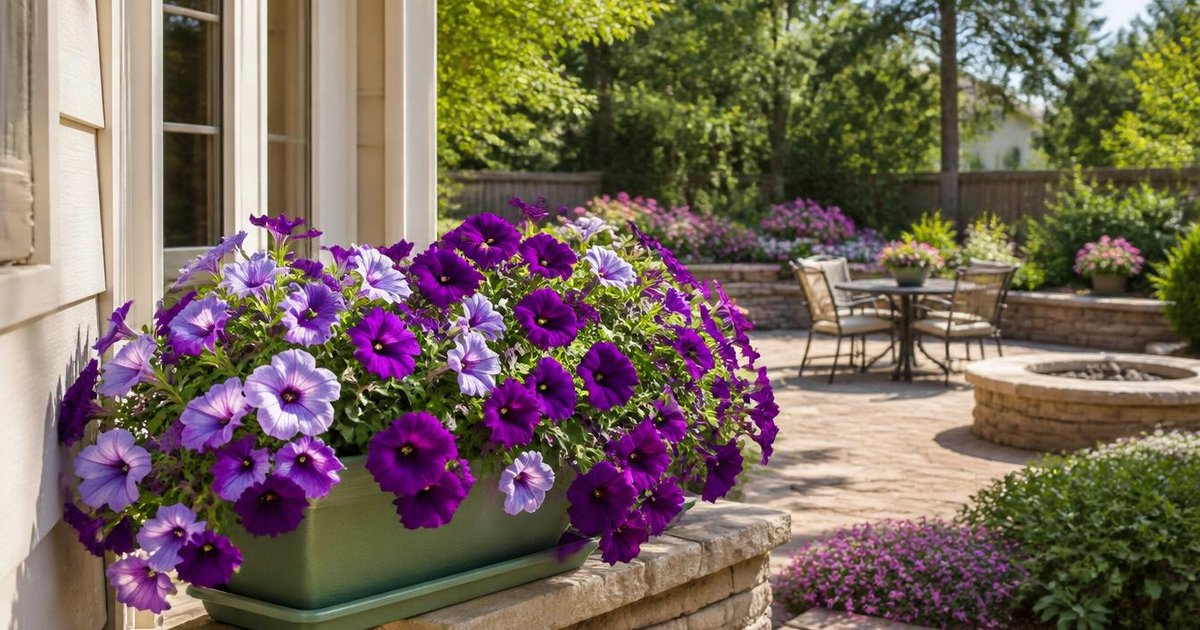
If mounding petunias are the dependable workhorse of summer containers, trailing petunias are the showstoppers. These are the varieties that spill, cascade, and pour over the edges of hanging baskets and patio planters like living color waterfalls. In Fort Collins and across the Front Range, they’ve become one of the most recognizable signatures of peak summer gardening.
With their long flowering season, vivid color range, and ability to transform even a simple container into a dramatic focal point, trailing petunias are a natural fit for Colorado’s bright sun and dry climate.
At [Plantorium.com](https://plantorium.com?utm_source=chatgpt.com trailing petunias are a cornerstone of summer annual collections, especially for gardeners looking to create high-impact displays with minimal structural complexity.
Why Trailing Petunias Excel in Northern Colorado
Trailing petunias are bred for vigor. Instead of forming compact mounds, they extend long, flexible stems that cascade downward and outward, often reaching impressive lengths by mid-summer.
In the Front Range climate, they perform especially well because:
- High sunlight levels drive strong flowering
- Low humidity reduces fungal pressure
- Cool nights help maintain bloom intensity
- Dry air supports dense, colorful growth
The result is a plant that can stay in continuous bloom from late spring until the first frost.
Popular colors include:
- Deep purple
- Hot pink
- Bright red
- White
- Coral
- Lavender
- Veined and patterned hybrids
Many modern varieties are also self-cleaning, meaning spent flowers drop naturally, keeping the display neat with little maintenance.
When to Plant Trailing Petunias in Fort Collins
Trailing petunias are warm-season annuals and should be planted after the last frost date has passed—typically mid-May in Fort Collins and surrounding communities.
Because they grow quickly once temperatures rise, they often establish rapidly and begin trailing within a few weeks of planting.
For hanging baskets and elevated containers, planting can be slightly delayed compared to beds, since these containers warm faster and support quicker growth.
Sunlight Requirements
Full sun is essential for strong flowering and dense trailing growth.
In Northern Colorado, provide:
- At least 6–8 hours of direct sunlight daily
- Open exposure for containers and baskets
- Good airflow around plants
Too little sun results in fewer blooms and longer, weaker stems. In full Front Range sun, trailing petunias often become completely covered in flowers by midsummer, with foliage nearly hidden beneath blooms.
Soil and Container Needs
Trailing petunias thrive in well-draining soil with consistent moisture.
For best results:
- Use high-quality potting mix in containers
- Ensure baskets and pots have excellent drainage
- Avoid heavy garden soil in containers
Because they produce so much growth and bloom mass, trailing petunias are heavy feeders and heavy drinkers compared to many annuals.
Watering in Colorado’s Dry Climate
Fort Collins’ dry air and frequent wind can cause rapid moisture loss, especially in hanging baskets.
A reliable watering rhythm includes:
- Checking containers daily in peak summer
- Watering deeply until excess drains out
- Increasing frequency during heat waves or wind events
- Avoiding prolonged dry cycles, which reduce flowering
Underwatering is one of the most common reasons trailing petunias slow down in midsummer.
Fertilizing for Maximum Cascade Effect
Trailing petunias are among the most nutrient-demanding annuals.
Regular feeding is essential to maintain their long bloom cycle:
- Use a balanced liquid fertilizer every 1–2 weeks
- Or incorporate slow-release fertilizer at planting
- Maintain consistent nutrition for continuous flower production
Well-fed plants produce longer vines, denser blooms, and stronger overall structure.
Design Role in the Garden
Trailing petunias are primarily a design plant. Their role is not height or structure, but movement.
They are most effective in:
- Hanging baskets
- Elevated porch planters
- Window boxes
- Tall containers and urns
- Retaining wall spillovers
In Fort Collins landscapes, they are often used to soften architectural edges and bring color down to eye level from above.
Handling Front Range Summer Conditions
Trailing petunias are well adapted to Colorado’s summer extremes, but they do have a few vulnerabilities:
They handle well:
- Heat
- Strong sunlight
- Dry air
- Wind exposure
They struggle with:
- Prolonged drought stress
- Heavy hail damage (temporary, often recoverable)
- Poor drainage or overly compacted soil
After storm damage, a light trim often encourages a fast rebound and renewed flowering within days.
Best Companion Plants
Trailing petunias are most powerful when paired with upright or structured plants that contrast their cascading habit.
Excellent companions include:
- Angelonia
- Calibrachoa
- Verbena
- Sweet Potato Vine
- Bacopa
- Ornamental grasses
- Compact geraniums
In mixed containers, trailing petunias usually serve as the “spill” layer, anchoring the visual flow of the arrangement.
A Defining Plant of Summer in Colorado
Few annuals are as visually transformative as trailing petunias. In a single season, they can turn a simple porch into a lush, colorful display that feels far more complex than the effort required to maintain them.
For gardeners across Fort Collins and the Front Range, they remain one of the most reliable ways to achieve dramatic summer impact with minimal structural gardening.
Long, flowing, and relentlessly colorful, trailing petunias are summer at full volume.
Explore seasonal availability and additional annuals at [Plantorium.com’s full plant catalog](https://plantorium.com/all-plants/?utm_source=chatgpt.com
Facts Only
Trailing petunias are annual plants known for their cascading growth and vibrant colors.
They are popular in Fort Collins and the Front Range for summer gardening.
These plants thrive in full sun, requiring at least 6–8 hours of direct sunlight daily.
They perform well in Colorado’s dry, low-humidity climate with cool nights.
Popular colors include deep purple, hot pink, bright red, white, coral, lavender, and patterned hybrids.
Many modern varieties are self-cleaning, dropping spent flowers naturally.
Planting should occur after the last frost, typically mid-May in Fort Collins.
They require well-draining soil and consistent moisture, especially in hanging baskets.
Trailing petunias are heavy feeders, needing regular fertilization for optimal growth.
They are often used in hanging baskets, window boxes, and elevated planters.
Common companion plants include angelonia, calibrachoa, verbena, and sweet potato vine.
They can recover quickly from hail damage with light trimming.
Executive Summary
Full Take
This article presents trailing petunias as an ideal choice for summer gardening in Northern Colorado, emphasizing their aesthetic appeal and adaptability to the region’s climate. The narrative leans heavily on their visual impact and low-maintenance nature, which aligns with broader trends in gardening media that prioritize "high-impact, low-effort" plants. While the facts about their care requirements and climate suitability are well-supported, the piece assumes a universal preference for dramatic, cascading displays without acknowledging potential drawbacks, such as their vulnerability to drought or the need for frequent watering in windy conditions.
The framing positions trailing petunias as a near-perfect solution for summer color, which could overlook individual gardener preferences or constraints (e.g., water restrictions, shade limitations). The inclusion of a commercial link to Plantorium.com subtly reinforces the narrative’s promotional tone, though the advice itself remains practical. A deeper critique might question whether the emphasis on visual spectacle overshadows ecological considerations, such as water usage or pollinator support, which are increasingly relevant in drought-prone regions.
**Patterns detected: none**
**Bridge questions:**
How do trailing petunias compare to native or drought-resistant alternatives in terms of water efficiency and ecological benefits?
What are the trade-offs between their high-maintenance needs (watering, fertilizing) and their aesthetic rewards?
Could their popularity reflect broader cultural trends in gardening, such as a preference for instant gratification over long-term sustainability?
Sentinel — Human
The text reads as highly informed, practical horticultural content, likely written by an experienced gardener or journalist. While the structure is clean and flows logically, the inclusion of localized, practical advice points toward human authorship rather than purely synthetic generation.