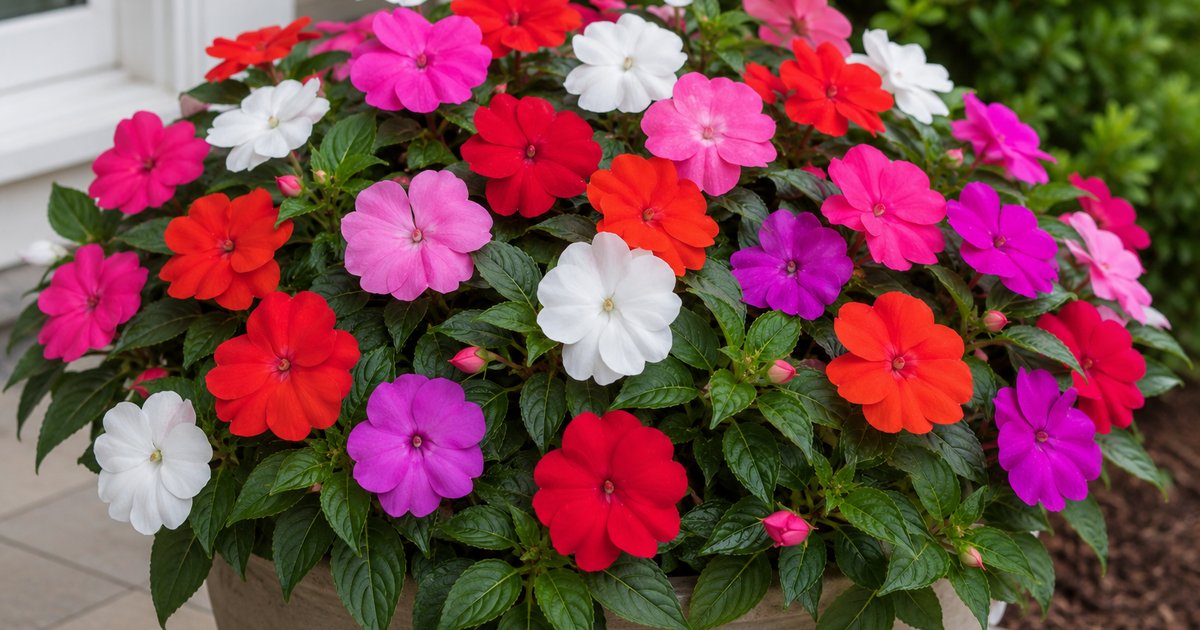
While their sun-loving cousins may grab the headlines, the Traditional Impatiens (often called Impatiens walleriana or Busy Lizzie) remains the gold standard for bringing saturated, carpet-like color to the coolest corners of a Fort Collins landscape. In a region where the high-altitude sun can be unforgiving, these shade-dwellers are essential for turning a north-facing patio or the space beneath a canopy of mature trees into a lush, floral sanctuary.
Why Classic Impatiens are a Shade Gardener’s Secret
Traditional Impatiens are beloved for their ability to bloom continuously in low-light conditions where other plants might struggle. For the Front Range gardener, they offer:
- Intense Shade Performance: They are the perfect solution for areas that receive little to no direct sunlight, flourishing in the dappled light found under Fort Collins' large cottonwoods or maples.
- Vibrant Color Range: From snowy whites and soft pastels to vivid violets and corals, they provide a vast palette to brighten up dark garden "pockets."
- Self-Cleaning Blooms: These plants are remarkably low-maintenance; they naturally drop their spent flowers, meaning you can enjoy a tidy look without constant deadheading.
- Succulent Foliage: Their bright green, juicy stems and leaves offer a cooling visual texture that feels refreshing during a dry Colorado August.
Designing with Traditional Impatiens
To achieve a professional "Better Homes" aesthetic, use traditional impatiens to create "pools" of color. Their mounding, spreading habit makes them ideal for:
- Flowering Groundcover: Plant them closely together in a shaded bed to create a seamless, vibrant carpet that suppresses weeds and retains soil moisture.
- Window Boxes and Shady Pots: They are the classic "filler" for north-facing containers, providing a dense layer of blooms that spills slightly over the edges.
- Tree Rings: Use them to define the base of large trees, adding a ring of color that highlights the vertical architecture of your landscape.
Perfect Pairings for the Shaded Front Range
Because Impatiens offer a soft, mounding texture, they pair beautifully with plants that provide architectural structure or contrasting leaf patterns. Consider these local companions:
- Hypoestes (Polka Dot Plant): The whimsical, spotted leaves of the Polka Dot Plant add a playful texture that echoes the soft petals of the Impatiens.
- Angelonia: In areas with "part-shade" or morning sun, the upright "Summer Snapdragon" provides a beautiful vertical contrast to the low-growing Impatiens.
- Coleus: Pair classic white Impatiens with deep, velvety burgundy Coleus for a high-contrast, sophisticated look in a shaded corner.
- Ferns and Hostas: The delicate fronds of a fern or the broad, structural leaves of a Hosta provide a textured backdrop that makes the bright Impatiens colors truly pop.
Pro-Tips for Local Success
Traditional Impatiens are sensitive to our dry, high-altitude winds and do not tolerate drought well. In the arid Fort Collins climate, they perform best with consistent moisture; if they begin to "flag" or wilt, a quick watering will usually see them bounce back within the hour. For the best results, wait until the soil has truly warmed up—usually late May or early June—before planting them out in your garden beds.
Do you have a specific shaded nook or a north-facing porch you're looking to transform this season?
Facts Only
* Traditional Impatiens are often identified as *Impatiens walleriana* or Busy Lizzie.
* They are used for bringing saturated, carpet-like color to shaded garden areas.
* They perform well in areas that receive little to no direct sunlight.
* They bloom continuously in low-light conditions.
* The plants offer a range of colors, including whites, pastels, violets, and corals.
* Impatiens are self-cleaning, naturally dropping spent flowers.
* They have bright green, juicy stems and leaves.
* They require consistent moisture and tolerate no drought well in the arid Fort Collins climate.
* Planting should occur after the soil has warmed, usually late May or early June.
* Recommended pairings include Hypoestes, Angelonia, Coleus, Ferns, and Hostas.
Executive Summary
Full Take
Sentinel — Human
The text exhibits strong human characteristics, utilizing localized, experiential knowledge and a conversational voice rather than formulaic, generalized information.