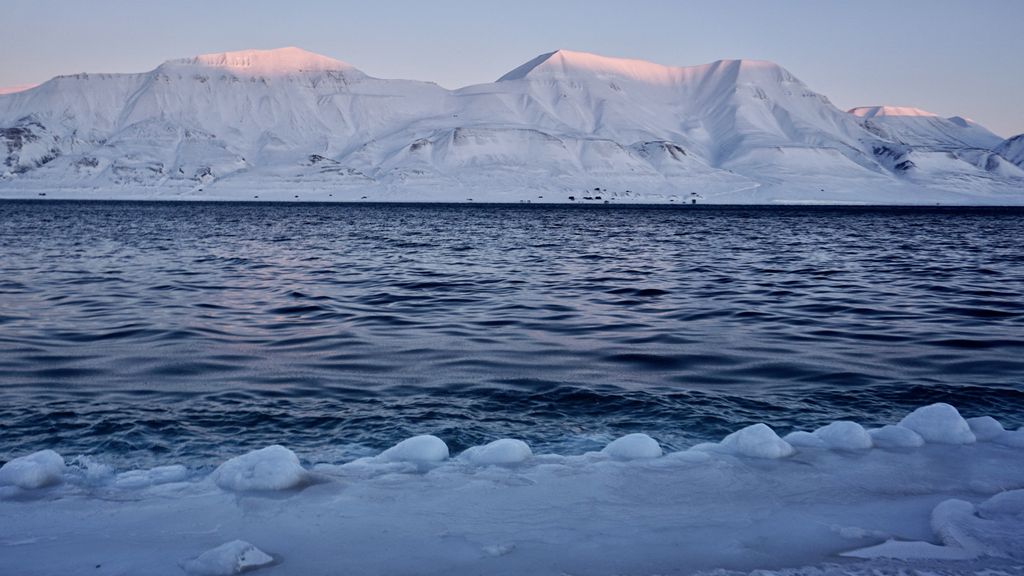
De hoeveelheid zee-ijs in het noordpoolgebied is deze winter net zo laag als vorig jaar. Toen spraken wetenschappers van een dieptepunt omdat er niet eerder zo weinig zee-ijs was voor de periode van het jaar. Er werd zo'n 9 procent minder zee-ijs gemeten dan normaal was in de periode tussen 1981 en 2010.
In de winter hoopt het ijs in het noordpoolgebied op door kou en maandenlange duisternis. De maximumhoeveelheid ijs wordt doorgaans in maart bereikt. Dit jaar werd de maximale omvang gemeten op 15 maart, een week eerder dan vorig jaar.
Op die datum was het ijs-oppervlak zo'n 14,3 miljoen vierkante kilometer, maten wetenschappers van NASA en het Amerikaans centrum voor sneeuw- en ijsdata NSIDC. Het is, net als vorig jaar, het laagste niveau dat in de winter werd waargenomen sinds er in 1978 werd begonnen met monitoring met satellieten.
In vergelijking tot het gemiddelde niveau tussen 1981 en 2010, ontbreekt er dit jaar zo'n 1,3 miljoen vierkante kilometer aan ijs: een hoeveelheid die ongeveer neerkomt op dertig keer de oppervlakte van Nederland.
Klimaatverandering
Dat er minder ijs is, is een van de vele gevolgen van klimaatverandering. In tegenstelling tot ijs op het land, zoals gletsjers of ijskappen, leidt smeltend zee-ijs niet direct tot een stijging van de zeespiegel.
Het heeft wel andere gevolgen voor het klimaat. Zo zijn veel diersoorten, zoals ijsberen in het Noordpoolgebied en keizerspinguïns in Antarctica, afhankelijk van zee-ijs om te broeden en voedsel te vinden.
Scheepsvaart
Niet alleen neemt het ijs af in omvang, het wordt ook steeds dunner. Daardoor wordt het Noordpoolgebied ook steeds toegankelijker voor scheepvaart. Tussen 2013 en 2023 nam het aantal schepen dat door Arctische wateren voer met 37 procent toe, iets dat negatieve gevolgen heeft voor dieren en de natuur.
Meer bekijken?
Meteorologen: aarde houdt meer warmte vast dan ooit, gevolgen nog eeuwen voelbaar
Nederlands bedrijf doet in Noordpoolgebied proef om zee-ijs dikker te maken
'Wetenschappers gebruikten verkeerde berekeningen', zeespiegel hoger dan gedacht
Veel regen in Marokko en Spanje, minder groente en fruit in Nederlandse supermarkt
Facts Only
Actors: NASA, NSIDC (National Snow and Ice Data Center)
Events: Monitoring sea ice extent since 1978, recording lowest winter extent in 2023
Timeline: Winter of 2023
Locations: Arctic region
Ices extent: 14.3 million square kilometers (lowest since 1978)
Comparison to average extent (1981-2010): missing area equivalent to about thirty times the size of the Netherlands
Executive Summary
In the Arctic region this winter, the extent of sea ice is as low as last year, which scientists described as a record low due to the minimal amount of sea ice for the season. The measured area is approximately 9% smaller than average between 1981 and 2010. The maximum size of the ice was reached on March 15th, a week earlier than in the previous year. On that day, scientists from NASA and the National Snow and Ice Data Center (NSIDC) reported an ice surface of approximately 14.3 million square kilometers. This year's extent is the lowest recorded since satellite monitoring began in 1978. Compared to the average size between 1981 and 2010, there is a missing area equivalent to about thirty times the size of the Netherlands this year.
This decrease in ice is one of many effects of climate change. Unlike land-based ice such as glaciers or ice caps, melting sea ice does not directly contribute to rising sea levels. However, it has other consequences for the climate and various species dependent on it, such as polar bears in the Arctic and emperor penguins in Antarctica.
Full Take
Steelman: The article presents a factual report on the record low sea ice extent in the Arctic this winter compared to historical averages. It highlights the implications for various species dependent on sea ice, such as polar bears and emperor penguins.
Patterns detected: None
Root Cause: Climate change is driving the melting of sea ice in the Arctic, contributing to a complex set of environmental changes that affect both local ecosystems and global climate patterns.
Implications: The melting of sea ice has various consequences for wildlife, including disrupting the habitats and food sources of dependent species. For humans, it increases accessibility to the region for shipping, potentially leading to increased traffic and associated environmental impacts.
Bridge Questions: How does this trend in sea ice melt impact other Arctic ecosystems? What measures can be taken to mitigate these effects on wildlife and the environment? How will increased shipping activity affect indigenous communities in the region?