Skip to content
Chimera readability score 0.6042 out of 100, reading level.

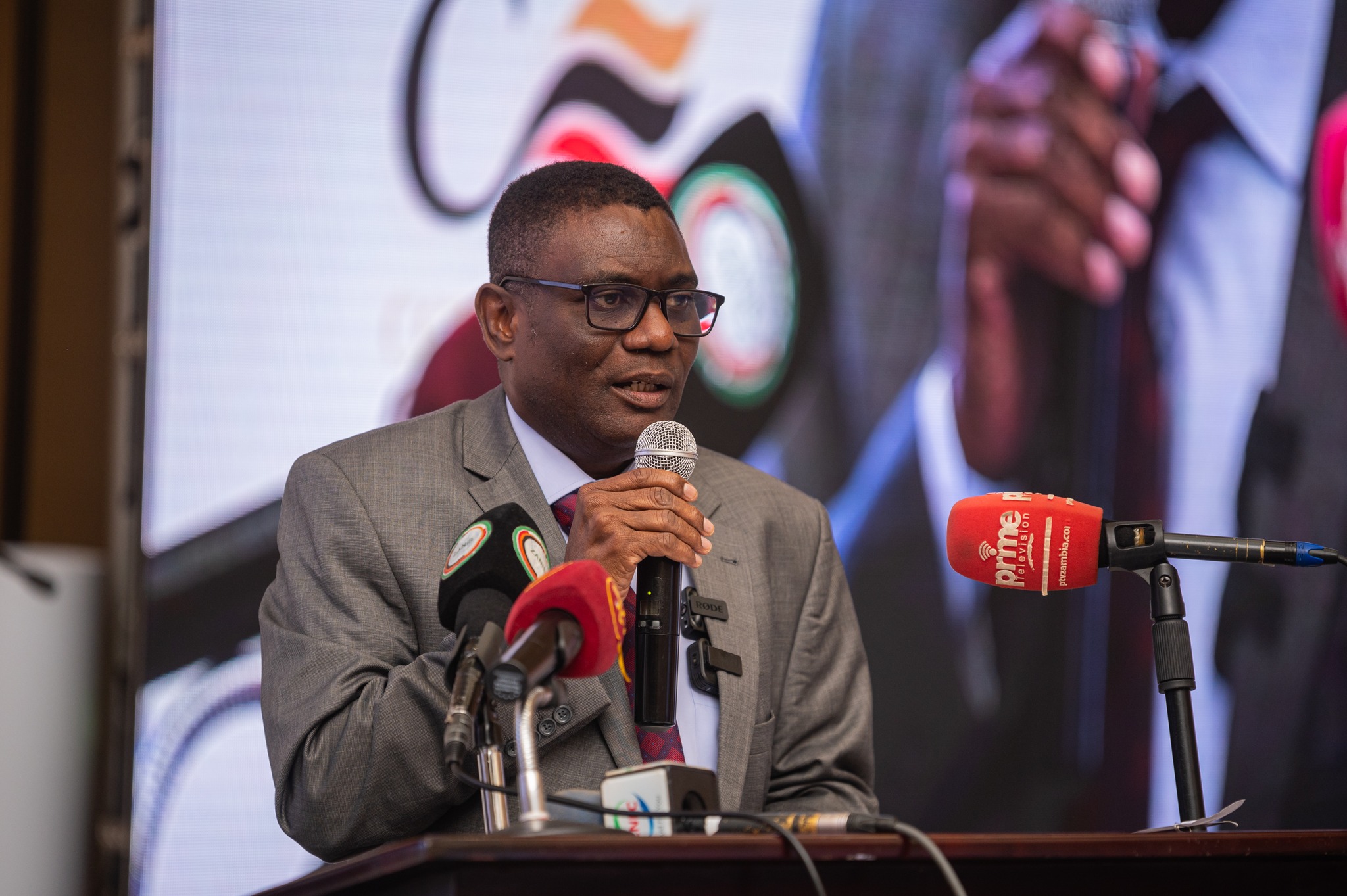
Justin Loongo, the chief executive of Zesco
Energy leaders convened in Lusaka this week for a high-level meeting of the Southern African Power Pool (SAPP), bringing the future of the region’s electricity systems firmly into focus.
Against a backdrop of rising power demand, ageing infrastructure and intensifying climate pressures, delegates emphasised the urgent need to strengthen cross-border transmission and distribution networks while accelerating investment in diverse and resilient energy sources.
The discussions highlighted how regional cooperation could help stabilise electricity supply across member states, as climate change continues to disrupt traditional hydropower generation and strain national grids.
Participants called for coordinated planning, expanded regional interconnectors and greater private sector participation to support a more flexible power system, capable of integrating renewable energy while ensuring reliable electricity for households and industries.
The meeting brought together 350 delegates from 17 power utilities from the 12-member SAPP, which was created by the SADC in 1995.
“As we reflect on the achievements of the past three decades, we must also recognise that the region now stands at a critical juncture,” Justin Loongo, the chief executive of Zambia’s state power utility, Zesco, told the meeting.
“Across Southern Africa, demand for electricity continues to grow at a rapid pace, driven by industrial development, population growth and expanding economic activity,” he said.
Power utilities in the region have increasingly embraced collaboration rather than operating in isolation, recognising that powering their countries requires closer coordination, cross-border power trading and joint planning.
The private sector wants SAPP to play a leading role in helping distribute power resources from surplus systems to deficit markets to power industrial activity by tapping into the region’s vast energy resources that include solar, hydro, geothermal and emerging gas potential.
“Some systems have surplus potential while others face persistent deficits,” said Padmore Muleya, the board chairperson of Kanona Power, which is developing the $100 million Zambia-Tanzania Interconnector. “The power pool exists precisely to bridge this imbalance.”
Muleya noted that stronger regional interconnections are essential to meeting rising electricity demand driven by expanding mining activity in Zambia, the Democratic Republic of Congo, Zimbabwe and the rest of the region.
Governments want utilities to prioritise stronger transmission networks and diversify power sources to ensure affordable electricity reaches citizens across the region.
“As governments, we challenge SAPP to embrace off-grid solutions that are grid-ready to allow seamless integration into national grids in the future,” said Zambia’s Minister of Energy, Makoze Chikote.
The Lusaka discussions feed into the broader continental ambition to expand electricity access to 300 million Africans by 2030 under the World Bank and African Development Bank–supported Mission 300 initiative, which aims to accelerate investment and regional cooperation to close Africa’s energy access gap.
According to data shared at the meeting, SAPP has contributed to reducing energy poverty, with average national access to electricity increasing from 23.9% in 2018 to 29% in 2024.

Facts Only

* Justin Loongo is the chief executive of Zesco.
* The Southern African Power Pool (SAPP) convened in Lusaka.
* There is rising power demand across Southern Africa.
* Ageing infrastructure and climate pressures are issues.
* Delegates emphasized strengthening cross-border transmission.
* Investment in diverse energy sources is needed.
* 350 delegates from 17 power utilities attended.
* The SAPP was created by the SADC in 1995.
* The Zambia-Tanzania Interconnector is valued at $100 million.
* National electricity access increased to 29% in 2024.
* SAPP has contributed to reducing energy poverty.

Executive Summary

The Southern African Power Pool (SAPP) is convening to address rising electricity demand and infrastructure challenges across 17 member states. The meeting highlights the urgent need for strengthened cross-border transmission networks, increased investment in diverse energy sources, and coordinated planning. Participants recognize the impact of climate change on hydropower and the importance of private sector involvement in integrating renewable energy. The discussion centers on expanding regional interconnectors and implementing grid-ready off-grid solutions to facilitate seamless integration. Progress has been made in increasing national electricity access, currently at 29% according to 2024 data, up from 23.9% in 2018. The overall goal is to contribute to the World Bank and African Development Bank’s Mission 300 initiative, aiming to expand electricity access to 300 million Africans by 2030.

Full Take

The article presents a cautiously optimistic, yet fundamentally reactive, account of the SAPP’s current state and future trajectory. It’s structured as a reassurance— a “critical juncture” acknowledges, but quickly pivots to emphasizing collaborative solutions and measurable progress (29% access), framing the situation as a solvable problem. The STEELMAN is the existing SAPP framework: a regionally coordinated effort to address specific vulnerabilities – primarily energy deficits exacerbated by climate change. The core pattern is one of managed crisis— attempting to avoid a narrative of systemic collapse by highlighting incremental gains. This deployment of “Padmore Muleya,” the Kanona Power board chair, with the $100M interconnector, is a classic Motte-and-Bailey (ARC-0043) technique: presenting a concrete project as proof of concept while avoiding direct discussion of broader systemic failures. The unstated assumption is that centralized coordination, driven by state-owned utilities like Zesco, is the optimal solution – a traditional, top-down approach. This echoes a longer history of development economics, where “solutions” are often tied to the authority and control of national institutions. The reference to the Mission 300 initiative (ARC-0018 – Scale of Ambition) introduces a large, externally-imposed metric, shaping the narrative around scale and ambition, but simultaneously obscuring the potential for more localized, bottom-up innovation. The call for “grid-ready off-grid solutions” reveals a subtle tension— acknowledging the limitations of centralized grids while simultaneously reinforcing the role of national utilities in managing and integrating these solutions. There is a clear system of implicit framing: the region is *not* facing a fundamental problem of energy access, but rather an opportunity to *expand* it. The inclusion of the 2018 data point subtly attempts to mitigate the perception of limited progress, while avoiding a direct admission of prolonged underperformance. The implications suggest a continued reliance on state-led infrastructure development, potentially overlooking more agile, decentralized approaches. A concerning element is the "Evasion" (ARC-0071) – the repeated focus on expanding existing networks, neglecting a deeper exploration of fundamental questions about energy consumption patterns, resource allocation, or the true drivers of demand. Counterstrike Scan: A bad actor could exploit this narrative by amplifying the "just asking questions" (ARC-0024) tactic, questioning the SAPP’s efficacy and highlighting the persistent deficits, while simultaneously advocating for a radical shift toward localized, community-based energy solutions – a deliberate disruption of the established pattern.

Sentinel — Likely Human

Confidence

This report details a Southern African Power Pool meeting focused on strengthening electricity infrastructure and expanding regional cooperation. While exhibiting a balanced, somewhat formulaic approach, the text provides a plausible overview of the event and its objectives.

Signals Detected
low severity: Sentence length variance is relatively consistent, though slightly leans towards longer sentences.
medium severity: The text employs a balanced 'both sides' framing without strongly advocating for any particular position.
low severity: Frequent use of ‘however’, ‘furthermore’, and ‘in addition’ creates a somewhat predictable argumentative structure.
low severity: Reliance on ‘experts say,’ ‘studies show’ without providing specific data points is common for this type of report.
Human Indicators
The text presents a reasonably detailed account of a business meeting, including attendee details, key discussion points, and strategic goals.
Quotes from individuals involved in the project are included, adding a degree of authenticity.