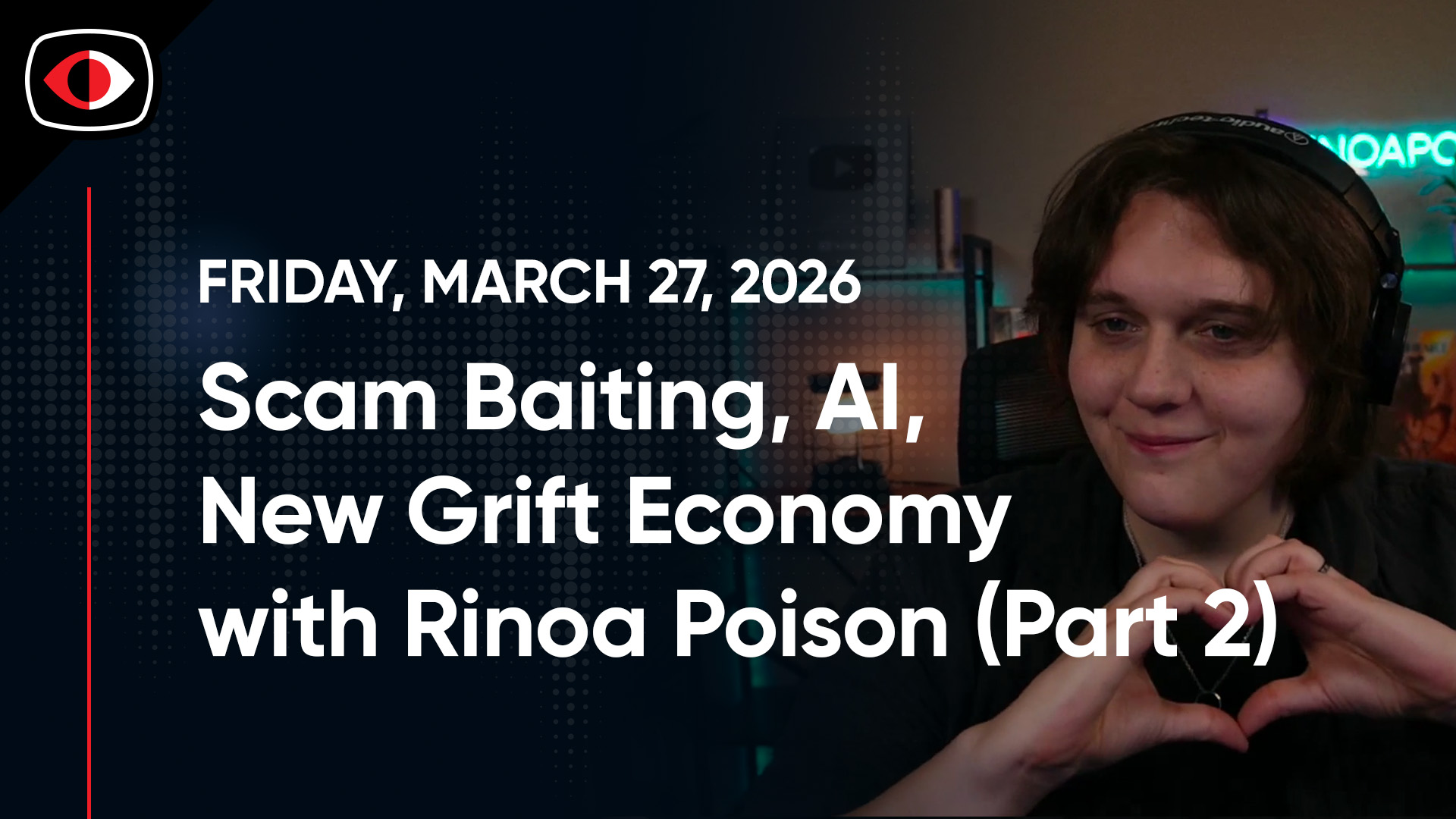
In this two-part interview, Rinoa Poison explores the mechanics of modern scams, the role of AI in making them more convincing, and the growing world of scam baiting. She also discusses the tactics, technical setups, and safety considerations behind wasting scammers’ time.
By calling scammers and wasting their time and efforts, Rinoa hopes to prevent them from scamming potential victims – while also providing a source of entertainment and education for audiences worldwide on her YouTube channel.
Her impressive ability to improvise and role play as characters while maintaining razor sharp wit and an ear for verbal and social cues has earned Rinoa a loyal and close-knit community.
Facts Only
Rinoa Poison is a content creator who specializes in scam baiting.
She conducts a two-part interview on modern scams, AI’s role in scams, and scam baiting.
Scam baiting involves calling scammers to waste their time and resources.
Rinoa’s goal includes preventing scammers from targeting potential victims.
She shares her scam baiting activities on her YouTube channel for entertainment and education.
Rinoa is known for improvising and role-playing characters during interactions with scammers.
Her skills include sharp wit and an ability to interpret verbal and social cues.
She has built a loyal and close-knit community around her content.
The interview discusses tactics, technical setups, and safety considerations in scam baiting.
Rinoa’s work aims to raise awareness about scams while providing entertainment.
Executive Summary
Full Take
The narrative around Rinoa Poison’s scam baiting presents a compelling case of grassroots digital activism, where individuals leverage creativity and technology to counter fraud. At its strongest, this story highlights the agency of content creators in disrupting malicious actors, using humor and education as tools for public good. Rinoa’s improvisational skills and community engagement demonstrate how entertainment can serve a protective function, turning the tables on scammers by consuming their time and exposing their methods.
However, the broader implications warrant scrutiny. Scam baiting, while cathartic and informative, operates within a reactive framework—it addresses symptoms rather than root causes. The reliance on individual vigilantes also raises questions about scalability and systemic solutions. Who bears the cost of this informal labor? While Rinoa’s efforts may deter some scammers, the underlying economic and technological conditions enabling fraud remain unchallenged. Additionally, the performative aspect of scam baiting could inadvertently glamourize the cat-and-mouse dynamic, potentially desensitizing audiences to the real harm scams inflict on vulnerable populations.
Rooted in the paradigm of digital self-defense, this narrative assumes that awareness and mockery are sufficient deterrents. Yet history shows that fraud evolves alongside countermeasures, often outpacing individual efforts. The unstated assumption here is that public shaming and time-wasting can meaningfully disrupt criminal enterprises—a claim that may overestimate the impact of decentralized resistance.
For human agency, the implications are mixed. On one hand, Rinoa’s work empowers viewers to recognize scams and respond with confidence. On the other, it risks shifting responsibility from institutions to individuals, absolving platforms and governments of their role in combating fraud. Second-order consequences might include scammers adapting their tactics to avoid baiters, or even retaliating against those who expose them.
Bridge questions to consider: How might scam baiting complement—or undermine—institutional efforts to combat fraud? What ethical boundaries should govern interactions with scammers, given the potential for escalation? If AI makes scams more convincing, can human-led countermeasures keep pace, or do we need systemic interventions?
Counterstrike scan: A coordinated influence campaign exploiting this narrative might frame scam baiting as a panacea, deflecting attention from policy failures or corporate negligence in cybersecurity. It could amplify individual heroism while downplaying structural solutions, fostering a "do-it-yourself" security culture that benefits platforms by reducing their accountability. However, the actual content does not align with this pattern—it presents scam baiting as one tool among many, without dismissing broader systemic needs.
Patterns detected: none