Pakistan's double-game: Mediator for US-Iran but villain for Afghanistan?
US President Donald Trump has said that Iran had sought a seven-day pause on American strikes targeting its energy infrastructure, but he decided to extend the window to 10 days. Meanwhile, Pakistan has emerged as a mediator in the ongoing Middle East tensions.
Trending Photos
Pakistan has emerged as a mediator in the ongoing US-Iran conflict, while its own tensions with Afghanistan remain unresolved.
According to IANS, reports suggest that Islamabad is facilitating backchannel talks between Washington and Tehran to avert a broader regional war.
Meanwhile, US President Donald Trump on Thursday (local time) said that Iran had sought a seven-day pause on American strikes targeting its energy infrastructure, but he decided to extend the window to 10 days, pushing the deadline to April 6.
As per ANI, speaking to Fox News, Trump said that Iran had approached his administration requesting more time as part of the ongoing diplomatic engagement between the two sides amid the conflict.
"They said to me very nicely, through my people, 'Could we have more time?' Because we're talking about tomorrow night, which is pretty quick, and if they don't do what they have to do, I will knock out their power plants," Trump stated.
Elaborating on his decision, Trump added, "They asked for seven, and I said, 'I'm going to give you 10,' because they gave me ships."
Trump had announced a pause in strikes on Iran's energy infrastructure following "productive" indirect diplomacy routed through Pakistan, alongside Turkiye and Egypt.
Islamabad thus intends to position itself as the lead intermediary, with proposals to host direct talks involving government representatives from the US and Iran.
Pakistan-Afghanistan tensions
It is noteworthy that Pakistan's eagerness to mediate in the US-Iran war, despite its ongoing conflict with Afghanistan, stems from urgent strategic, economic, and reputational needs.
This move could allow Islamabad to project itself as a responsible global player amid its own regional crisis.
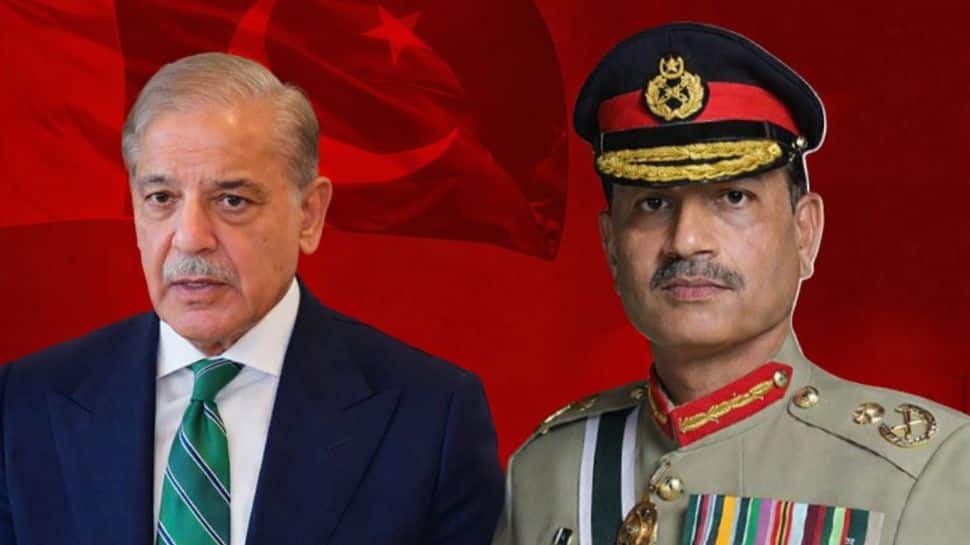
Pakistan Army Chief Asim Munir and PM Shehbaz Sharif have reportedly presented Islamabad as a neutral venue.
Meanwhile, Pakistan and Afghanistan are witnessing escalating tensions, with airstrikes hitting several Afghan cities, including the capital, killing many.
Recently, it reportedly killed around 400 individuals in a Kabul drug rehabilitation centre bombing.
The Pakistan-Afghanistan conflict roots in the disputed over-2,600-km Durand Line border, which Kabul rejects as a colonial division of Pashtun lands.
Pakistan, as per IANS, accuses the Taliban of failing 2021 Doha pledges to curb terror groups allegedly using Afghan land, prompting reprisals like air strikes on perceived militant infrastructure.
A brief clash in 2025 killed 17 civilians before a Qatar-Turkiye mediated ceasefire in October, but fighting resumed.
The breakdowns in Afghanistan-Pakistan ties stem from mistrust and sovereignty claims, leaving hundreds dead in weeks of fighting.
Thus, Pakistan's mediator role in the Iran conflict reveals a diplomacy of desperation of the Shehbaz government. Islamabad’s role as a mediator in US-Iran tensions cannot wash away its sins of harbouring terrorists and perpetrating attacks against innocents in Afghanistan.
(with agencies' inputs)
Also check- From mediator to betrayer: Iran furious over Pakistan's 'double game' in Hormuz
Stay informed on all the latest news, real-time breaking news updates, and follow all the important headlines in india news andworld News on Zee News.
Live Tv
Facts Only
Actors: US President Donald Trump, Iran, Pakistan, Afghanistan Taliban, Turkey, Egypt
Events: US strikes on Iran's energy infrastructure, diplomatic engagements between the US and Iran, air strikes in Afghan cities, bombing of a Kabul drug rehabilitation center
Dates: Unspecified (recent)
Locations: US, Iran, Pakistan, Afghanistan, Turkey, Egypt
Executive Summary
Full Take
Patterns detected: ARC-0043 Motte-and-Bailey, ARC-0024 Ambiguity. The article presents Pakistan's role as a mediator in the US-Iran conflict while highlighting its ongoing tensions with Afghanistan. This dual portrayal can be seen as a motte-and-bailey argument: Pakistan is cast as a responsible global player (motte) in one context but accused of harboring terrorists and perpetrating attacks against innocents (bailey) in another. The article's ambiguous framing leaves room for readers to question Pakistan's true intentions, which could be seen as an attempt to manipulate perceptions.
Steelman: Presented factually, the article accurately reports on Pakistan's role as a mediator in the US-Iran conflict and its ongoing tensions with Afghanistan. The article does not make definitive statements about Pakistan's intentions or character.
Root Cause: The article suggests that Pakistan's diplomatic efforts are driven by strategic, economic, and reputational needs amid its own regional crisis. However, the underlying paradigm is not explicitly stated.
Implications: If Pakistan successfully mediates a resolution to the US-Iran conflict, it could potentially improve its international standing and economic prospects. On the other hand, continued tensions with Afghanistan could further destabilize the region and undermine Pakistan's efforts at global diplomacy. The costs and benefits of these outcomes are not fully explored in the article.
Bridge Questions: What are Pakistan's true intentions in facilitating talks between the US and Iran? How does Pakistan's role as a mediator in the Middle East conflict affect its relationships with other regional powers, particularly Afghanistan? How can diplomacy be used to address ongoing tensions along the Durand Line border?
Counterstrike Scan: The article does not provide evidence of a coordinated influence campaign. However, it is possible that such a campaign could involve efforts to portray Pakistan as a responsible global player while highlighting its perceived failures in Afghanistan. A hypothetical attack would aim to undermine Pakistan's reputation and legitimacy in both regional and global contexts.
Sentinel — Human
The article shows signs of human authorship with a varying sentence length, clear argument, and specific attribution to sources. However, there's still a small possibility it could be synthetic.