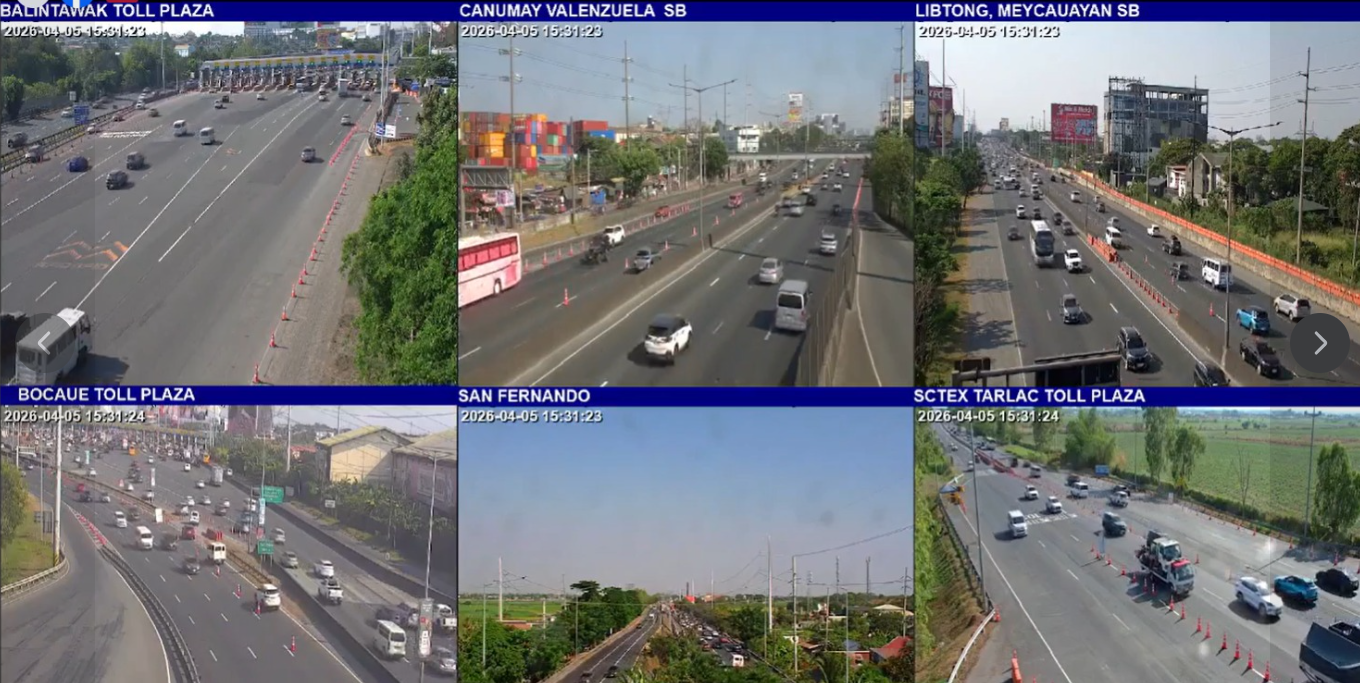
No major incidents reported during Holy Week — PNP
The Philippine National Police (PNP) on Sunday said the nationwide observance of Holy Week remained generally peaceful, with no major incidents recorded.
“Safe travel of millions of our kababayan remains our top priority. We remain on full alert status, and our personnel on the ground are ready to respond to any peace and order and public safety concerns,” said PNP chief Police General Jose Melencio Nartatez Jr., as authorities anticipate the influx of passengers returning from the break.
The PNP said it deployed 98,636 officers nationwide to provide security during the Lenten period.
Personnel were stationed in churches, tourist destinations, major thoroughfares, transportation hubs, and other areas of convergence.
The PNP also reminded motorists to stay calm during long drives to avoid road rage incidents.
Drivers were likewise advised to check their vehicles before traveling and to avoid driving under the influence of alcohol or when unwell.
“We will continue to be vigilant and responsive until every traveler has safely returned home. The safety and well-being of our kababayan remain a priority,” Nartatez said.—MCG, GMA News
Facts Only
The Philippine National Police (PNP) reported no major incidents during Holy Week.
PNP Chief Police General Jose Melencio Nartatez Jr. stated that safe travel is a top priority.
The PNP deployed 98,636 officers nationwide for security during the Lenten period.
Personnel were stationed in churches, tourist destinations, major thoroughfares, and transportation hubs.
The PNP advised motorists to stay calm during long drives to avoid road rage.
Drivers were urged to check their vehicles before traveling.
Motorists were warned against driving under the influence of alcohol or when unwell.
Authorities anticipate an influx of passengers returning from the holiday break.
The PNP pledged continued vigilance until all travelers return home safely.
Executive Summary
The Philippine National Police (PNP) reported a peaceful Holy Week observance nationwide, with no major incidents recorded. Over 98,000 officers were deployed to secure churches, tourist destinations, transportation hubs, and major roads. PNP Chief Police General Jose Melencio Nartatez Jr. emphasized that ensuring the safe travel of millions of citizens remains a top priority, with personnel on full alert to address any public safety concerns. The PNP also advised motorists to remain calm during long drives, avoid road rage, and refrain from driving under the influence of alcohol or while unwell. Authorities anticipate a surge in passengers returning from the holiday break and have pledged continued vigilance until all travelers reach their destinations safely.
The deployment reflects a proactive approach to maintaining peace and order during a period of high mobility and religious observance. While the PNP’s statement highlights successful security measures, it also underscores ongoing challenges such as traffic management and public compliance with safety guidelines. The absence of major incidents suggests effective coordination, though the full impact of these measures will be assessed as the post-holiday travel period concludes.
Full Take
The PNP’s report presents a narrative of successful security operations during Holy Week, emphasizing preparedness and public safety. At its strongest, this narrative highlights proactive measures—large-scale deployments, strategic positioning of personnel, and public advisories—to mitigate risks during a high-traffic period. The focus on preventing road rage and impaired driving also reflects a nuanced understanding of behavioral risks beyond traditional security threats.
However, the absence of reported incidents does not necessarily equate to the absence of risks. The PNP’s framing leans on authority and institutional credibility, which, while reassuring, could obscure underlying vulnerabilities. For instance, the reliance on visible policing may deter some threats but does little to address systemic issues like traffic infrastructure or public compliance with safety norms. The advisory against road rage, while practical, also subtly shifts responsibility onto individual motorists rather than examining broader factors like road conditions or enforcement consistency.
Historically, such narratives echo the "security theater" paradigm, where visible measures create perceptions of safety without necessarily addressing root causes. The PNP’s emphasis on vigilance and readiness aligns with a reactive rather than preventive security model, which may leave gaps in long-term risk mitigation.
For human agency, this raises questions about the balance between state-led security and community resilience. Who bears the cost of maintaining such large-scale deployments, and how sustainable is this approach? Second-order consequences could include public desensitization to security presence or over-reliance on policing rather than systemic improvements.
Bridge questions:
How does the PNP measure the effectiveness of its Holy Week security operations beyond the absence of major incidents?
What role do local communities play in supplementing state-led security efforts during high-risk periods?
Would a shift toward infrastructure and behavioral education (e.g., driver training) yield more sustainable safety outcomes than temporary deployments?
Counterstrike scan: If this were part of an influence campaign, the playbook would emphasize institutional authority to foster public trust while downplaying systemic weaknesses. The actual content aligns with this pattern but does not exhibit overt manipulation—it is a standard institutional report. No concerning structural alignment detected.
Patterns detected: none
Sentinel — Human
Although some stylometric signals are present, the article's coherence and personal voice suggest it is likely written by a human.