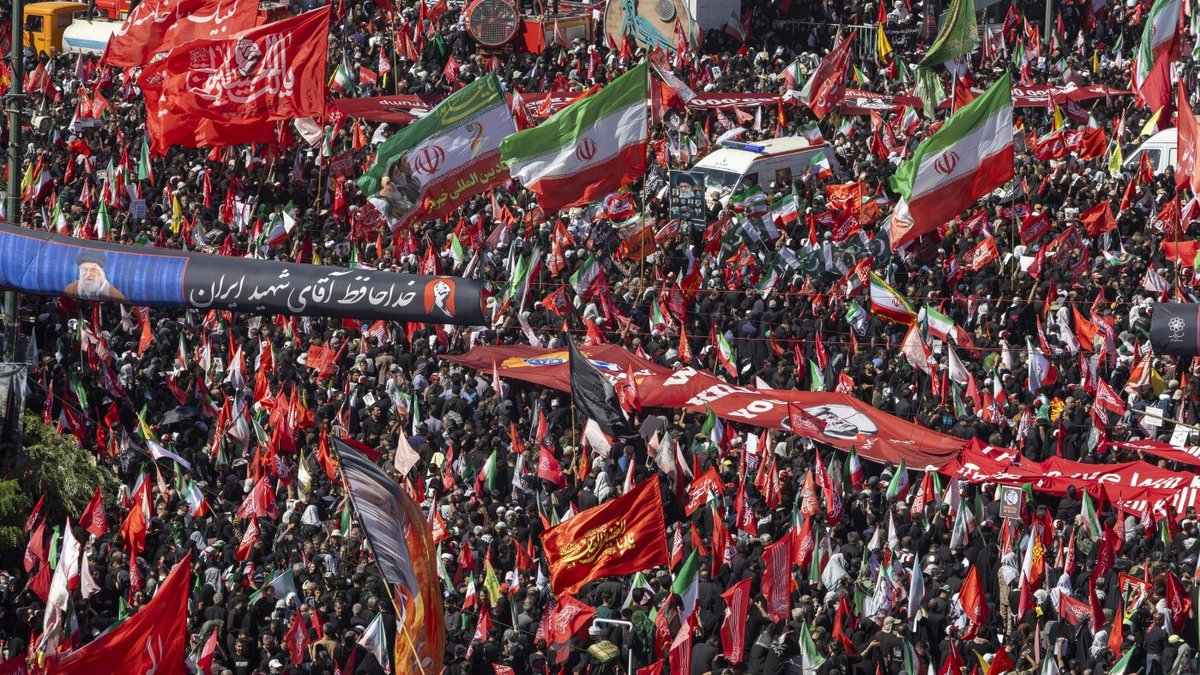
U.S.-Iran fighting appears to pause. And, life inside Israel's military zones in Gaza
Iran and US Pause Fighting Again, TPS Work Permits, July 4th Teen Death Investigation
Good morning. You're reading the Up First newsletter. Subscribe here to get it delivered to your inbox, and listen to the Up First podcast for all the news you need to start your day.
Today's top stories
After two days of intense strikes, fighting between the U.S. and Iran appears to have paused. The U.S. says it hit 170 targets in Iran. Iran says it targeted U.S. military bases in the Gulf. The fighting coincided with a weeklong funeral for former Supreme Leader Ayatollah Ali Khamenei and four of his family members killed on the first day of the conflict.
- 🎧 Tensions remain high in the region, NPR's Carrie Kahn, who is in Tel Aviv, tells Up First. In the recent series of attacks, Jordan intercepted incoming fire from Iran. Iran yesterday threatened the United Arab Emirates. Eyal Zamir, the Israeli armed forces chief of staff, said that the country is prepared if fighting resumes.
Thousands of Haitian and Syrian immigrants with Temporary Protected Status (TPS) are at risk of losing their ability to work in the U.S. due to a recent Supreme Court ruling. The court gave the Trump administration the green light to revoke TPS for more than 300,000 people. TPS allows immigrants to legally reside in the United States when conditions in their countries make it unsafe to return.
- 🎧 Many immigrants' work permits are tied to their TPS and their driver's licenses are linked to those permits, says reporter Kathryn Mobley of NPR network station WYSO. Reporting from Springfield, Ohio, home to a large Haitian community, Mobley says some immigrants are staying home, while others are reaching out for help. Local nonprofits are encouraging people to apply for asylum, though the process is lengthy and offers no guarantee of protection from deportation. Some Springfield residents say they have already lost manufacturing jobs following the ruling.
President Trump dismissed the remaining members of the bipartisan U.S. Election Assistance Commission, drawing criticism from Democrats and voting rights advocates. A White House official said that Trump can take this action due to the Slaughter decision. Last month, in the Slaughter Case, the U.S. Supreme Court ruled that a president has greater flexibility in removing members of independent federal agencies.
The U.S. brokered a ceasefire between Israel and Hamas last year, but nine months later, that agreement has stalled. The deal called for an Israeli withdrawal from Gaza, new governance in Gaza and Hamas's disarmament. Instead, Israeli forces have expanded their control from about half of Gaza at the start of the ceasefire to nearly 70%, according to Israeli officials and NPR's analysis. Israeli Prime Minister Benjamin Netanyahu says that the military is tightening its grip to surround Hamas. For Palestinians, that has meant more displacement, shrinking access to aid and another cycle of grief. More than 1,000 Palestinians have been killed since the ceasefire took effect, according to Gaza's Health Ministry. In a new report, NPR's Anas Baba and Aya Batrawy document what daily life looks like for families trapped between expanding military zones, with shelling at night, gunfire by day and nowhere safe to go.
Deep dive
Nominations opened yesterday in the Labour Party election to succeed Keir Starmer as the U.K.'s next prime minister. Former Greater Manchester Mayor Andy Burnham, 56, is widely expected to be the next person to take on the role. Analysts say that Burnham's upbringing and experience as mayor have influenced his politics and could help Labour win back working-class voters who have shifted toward right-wing parties in recent years. Here are some moments that have defined his career so far:
- ➡️ In 2009, as secretary of state for culture, media, and sports, Burnham launched an inquiry into the 1989 Hillsborough disaster after victims' families challenged the official account. The inquiry later found that police failures, not the victims, who were labeled as hooligans, caused the disaster.
- ➡️ Burnham entered Parliament at age 31, serving 16 years and ran twice for Labour leader before being elected as mayor of Greater Manchester in 2017. There he gained a national reputation.
- ➡️ During the COVID pandemic in 2020, Burnham gained national attention after clashing with the government over new lockdown restrictions during a live television news conference.
Weekend picks
Check out what NPR is watching, reading and listening to this weekend:
🍿 Movies: Moana returns in Disney's new live-action remake, featuring Dwayne Johnson as Maui and Catherine Laga'aia as Moana. The film includes a new song by Lin-Manuel Miranda.
📺 TV: Hulu's Alice and Steve is a six-part British comedy about two longtime best friends in their 50s who turn against each other when Steve starts a relationship with Alice's 26-year-old daughter.
📚 Books: Ten new book releases for July include titles by Colson Whitehead, Sigrid Nuñez, Daniel Mason and Nathaniel Rich. Plus, award-winning journalists deliver some nonfiction reads.
🎵 Music: NPR Music's New Music Friday podcast is highlighting their favorite albums released today, featuring artists such as Jack White, Baby Rose and Suki Waterhouse.
🎭 Theater: The Black Opera Project is commissioning three original operas that celebrate and showcase the Black American experience. The first production, Lalovavi, will make its world debut this week in Cincinnati. (via WVXU)
3 things to know before you go
- Former U.S. Olympic canoeist David Hearn pleaded not guilty on Thursday to a charge of destruction of property of the Lincoln Memorial Reflecting Pool in D.C. Superior Court.
- Mountain bike enthusiasts are working on making The Velomont, a multi-use trail that will span the length of Vermont, user-friendly for everyone.
- The Trump administration is proposing changes to Biden-era environmental rules aimed at reducing pollution from heavy-duty vehicles, including buses and large trucks.
This newsletter was edited by Majd Al-Waheidi.
Facts Only
* Fighting between the U.S. and Iran appears to have paused after two days of strikes.
* The U.S. states it hit 170 targets in Iran.
* Iran states it targeted U.S. military bases in the Gulf.
* The fighting coincided with a weeklong funeral for former Supreme Leader Ayatollah Ali Khamenei and four family members killed on the first day of conflict.
* Jordan intercepted incoming fire from Iran during recent attacks.
* Iran threatened the United Arab Emirates yesterday.
* Eyal Zamir, Israeli armed forces chief of staff, stated the country is prepared if fighting resumes.
* A Supreme Court ruling gave the Trump administration the green light to revoke TPS for more than 300,000 people.
* The U.S. brokered a ceasefire between Israel and Hamas last year, which has stalled nine months later.
* Israeli forces expanded control over Gaza from about half at the ceasefire start to nearly 70%.
* More than 1,000 Palestinians have been killed since the ceasefire took effect according to Gaza's Health Ministry.
Executive Summary
Fighting between the U.S. and Iran appears to have paused following two days of intense strikes, with the U.S. reporting 170 targets hit in Iran and Iran reporting targeting U.S. military bases in the Gulf. This cessation coincided with a weeklong funeral for former Supreme Leader Ayatollah Ali Khamenei and four of his family members who died during the initial conflict. Tensions remain high regionally, evidenced by Jordan intercepting incoming fire from Iran and Iran threatening the United Arab Emirates. The Israeli armed forces chief of staff stated that Israel is prepared if fighting resumes.
A separate development concerns immigration status; a recent Supreme Court ruling gave the Trump administration authorization to revoke Temporary Protected Status (TPS) for over 300,000 people. TPS allows immigrants to reside legally when conditions in their home country make return unsafe, and many work permits and driver's licenses are linked to this status. Reports from places like Springfield, Ohio, show that some immigrants are staying, while others seek asylum, with local nonprofits encouraging applications despite the lengthy process. Furthermore, an agreement brokered between Israel and Hamas regarding a ceasefire has stalled; Israeli forces expanded control over Gaza from approximately half of the territory at the start of the deal to nearly 70%. This situation has resulted in increased displacement for Palestinians and reported casualties since the ceasefire began.
Full Take
The narrative presents a juxtaposition of immediate geopolitical conflict, complex international legal and immigration crises, and protracted localized territorial control. The pause in U.S.-Iran fighting serves as a momentary feature against a backdrop of systemic instability, suggesting that high-level military engagements can be interrupted by non-military events, such as religious mourning. This signals that state conflicts operate within broader, slower political and social systems, where international tensions persist regardless of specific kinetic actions.
The immigration and refugee situation highlights a tension between established legal frameworks (like TPS) and shifting executive authority, where judicial decisions directly impact fundamental rights to work and residency for vulnerable populations. The link between the Supreme Court's ruling on executive power and potential revocation of status introduces a critical mechanism where political action translates into tangible, immediate consequences for individuals based on precarious legal standing.
The prolonged stalemate in the Gaza conflict demonstrates a pattern where negotiated agreements fail to yield sustained territorial or humanitarian outcomes, leading instead to intensified physical control, displacement, and ongoing loss of life. The focus shifts from achieving peace to managing the resulting fragmentation—where expanded military zones create conditions of daily trauma for civilians trapped between conflicting powers. A key implication is that the narrative of conflict is not linear; it is a continuous cycle where legal status, territorial control, and security negotiations are interwoven consequences of high-stakes political maneuvering.
Bridge Questions: How do shifts in international kinetic action correlate with domestic policy changes affecting immigration status? What mechanisms exist for ensuring that humanitarian frameworks remain prioritized during periods of intense geopolitical tension? If negotiated agreements frequently dissolve into expanded military control, what long-term strategies can address the root causes of territorial disputes rather than just managing the symptoms of conflict?
Sentinel — Human
The text reads like a curated newsletter synthesizing diverse news items rather than raw, unedited reporting, displaying characteristics of human editorial selection and framing.