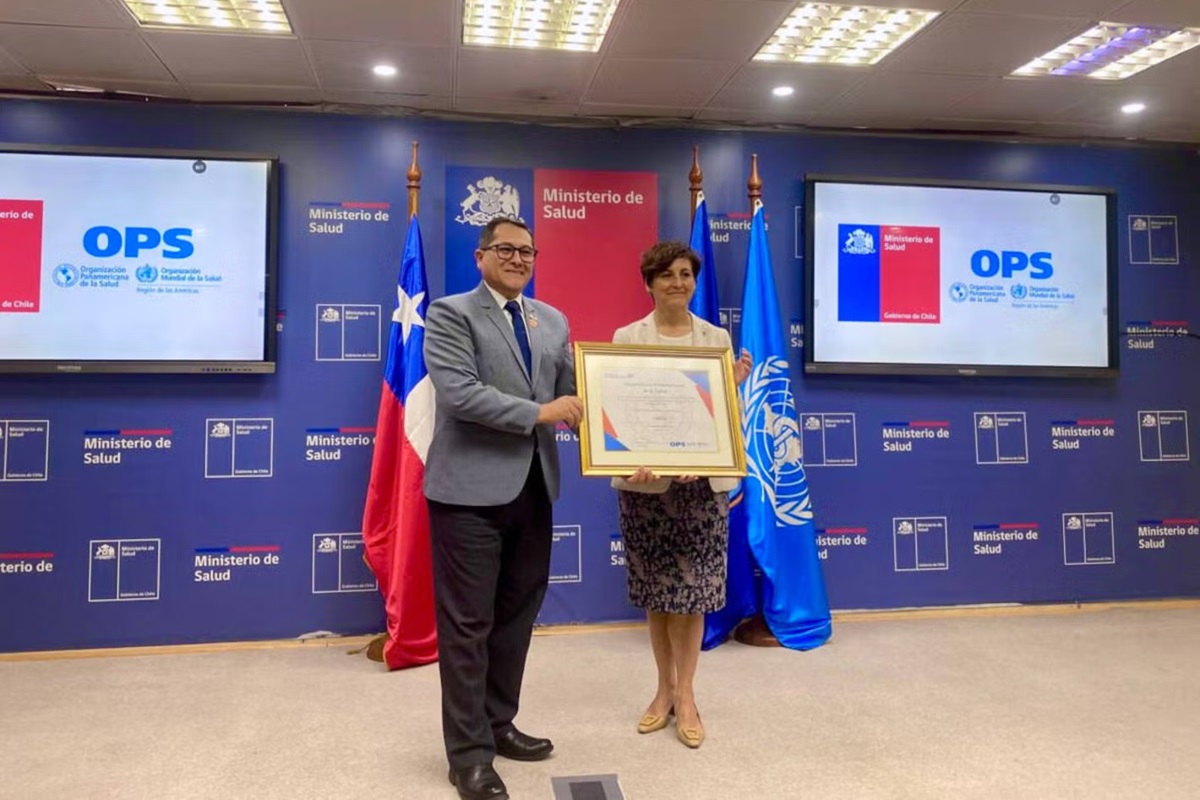
The World Health Organization (WHO), together with the Pan American Health Organization (PAHO), congratulates Chile for becoming the first country in the Americas – and the second globally – to be officially verified as having eliminated leprosy disease.
Leprosy (Hansen disease) was historically recorded in Chile at the end of the 19th century on Rapa Nui (Easter Island). The disease was limited in mainland Chile, with sporadic introductions, contained through isolation and treatment measures in the Island, where the last secondary cases were managed by the late 1990s.
Since then, Chile has not reported any locally acquired case of leprosy for more than 30 years, with the last locally acquired case detected in 1993. However, the disease was never removed from the country’s public health agenda; it has remained a notifiable condition, monitored through mandatory reporting, integrated surveillance, and continuous clinical readiness across the health system.
“This landmark public health achievement is a powerful testament to what leadership, science, and solidarity can accomplish,” said Dr Tedros Adhanom Ghebreyesus, WHO Director-General. “Chile’s elimination of leprosy sends a clear message to the world: with sustained commitment, inclusive health services, integrated public health strategies, early detection and universal access to care, we can consign ancient diseases to history.”
The verification recognizes more than three decades of sustained public health action, robust surveillance, long-term political commitment, and a health system that has remained vigilant even in the absence of local transmission.
“Chile’s achievement demonstrates that eliminating leprosy is achievable and requires building strong systems that can detect, respond to, and provide comprehensive care for people affected by the disease, including those living with chronic disabilities,” said PAHO Director Dr Jarbas Barbosa. “Being the first country in the Americas to be confirmed as eliminating leprosy sends a powerful message to the Region – that diseases strongly linked to groups living in vulnerable conditions can be eliminated, contributing to interrupt the vicious circle between disease and poverty.”
At the request of Chile’s Ministry of Health, PAHO and WHO convened an independent expert panel in 2025 to assess whether elimination had been achieved and could be sustained over time. The panel conducted a thorough assessment, reviewing epidemiological data, surveillance mechanisms, case management protocols, and sustainability plans. Its findings confirmed the absence of local transmission and validated Chile’s capacity to detect and respond to future cases occurring among the non-autochthonous population.
“This is very good news and a source of great pride for our country. Chile has received verification of the elimination of leprosy disease, becoming the first country in the Americas and the second globally to achieve this recognition,” said Ximena Aguilera, Chile’s Minister of Health. “This milestone reflects decades of sustained public health efforts, including prevention strategies, early diagnosis, effective treatment, continuous follow-up, and the commitment of health teams across the country. It also reaffirms our responsibility to maintain active surveillance and ensure respectful, stigma-free care for all.”
Sustained training, surveillance and holistic care in a low-incidence setting
Between 2012 and 2023, Chile reported 47 cases nationwide, none of which were locally acquired.
Chile’s integrated model ensures early detection and comprehensive care: primary care centers serve as the entry point for suspected cases, with timely referrals to specialized dermatology services for diagnosis, treatment, and follow-up. Clinicians receive training aligned with WHO's Towards zero leprosy strategy. The system prioritizes early intervention, disability prevention, and holistic care, including physiotherapy and rehabilitation services, ensuring that anyone affected by leprosy receives continuous support for both acute and long-term health needs to promote full recovery and social inclusion.
A milestone for the Region of the Americas
Chile's accomplishment paves the way for other nations, illustrating the impact of political will, cross-sector collaboration, and adaptive planning in low-incidence settings.
Since 1995, PAHO, in coordination with WHO, has ensured uninterrupted access to multidrug therapy (MDT) for countries in the Americas, including Chile. This continuous supply has been made possible with the support of The Nippon Foundation (1995–2000) and Novartis (since 2000), which have provided MDT free of charge through direct agreements with WHO. This reliable access, combined with national supply systems, has been essential for curing patients, preventing disability, and interrupting transmission.
PAHO has also supported Chile in aligning surveillance with international standards, strengthening laboratory capacity, and maintaining clinical expertise in a low-incidence context, where many health professionals may never encounter a case during their careers.
Ensuring access and coverage for everyone
Chile’s elimination of leprosy has been achieved within a broader legal and social framework that protects human rights, promotes inclusion, and prevents discrimination. National legislation guarantees equal access to health care, social protection, and disability services, ensuring that people affected by leprosy receive care without stigma or exclusion.
Chile’s mixed public–private health system, with strong regulatory oversight, further strengthens equitable access, including for migrants and other vulnerable populations.
Sustaining elimination
Aligned with WHO’s Towards zero leprosy strategy and PAHO’s Disease Elimination Initiative, Chile’s experience demonstrates that elimination is not defined solely by the absence of disease, but by a sustained health system capable of detecting, responding to, and providing holistic care whenever a case appears.
Moving into the post-elimination phase, Chile is encouraged to continue reporting to WHO, maintain sensitive surveillance, and ensure that clinical expertise is retained for future sporadic cases as well as any cases acquired outside the country. The verification panel also recommended formally designating a referral centre and leveraging WHO Academy’s online training for health workers and staff, strengthening long-term capacity and preparedness.
Note to editors
Leprosy
Leprosy, also known as Hansen disease, is a chronic infectious disease caused by the bacterium Mycobacterium leprae. It primarily affects the skin, peripheral nerves, upper respiratory tract mucosa, and eyes. If untreated, it can lead to permanent nerve damage, disabilities, and social stigma. However, leprosy is fully curable with multidrug therapy, and early detection prevents complications.
As a neglected tropical disease, leprosy persists in over 120 countries, with more than 200 000 new cases annually worldwide.
PAHO's Disease Elimination Initiative aims to eliminate leprosy, other communicable diseases and related conditions in the Americas by 2030, through strengthened surveillance, access to treatment, and community engagement.
Neglected tropical diseases
Neglected tropical diseases are a diverse group of 21 conditions associated with devastating health, social and economic consequences. They affect one billion people globally and their burden is mainly prevalent among impoverished communities in tropical areas.
Public health targets for the control, elimination and eradication of these conditions have been set in the road map for neglected tropical diseases 2021–2030. In 2025 alone, 9 countries were validated, verified or certified by WHO for achieving these targets. Following the successful verification of elimination of leprosy disease, Chile becomes the sixty-first country globally and the sixth in the Americas to have eliminated at least one neglected tropical disease, together with Brazil, Colombia, Ecuador, Guatemala, and Mexico. Chile is the second country in the world after the Hashemite Kingdom of Jordan to have achieved elimination of leprosy.
Editor's note
On 6 March 2026, a correction was made to the 12th paragraph of this news release as noted below.
The paragraph in the original news release read:
Since 1995, PAHO, in coordination with WHO, has provided multidrug therapy (MDT) free of charge to countries in the Americas, including Chile. This uninterrupted access to treatment, combined with national supply systems, has been essential to curing patients, preventing disability, and interrupting transmission.
This was changed to:
Since 1995, PAHO, in coordination with WHO, has ensured uninterrupted access to multidrug therapy (MDT) for countries in the Americas, including Chile. This continuous supply has been made possible with the support of The Nippon Foundation (1995–2000) and Novartis (since 2000), which have provided MDT free of charge through direct agreements with WHO. This reliable access, combined with national supply systems, has been essential for curing patients, preventing disability, and interrupting transmission.
Facts Only
Chile is the first country in the Americas and the second globally to be verified as having eliminated leprosy.
The verification was conducted by an independent expert panel convened by WHO and PAHO in 2025.
The last locally acquired case of leprosy in Chile was detected in 1993.
Chile reported 47 cases between 2012 and 2023, none of which were locally acquired.
Leprosy was historically recorded in Chile on Rapa Nui (Easter Island) in the late 19th century.
Chile's health system includes mandatory reporting, integrated surveillance, and specialized dermatology services for leprosy.
PAHO and WHO have ensured uninterrupted access to multidrug therapy (MDT) for leprosy treatment since 1995.
The Nippon Foundation (1995–2000) and Novartis (since 2000) have provided MDT free of charge through agreements with WHO.
Chile's elimination effort includes training for clinicians aligned with WHO's Towards zero leprosy strategy.
National legislation in Chile guarantees equal access to healthcare and social protection for people affected by leprosy.
Chile's mixed public-private health system strengthens equitable access, including for migrants and vulnerable populations.
The verification panel recommended maintaining surveillance and designating a referral center for future cases.
Executive Summary
Full Take
**STEELMAN:** Chile's elimination of leprosy is a landmark public health achievement, demonstrating that sustained political commitment, robust surveillance, and equitable healthcare access can eradicate even ancient diseases. The verification process was rigorous, involving independent experts who confirmed the absence of local transmission and the country's capacity to detect and respond to future cases. Chile's model—integrating primary care with specialized services, ensuring stigma-free treatment, and maintaining clinical readiness—offers a blueprint for other nations. The role of international organizations like WHO and PAHO, along with private-sector support for MDT, highlights the importance of global cooperation in disease elimination.
**PATTERN SCAN:** The narrative is largely factual and celebratory, focusing on Chile's success without overt manipulation. However, the framing of leprosy as an "ancient disease" consigned to history could subtly reinforce a narrative of progress that downplays ongoing challenges in other regions. The emphasis on political will and systemic strength might also imply that failure to eliminate leprosy elsewhere stems from a lack of commitment, potentially oversimplifying complex socio-economic barriers. No overt distortion or bad faith is detected, but the narrative leans toward an optimistic, solutionist tone that could obscure persistent global disparities.
**ROOT CAUSE:** The paradigm driving this narrative is one of public health triumphalism, where disease elimination is framed as achievable through technical and political solutions. Underlying assumptions include the efficacy of top-down health systems, the reliability of international aid, and the malleability of social stigma through policy. Historically, this echoes the mid-20th-century optimism around disease eradication (e.g., smallpox), but it risks underestimating the role of structural inequalities in disease persistence.
**IMPLICATIONS:** For human agency, Chile's success reinforces the idea that collective action and institutional resilience can overcome entrenched health challenges. However, the focus on elimination as a binary achievement (presence/absence of disease) may divert attention from the ongoing needs of those living with leprosy-related disabilities. The second-order consequence could be reduced global funding for leprosy programs in regions where elimination seems "within reach," potentially leaving vulnerable populations behind.
**BRIDGE QUESTIONS:**
How does Chile's elimination of leprosy compare to efforts in countries with higher disease burdens, where socio-economic factors may hinder progress?
What lessons from Chile's model could be adapted to other neglected tropical diseases, and what limitations might arise in different contexts?
Does the focus on elimination risk deprioritizing the long-term care needs of those already affected by leprosy?
**COUNTERSTRIKE SCAN:** A coordinated influence campaign might use this narrative to promote a specific public health agenda (e.g., advocating for increased funding or policy adoption) by framing Chile's success as universally replicable. However, the actual content does not exhibit signs of manipulation; it presents a balanced account of Chile's achievements while acknowledging the role of international support and systemic factors. The narrative aligns with legitimate public health advocacy rather than a deceptive playbook.
Patterns detected: none
Sentinel — Human
This WHO/PAHO press release exhibits strong human authorship signals, with institutional tone, verifiable specifics, and no stylometric or coherence anomalies suggestive of AI generation.