Stunning landscapes, fantastic Vermentino wines, and plenty of history to discover.
Get our daily fine wine reviews, latest wine ratings, news and travel guides delivered straight to your inbox.
You are now subscribed
Your newsletter sign-up was successful
Vermentino, the quintessential coastal grape, thrives on the shores of Tuscany, through Liguria to southern France, Corsica and Sardinia. At the heart of this triangle is the Colli di Luni zone, a land of castles and stone-built villages, hillside wineries and stunning sea views.
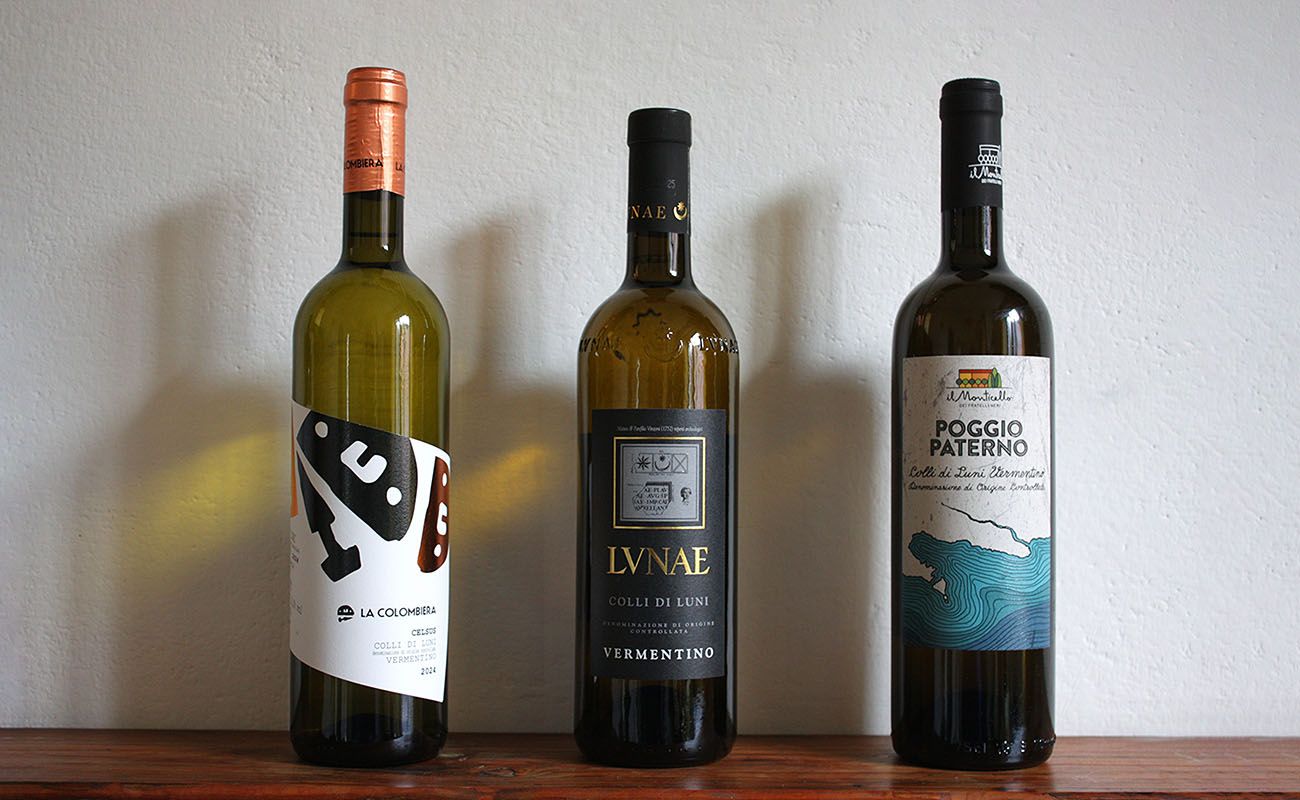
Here, some of the most harmonious and expressive Vermentino is made, enticingly savoury and sometimes surprisingly ageworthy.
For fans of authentic Italian white wines, stunning scenery and ancient history, Colli di Luni is like nowhere else.
Colli di Luni's stunning landscape
The Colli di Luni occupies a crescent of wooded hills extending like an embrace towards the sea and the ancient Roman site of Luni. It's the easternmost corner of Liguria, spilling over into north-west Tuscany, where the Alpi Apuane mountains sparkle with white Carrara marble, creating a spectacular backdrop and mild microclimate ventilated by sea breezes.
The scenic Bocca di Magra estuary and celebrated coastal spots like Portovenere and Cinque Terre are nearby.
Where to eat and drink in Colli di Luni
Colli di Luni offers travellers warm welcomes wherever they go, with many wineries offering accommodation and/ or meals.
The simple, tasty cuisine of the area includes panigacci (flour and water flatbreads accompanying salumi, or rolled with olive oil and cheese), testaroli (similar but served as pasta, with pesto) and seafood such as stuffed mussels and fried anchovies. All ideal with Colli di Luni Vermentino!
- Ca' Lunae
An atmosphere of authenticity and passion for tradition pervades these beautifully restored 18th century rosy-brick farm buildings and lush gardens with citrus and olive trees, run by the Bosoni family of Cantine Lunae (see below).
The farmhouse museum follows the wine lifecycle land-to-table through lovingly restored implements and images; local products sold include their own liqueurs and jams, and wines can be ordered by the glass or enjoyed with lunch at the cosy osteria. - Luni
The ancient port and prestigious Roman colony of Luni governed historic Lunigiana which, once vast, is now a small inland territory. Vines grow by the ancient amphitheatre and fascinating archeological park.
At La Pietra del Focolare (www.lapietradelfocolare.it) the Salvetti family live upstairs and make their wines downstairs, such as the appealing ‘Solarancio’ Vermentino from hillside vines, their first after quitting their day jobs in the 1990s.
Just uphill from Luni at tiny Nicola, Da Fiorella is a locals' favourite for typical dishes and wines. - Sarzana
A lively small town on the Via Francigena pilgrims' route to Rome, Sarzana gained importance in medieval times as ancient Luni declined.
Highlights include a handsome cathedral and two stately castles, while contemporary design studios, restaurants and bars dot the narrow sidestreets, including Le Boccanegrine wine bar, specialising in local labels.
The apartments at hillside winery Il Monticello (see below) guarantee relaxing stays. - Castelnuovo Magra
This quiet village with its landmark tower comes alive each June for Benvenuto Vermentino, involving Vermentino producers from near and far.
The Enoteca Regionale should soon reopen for year-round tastings.
La Colombiera, run by sisters Valeria and Benedetta Ferro with their winemaker father, offers a contemporary vibe, b&b accommodation, light lunches, a panoramic terrace, a pool, and enjoyable wines including the guests' favourite rosé, a Sangiovese-Syrah blend. - Fosdinovo
A dramatic sight, Fosdinovo castle dominates the medieval village and offers tours and accommodation.
Opposite the castle, stone-vaulted Trattoria La Quinta Terra serves delicious dishes such as rabbit, calamari, and chestnut cake.
Wines are exclusively local, including excellent Vermentino made by owners Anne and Michele Pradelli at their winery, with accommodation, a pool and glorious views.
Wineries to visit
Just outside charming Sarzana, Il Monticello winery (www.ilmonticello.it) is run by brothers Davide and Alessandro Neri. The latter is an engineer whose inventions include vine disease monitoring and fermentation control systems. ‘We have lots of fun!’ he says.
Like most here, vines are split between numerous small plots. One has two distinct soils, giving rise to sibling Vermentino crus: minerally ‘Argille Grigie’ from chalky grey clay, and complex ‘Argille Rosse’ from iron-rich red clay. Try too their fresh, contemporary red Vermentino Nero – unrelated to white Vermentino – and increasingly grown hereabouts.
Get our daily fine wine reviews, latest wine ratings, news and travel guides delivered straight to your inbox.
Near Luni is the area’s flagship winery, Cantine Lunae (www.cantinelunae.com), based between historic Ca' Lunae (below) and the contemporary winery where sustainability goes hand-in-hand with design. As latest generation owner-winemaker Diego Bosoni points out: ‘our aim is to create harmony with nature and wine through art and architecture’.
With 65 hectares of vines plus a network of growers, they're the denomination's largest wine estate. While Bosoni experiments with minor native varieties like Pollera Nera (‘International varieties have never taken root here’), Vermentino dominates in the area's three bands of land: sandy lowlands (currently outside the denomination), clay-soiled foothills, and rocky higher plots where the vibrant ‘Etichetta Nera’ (DWWA 2025 Silver medal) originates.
Bosoni also makes an apple-fresh 48-month aged Vermentino-Albarola traditional method brut.
Nearby Andrea Marcesini of La Felce winery (www.facebook.com/marcesini.andrea) works with just 6ha under vine, and although he was the consortium's first president, his wines are no longer labelled as Colli di Luni DOC: ‘I'm not against the denomination, I just wanted to go my own way’, he says.
With Triple A certification for his low-intervention wines – including a perpetual blend – he is doing just that. He's also involved in a vineyard therapy project with psychiatric hospital residents.
High in the hills at 550 metres above sea level, Fosdinovo stands out for its magnificent castle, vineyards with superb sea views, and schist soil bringing minerality and complexity to wines.
While Ivan Giuliani at Terenzuola (www.terenzuola.it) experiments extensively with lesser-known varieties, his star wines are ageworthy Vermentino crus from vines overlooked by two statuesque pines: ‘I Pini di Corsano’ (DWWA 2025 Silver medal) is remarkable. Tastings include old vintages, showing exciting evolution and freshness after even a decade.
Related articles
Exploring Valle d’Aosta: Italy’s hidden gem for wine and alpine adventures
The Aosta Valley has much to offer the intrepid traveller – from vineyard picnics and thermal baths to scenic hiking trails and world-class skiing.
Discover 10 must-visit wineries for an unforgettable Tuscany experience
Follow our expert guide for a not-to-be-missed itinerary taking in 10 incredible wineries offering a mix of hedonism and silent relaxation.
Cowbells all around: Hiking in the Südtirol
The Dolomites are full of hiking trails. Kate Nowell-Smith spends a week on foot with her family in Trentino-Alto Adige. Will you follow her itinerary, or simply find some inspiration?
Sarah Jane is a freelance food, wine, lifestyle and travel journalist, based in Bologna. Aside from Decanter, she has written for publications such as Delicious, Olive, The Daily Telegraph, easyJet Traveller, Bologna Magazine and Taste Italia. For Decanter, she has written travel guides to Italian wine destinations such as Bologna, Milan and Cinque Terre.
Facts Only
* The Colli di Luni zone is located in Liguria, Italy, extending into Tuscany.
* It’s characterized by hilly landscapes, wineries, and sea views.
* The zone is associated with Vermentino wine production.
* The Roman site of Luni is nearby.
* The Alpi Apuane mountains provide a backdrop and influence the climate.
* Bocca di Magra estuary and Portovenere and Cinque Terre are also nearby.
* Local cuisine includes panigacci, testaroli, and seafood.
* Ca’ Lunae, Luni, La Pietra del Focolare, Nicola da Fiorella, Il Monticello, and Fosdinovo are featured locations.
* The Bosoni family operates Cantine Lunae.
* Wineries incorporate vineyard innovations like soil analysis and disease monitoring.
* The annual Benvenuto Vermentino event takes place in Sarzana.
Executive Summary
Full Take
Patterns detected: ARC-0024 Ambiguity - The article heavily relies on evocative descriptions ("harmonious," "expressive," "enticingly savoury") without offering concrete, measurable details about the wine itself. This creates a seductive narrative focused on experience rather than substance, designed to bypass critical scrutiny. The constant layering of positive adjectives around Vermentino – “most harmonious,” “most expressive” – risks establishing a subjective benchmark that’s difficult to verify.
The article also employs ARC-0043 Motte-and-Bailey, presenting a compelling picture of the region as a uniquely authentic and historical wine destination while simultaneously offering superficial information. The description of 'sibling Vermentino crus' – one described as ‘mineral’ and the other as ‘complex’ – is a classic motte-and-bailey tactic, elevating terroir-based claims without demonstrating measurable differences or providing details about the viticultural practices that might explain such distinctions. The wine descriptors are, frankly, not useful for a wine drinker.
Furthermore, there's an underlying current of ARC-0071 Systemic – the presentation of numerous small, independent wineries suggests a curated narrative aimed at creating a sense of discovery and exclusivity. The article is essentially an advertising piece for a specific geographic location, leveraging the perceived charm of artisanal production to drive tourism. It operates within a system of travel marketing that prioritizes aesthetic appeal over objective quality assessments.
The framing around "sustainable design" at Cantine Lunae risks a shallow application of the concept, focusing primarily on architectural aesthetics rather than demonstrable environmental impact metrics. The insistence on “harmony with nature” is a rhetorical flourish, rather than a commitment to rigorous ecological practices.
The implication here is not just about promoting a wine region, but about constructing a desirable narrative around that region - an aspirational image that might be disconnected from the realities of winemaking.
Sentinel — Uncertain
This article presents a largely descriptive overview of Colli di Luni, focusing on its wine, scenery, and local culture. While fluent and well-structured, the text exhibits stylistic traits common in travel writing and lacks a strongly distinct authorial voice, raising moderate concerns about potential AI-assisted creation.