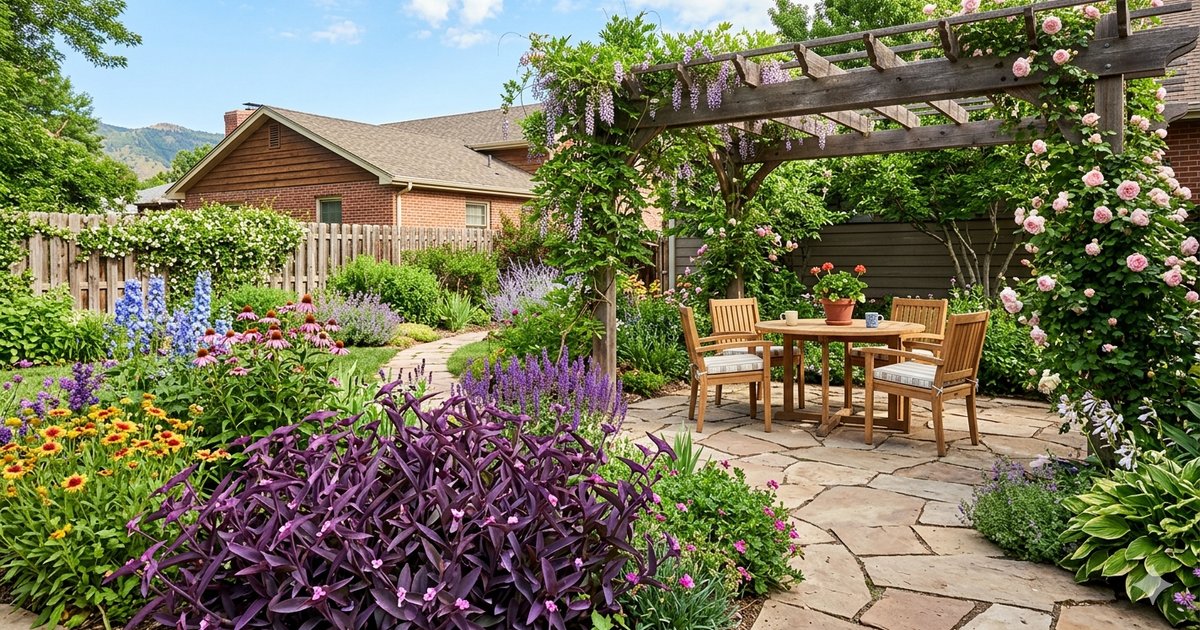
Setcreasea, more commonly known today as Purple Heart, is one of the most visually distinctive foliage plants used in modern container design. With its deep purple, almost iridescent stems and soft, lance-shaped leaves, it brings a strong color statement that contrasts beautifully with the bright greens and vivid blooms typical of summer plantings in Fort Collins and across the Front Range.
Unlike many flowering annuals that rely on blooms for impact, Setcreasea delivers color through foliage alone—making it a dependable anchor plant in mixed containers, especially where designers want depth, contrast, and continuity throughout the season.
At [Plantorium.com](https://plantorium.com?utm_source=chatgpt.com Purple Heart is often used as a trailing or mid-height foliage accent in summer container compositions, particularly in high-sun, high-contrast designs.
Why Setcreasea Performs Well in Northern Colorado
Setcreasea (botanically often listed as Tradescantia pallida) originates from warm, dry regions and adapts well to the intense sun and low humidity of Colorado’s Front Range.
It performs well because:
- It thrives in full sun
- It tolerates heat exceptionally well
- It maintains strong purple coloration under high light
- It handles dry air and wind exposure
In shaded conditions, the foliage tends to turn greener and lose some of its signature deep purple tone. In full sun, however, it becomes intensely colored and highly ornamental.
When to Plant Setcreasea in Fort Collins
Purple Heart is highly sensitive to cold and should only be planted after all risk of frost has passed—typically mid-May in Fort Collins and surrounding areas.
Once temperatures warm, it establishes quickly and begins producing long, trailing stems that expand steadily through the summer season.
Sunlight Requirements
Full sun is strongly recommended for best color development.
In the Front Range climate:
- Provide at least 6–8 hours of direct sunlight daily
- Ensure open exposure in containers or beds
- Avoid heavy shade, which reduces purple coloration
The intensity of Colorado sunlight is one of the reasons Setcreasea performs so well here—it responds directly to light levels with deeper pigmentation.
Soil and Growing Conditions
Setcreasea prefers well-draining soil and performs best in container environments.
For optimal growth:
- Use a high-quality potting mix
- Ensure excellent drainage in pots and planters
- Avoid heavy or compacted garden soil
While adaptable, it performs best in lighter soils that do not retain excessive moisture.
Watering in a Dry Climate
Once established, Setcreasea is moderately drought tolerant.
Recommended watering approach:
- Water deeply when the top layer of soil dries
- Avoid constant moisture or waterlogged conditions
- Reduce watering frequency in cooler periods
- Increase watering during extended heat or wind exposure
In containers, monitoring is important, especially during peak summer heat in Fort Collins.
Fertilizing for Strong Color and Growth
Setcreasea does not require heavy feeding, but light fertilization supports vigorous growth.
A balanced fertilizer applied occasionally helps maintain:
- Strong purple coloration
- Dense trailing stems
- Healthy foliage development
Excess nitrogen should be avoided, as it can encourage softer growth and reduced color intensity.
Garden Role and Design Use
Purple Heart is primarily a foliage contrast and trailing accent plant.
It works especially well in:
- Hanging baskets
- Mixed patio containers
- Modern container designs
- Color contrast plantings
- Edging and spill-over compositions
In Fort Collins gardens, it is frequently paired with bright flowering annuals to create strong visual contrast between deep purple foliage and vivid blooms.
Handling Colorado Weather
Setcreasea performs well in Front Range summer conditions but must be protected from cold.
It tolerates:
- Heat
- Intense sunlight
- Dry air
- Wind exposure
It is sensitive to:
- Frost (not cold hardy)
- Overwatering
- Poor drainage
Even after minor stress, it typically rebounds quickly with continued growth during warm weather.
Companion Planting
Setcreasea is most effective when used as a contrasting foliage element in mixed designs.
Excellent companions include:
- Petunias
- Calibrachoa
- Salvia
- Verbena
- Portulaca
- Senecio
- Ornamental grasses
Its deep purple tones enhance both warm and cool color palettes, making it highly versatile in design compositions.
A Bold Foliage Accent for Modern Summer Containers
Setcreasea stands out not because of flowers, but because of its unapologetically rich foliage color. In the bright, high-contrast environment of Colorado’s Front Range, it offers a grounding visual depth that helps flowering plants stand out even more.
For gardeners in Fort Collins seeking to elevate container design with minimal maintenance and maximum visual contrast, Purple Heart remains one of the most effective foliage plants available.
Explore seasonal availability and additional annuals at [Plantorium.com’s full plant catalog](https://plantorium.com/all-plants/?utm_source=chatgpt.com
Facts Only
Setcreasea, also known as Purple Heart, is a foliage plant used in container design.
It features deep purple stems and lance-shaped leaves.
The plant thrives in full sun and tolerates heat, dry air, and wind exposure.
It is sensitive to cold and should be planted after the last frost, typically mid-May in Fort Collins.
Full sun (6–8 hours daily) is recommended for optimal color development.
It prefers well-draining soil, especially in container environments.
Once established, it is moderately drought-tolerant but requires deep watering when the top soil layer dries.
Light fertilization supports strong color and growth, but excess nitrogen should be avoided.
Purple Heart is used as a trailing or mid-height accent in mixed containers, hanging baskets, and modern designs.
It is often paired with bright flowering annuals like petunias, calibrachoa, and salvia.
The plant is not cold-hardy and must be protected from frost.
It is available seasonally at Plantorium.com.
Executive Summary
Full Take
This piece presents Purple Heart as an ideal foliage plant for high-sun, low-humidity environments like Colorado’s Front Range, emphasizing its aesthetic and practical benefits. The strongest version of this narrative highlights its adaptability to intense sunlight, drought tolerance, and striking visual contrast in container designs. However, the analysis could benefit from addressing potential drawbacks, such as its sensitivity to overwatering or poor drainage, which might limit its suitability for less experienced gardeners. The recommendation to avoid heavy shade is well-supported, but the claim that it "rebounds quickly" after stress lacks specificity—what constitutes "minor stress," and how quickly does recovery occur?
The narrative aligns with a broader trend in horticultural media that promotes low-maintenance, high-impact plants for urban and suburban gardening. This paradigm assumes that visual appeal and ease of care are paramount, potentially overlooking ecological considerations, such as whether Purple Heart supports local pollinators or competes with native species. The piece also assumes readers have access to well-draining containers and consistent sunlight, which may not be the case for all gardeners.
If this were part of a coordinated influence campaign, the playbook might involve promoting Purple Heart as a "must-have" plant for modern gardens, leveraging its aesthetic appeal to drive sales or engagement with gardening brands. However, the content does not exhibit overt manipulation patterns; it remains largely informational, though it does subtly endorse Plantorium.com through embedded links. The absence of counterarguments or alternative perspectives (e.g., native plant advocates) suggests a mild promotional bias, but it does not rise to the level of systemic distortion.
**Patterns detected: none**
Key questions for further inquiry:
How does Purple Heart compare to native Colorado plants in terms of water usage and ecological impact?
What are the long-term maintenance requirements beyond the first growing season?
Are there regional variations in its performance that might affect its suitability for different microclimates?
Sentinel — Human
Sentinel analysis incomplete — partial response from fallback model.