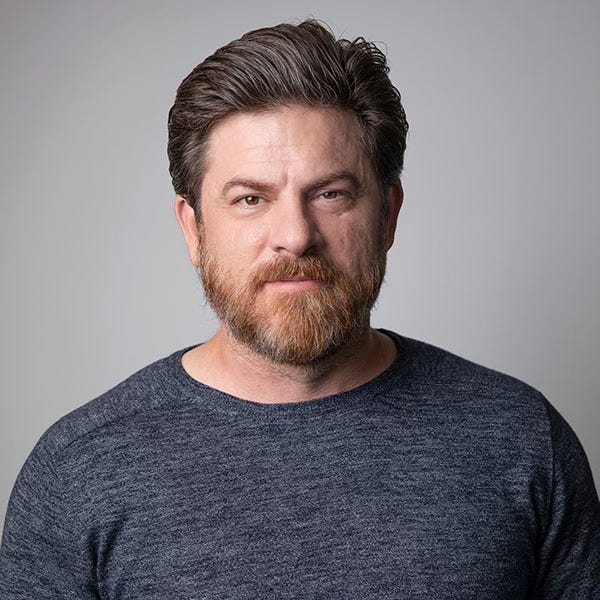
Former CIA operative Kevin Chalker touts his exploits in The New Yorker to "repair his reputation"
Most espionage aficionados are quite familiar with spy jargon like dead drops, brush passes, secret writing, and so forth. Experts and former practitioners, though, are familiar with a lesser-known element of the spy business, summed up in the acronym “MICE.” It stands for the various reasons that officials—say, Iranian nuclear scientists—turn coat: Money, Ideology, Compromise, and Ego. After reading an extraordinary piece about spy ops in The New Yorker magazine this week, I propose adding another letter—D, for death threats.
The idea came to mind about two-thirds the way through reporter David D. Kirkpatrick’s compelling deep dive into the tumultuous life, career, and travails of one Kevin Chalker, a former CIA operations officer who once played a key role in persuading Iranian nuclear scientists to defect—or be killed.
And he was very good at it, Chalker told Kirkpatrick, an assertion the writer corroborated with other sources.
“The most salient reason for his success…was surely his existential offer: defect or die,” Kirkpatrick wrote. Since Israel’s assassinations campaign in Iran was no secret to the government’s nuclear scientists, Chalker’s offer to exfiltrate them ”could almost be considered humanitarian,” one of his colleagues recalled, because Chalker was ‘throwing them a lifeline.’
“Of the many scientists he approached, three-quarters ultimately agreed to cooperate,” Kirkpatrick writes.
Kirkpatrick volunteers that the Los Angeles Times first reported on the project known as Brain Drain back in 2007. “But the details of the ‘invitations’ to Iranian scientists have not previously been reported.”
The CIA is prohibited by law from carrying out the assassinations, but passing along names to the Israelis was an effective sleight of hand. What happened after that was not a great concern to the agency, by Kirkpatrick’s account.
But there was this: “Citing stories from friends in the U.S. Special Forces, Chalker said he believed that, on at least a few occasions, U.S. commandos—such as Delta Force operatives, Navy SEALs, or members of the CIA’s paramilitary Ground Branch—have carried out targeted killings of Iranian military officers. (Chalker said that the operators even had a term of art for such killings: X-boxing.) He could not name any Iranian scientists assassinated by Americans. But he is confident that those who rebuffed him were, in fact, killed—one way or another.”
In effect, Kirkpatrick’s tale amounts to a gripping “as-told-to” feature—with this major exception: He has persuasively corroborated the essential elements of Chalker’s story, as well as knocked down the former CIA man’s self-serving fibs and exaggerations.
And what a story it is, chock-full of the many operational tactics, tradecraft tricks, and cryptonyms Chalker employed in several of his recruiting episodes.
But why is Chalker spilling the beans?
Chalker’s reasons for talking, particularly to Kirkpatrick, are both simple and complex. The New Yorker writer was a three-time Pulitzer winner during his 22 years with the New York Times who had written about Chalker’s previous legal problems. The ex-CIA man is evidently down and out, his reputation in tatters because of several negative stories involving his post-CIA involvement with Qatar and a nasty lawsuit against him by Elliott Broidy—a mega-donor to President Donald Trump—all of which Kirkpatrick recounts in detail but is beyond the scope of our interests here.
“He could not name any Iranian scientists assassinated by Americans. But he is confident that those who rebuffed him were, in fact, killed—one way or another.”
Which takes us back to MICE, and particularly its first and last letters: Money and Ego. Chalker and Broidy had settled the lawsuit on confidential terms, Chalker told Kirkpatrick, but “he wanted to repair his reputation. He had always been an American patriot, he insisted, and to prove it he was willing to talk publicly, for the first time, about his years of clandestine work for the CIA—which, he said, had ‘prevented Iran from getting a nuke.’”
He was also pissed that the CIA had not had his back when he fell into trouble, but he obviously hoped telling his story could get him new clients and cash. In a fine irony, those are some of the same reasons Iranians agreed to defect or spy for him (along with that “D,” of course, for death threat).
Nolo Contendere
Which leaves the question of why the CIA hasn’t taken action to prevent or punish Chalker for committing what appears to be an egregious violation of his oath to keep secrets. Not that we’re arguing it should, but in 1978 the agency vigorously and successfully pursued former top CIA Vietnam strategy analyst Frank Snepp in court for not submitting his manuscript for Decent Interval, his blistering account of the disastrous U.S. withdrawal from Saigon, to agency censors. The Justice Department did not charge him with disclosing classified information. Former CIA officials often tell journalists they have to get permission from the agency before discussing certain subjects.
A former senior CIA counter-proliferation officer said “certain parts” of Chalker’s account “seem very classified and could put defectors at risk.”
Does the CIA have good reason for letting Chalker tell his story? Cui bono? we always ask, especially in the shadow world. Who benefits from Chalker’s tale? From one perspective, the agency certainly comes out looking good, especially in comparison with Tulsi Gabbard’s ODNI and Kash Patel’s FBI, both hopelessly corrupted by President Trump’s retribution campaigns.
David Kirkpatrick did not immediately respond to an email requesting comment. A CIA spokesman fielded SpyTalk’s questions about Chalker and the New Yorker piece but did not provide answers by press time. ###
Given Trump's enthusiasm for foisting Snepp-like non disclosure agreements on Pentagon-based journalists and enforcing just such a covenant against apostate John Bolton, it is difficult to believe that this new truth-teller-turned-tattler wont have his head handed to him. Perhaps the Iranian diversion will keep His Majesty too distracted to do damage to the First Amendment in this case. Hope springs eternal.
Informative and interesting. Wasn't there another article that mentioned MICE, along with a great "school" book?
Facts Only
Kevin Chalker: former CIA operative
Iranian nuclear scientists: targets of operation
Brain Drain: covert operation to persuade scientists to defect or be killed
Los Angeles Times: first reported on the operation in 2007
Israel: alleged recipients of names for potential assassinations
Delta Force operatives, Navy SEALs, CIA's paramilitary Ground Branch: possible U.S. forces involved in killings (according to Chalker)
Elliott Broidy: mega-donor to President Donald Trump and plaintiff in lawsuit against Chalker
Qatar: associated with Chalker's legal troubles
Executive Summary
Former CIA operative Kevin Chalker, in an article published by The New Yorker, detailed his role in a covert operation aimed at persuading Iranian nuclear scientists to defect or face possible assassination. The operation, known as Brain Drain, was first reported on by the Los Angeles Times in 2007, but Chalker's account provides new details about the methods used and the outcomes achieved.
Chalker claims that he was successful in persuading three-quarters of the scientists he approached to cooperate, using a combination of threats and promises. The CIA is said to have passed on names to Israeli operatives for potential assassinations, although the agency denies any direct involvement in such actions.
Chalker's account comes as he seeks to repair his reputation following legal troubles and a lawsuit brought against him by Elliott Broidy. He says he wanted to share his story to demonstrate his American patriotism and potentially secure new clients and income. The CIA has not taken action against Chalker for discussing classified information, citing unclear reasons.
Full Take
The article raises concerns about the ethical implications of using threats and coercion in intelligence operations, as well as potential violations of the law. It also sheds light on the complex motivations and consequences of whistleblowing, as Chalker seeks to repair his reputation by sharing classified information.
Patterns detected: ARC-0043 Motte-and-Bailey (Chalker presents himself as a patriot while potentially breaking the law), ARC-0024 Ambiguity (the article does not clarify whether Chalker's claims about U.S. involvement in assassinations are accurate).
The operation raises questions about the role of intelligence agencies in international affairs, particularly regarding their relationship with Israel and their willingness to engage in controversial activities. It also highlights the dangers faced by defectors, who may be targeted for retaliation.
Bridge Questions: What are the ethical implications of using coercion and threats in intelligence operations? How should whistleblowers be treated when they seek to expose wrongdoing while potentially breaking the law? What is the role of intelligence agencies in shaping international politics, particularly regarding controversial activities such as assassinations?
Sentinel — Human
This analysis suggests that the text is likely human-written, with some signs of idiosyncratic style and personal voice. However, there are also subtle indications of irregular sentence length variance, which could be a sign of AI assistance or extensive editing. Further investigation may be necessary to confirm the human origin.