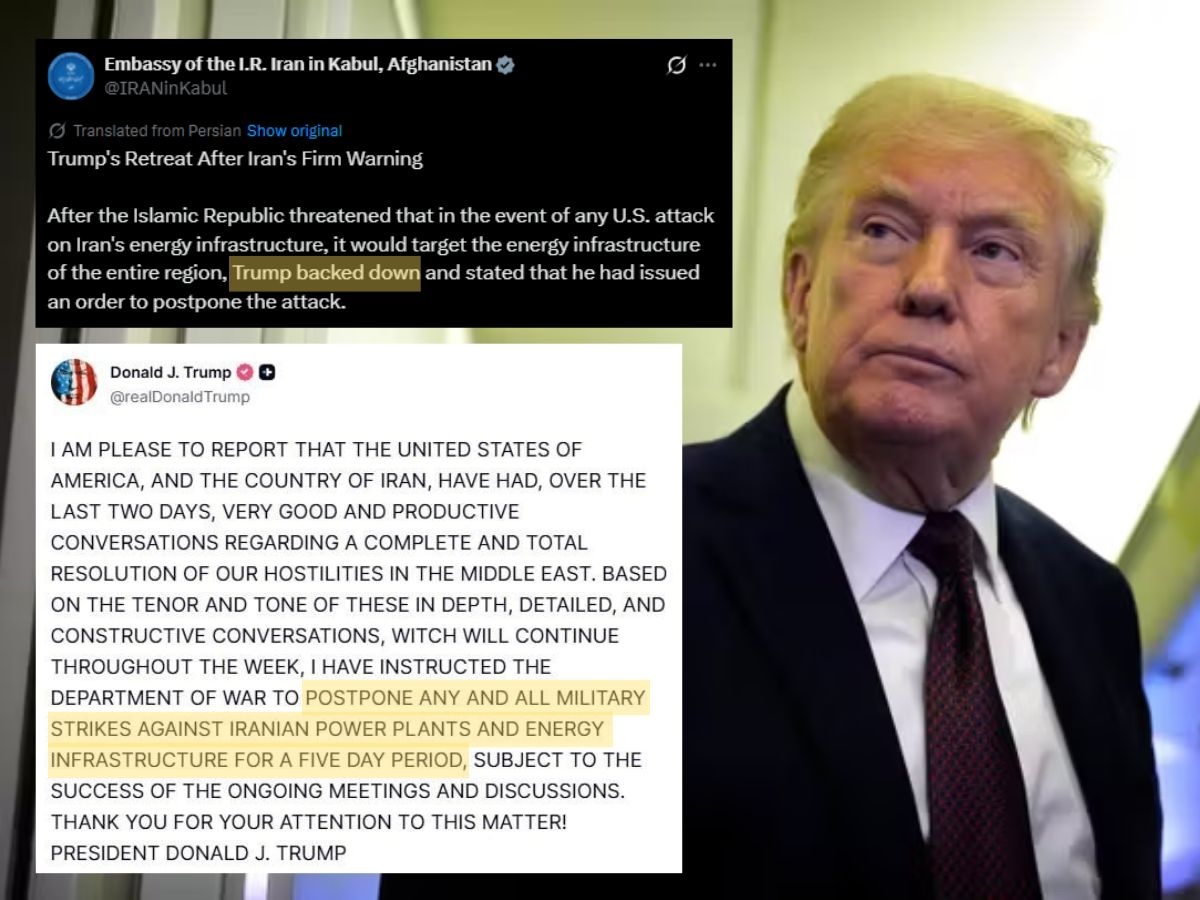
Yet again, the US-Israel war against Iran is showing that even a so-called superpower is nowhere near as powerful as it looks. Although we will all suffer the political and economic effects of this war for many months and years to come, we humbler powers in Europe should find this renewed proof quite reassuring. With the important exception of nuclear weapons, the gap between what a superpower can achieve and what humbler, so-called “middle powers” can do is a lot smaller than it seems.
It is tempting to attribute this to the strategic incompetence that has been demonstrated by the Trump administration. Despite having had many months to plan and prepare for this war, Donald Trump and his team have been taken by surprise by the ability of the Iranian regime not just to survive but also to hit back against American military assets and Arab allies and to restrict the flow of oil out of the famously narrow Strait of Hormuz.
Yet the most shocking sign of incompetence has not been the lack of planning or the absence of clear objectives, but the failure to learn the lessons of almost every other war involving a superpower since 1945.
That lesson should have been made clear by the Vietnam war that ended in a costly American failure in 1975. It should have been made clear by Russia’s disastrous invasion of Afghanistan in the 1980s and then by the equally disastrous American failures in Afghanistan and Iraq during the past 20 years, failures that Trump himself highlighted during his three election campaigns. It should also have been made clear by Russia’s failure to force Ukraine into submission since its attempted invasion in February 2022.
In the modern, post-colonial era, even the greatest military power in the world cannot force a determined opponent to lay down its weapons, especially when that opponent continues to have popular support. The delusion common to Vietnam, Afghanistan, Iraq, Ukraine and now Iran has been the belief that those countries’ populations would treat the superpower as a liberator.
Some people did think the outside attacker was a liberator, in all those cases, but a lot more did not, and as in Iran today many considered the superpower to be just as evil as the dictatorial regime under whose rule they previously suffered. Perhaps a point will come in Iran when the regime finally collapses, but even then neither peace nor friendly collaboration can be considered the likeliest outcomes.
There is another painful lesson from this war, and an important question will be how the United States chooses to learn from it, especially during the remaining two-and-three-quarter years of the Trump administration. This lesson is that even a country that spends more than US$900 billion every year on its military, a defense budget more than three times larger than China’s and four times larger than Russia’s, can find its forces and weapons stocks severely stretched and depleted after a short, intense war against an already weakened adversary.
America’s allies in Asia, led by Japan and South Korea, have watched with growing concern the fact that the United States has had to move crucial military assets from Asia to the Middle East in order to fight this supposedly short war. This has included aircraft carriers, a special US Marines regiment and several missile-defence systems. This is despite the many lectures given to Asian allies in recent years by the Trump team and by President Joe Biden’s administration about how vital those assets are to deter China and North Korea.
The war in Iran has created big holes in the structure of deterrence, especially against China. The speed and intensity with which America has used up much of its stock of its most powerful missiles and of its expensive missile-interceptors has also exposed a lack of production capacity and of stockpiles.
American defense-planners have declared ever since the end of the Cold War that the US military would not now be big enough to be able to fight two wars simultaneously around the world. The Iran war may have displayed the impressive destructive power of the US and Israeli militaries, but it has also displayed clear limits to the capacity of the US military to fight even one war without quickly feeling the consequences.
There are, essentially, two ways in which America could respond to this lesson. One would be to abandon the pretence of being a global military power by cutting back, sharply, forces and bases America maintains overseas whether in Europe, the Middle East, the Indian Ocean, the western hemisphere or Asia. By reducing overstretch and the high overhead costs of foreign bases, such cutbacks might enable the US$921 billion budget to be spent more effectively.
That sort of response, however, given Trump’s angry reaction to European and Asian allies’ refusal to join the US-Israeli war on Iran, could lead to an American withdrawal from NATO and an even more explicit support for Russia in Ukraine than Trump has already displayed. It could also lead to an agreement with China that opens the way towards a Chinese annexation of Taiwan, whether by force or by coercion. Trump has often said that Taiwan is too far away for the United States to be able to defend it, and the overstretch shown by the Iran war might have confirmed him in this view.
The other way in which America could respond to this lesson, however, would be by embarking upon a major effort to repair the shortcomings that the Iran war has exposed: inefficient spending, inadequate defense production and, above all, inadequate coordination with allies. If America wants to be serious about deterring China from bullying its neighbours and invading Taiwan, and the China-Russia partnership from dominating the world, then it will need to use Japanese and South Korean shipbuilding capacity, greater collaboration over missile defence, and a genuine renewal of the NATO and Asian alliances.
This will not happen under the Trump administration, given Trump’s clear contempt for Europe and our well-justified distrust of him. But in the longer term, the only viable option for an overstretched America that wishes to play a global role and deter China will be to rebuild the alliance system that served it so well during the Cold War.
In Europe, we have known since Russia’s 2022 invasion of Ukraine that we need to do a lot more to defend ourselves, and we surely know now that we have to do a lot more immediately to support Ukraine. But also, as non-superpowers, we have long known that collaboration, active diplomacy and support for international law can be powerful tools, sometimes more powerful than bombs and missiles.
Russia, America and Israel may now have destroyed the force of international law for many years to come, through their brazenly illegal attacks. But they have meanwhile confirmed that while missiles may look powerful in the short term, other more European-style geopolitical tools are essential for the longer term.
This is the English original of an article first published in Italian by La Stampa. Also available on Bill Emmott’s Global View, it is republished with permission.
Esmaeil Khatib
Ali Larijani
Gholamreza Soleimani
Esmail Khatib
RIP !
Facts Only
Donald Trump is the US President during the war with Iran.
The Iranian regime has been able to hit back against American military assets and Arab allies, restrict the flow of oil out of the Strait of Hormuz.
The war started after many months of planning and preparation by the Trump administration.
The US defense budget is more than three times larger than China's and four times larger than Russia's.
The Iran war has exposed a lack of production capacity and stockpiles in America's missile-defense systems.
Japan and South Korea have watched with concern as the US had to move crucial military assets from Asia to the Middle East to fight the war in Iran.
Executive Summary
Full Take
Pattern Analysis and Deeper Implications:
* Emotional Exploitation (ARC-0026, Fear Appeals): The authors use fear appeals to emphasize the political and economic effects of the US-Iran war, suggesting that it will have lasting impacts on Europe.
* Distortion (ARC-0013, Out-of-Context Framing): The authors frame the US military as overstretched after a short, intense war against Iran, but they do not provide evidence for the claim that the US spent more than US$900 billion every year on its military.
* Root Cause: The authors suggest that the delusion common to Vietnam, Afghanistan, Iraq, Ukraine, and now Iran has been the belief that those countries’ populations would treat the superpower as a liberator. This reflects a broader pattern of Western interventionism and the assumption that military force can bring about political change in other countries.
* Implications: The authors argue that America's allies in Asia are concerned about US military assets being moved away from Asia to fight wars elsewhere, which could weaken the structure of deterrence against China and North Korea. This suggests a broader pattern of declining American influence in the region and a shift in power dynamics between the US and its allies.
* Bridge Questions: How can humbler powers learn from the failures of superpowers in their foreign policy? What role do economic and political factors play in determining the outcome of wars involving superpowers? What can be done to prevent overstretch and maintain the effectiveness of military forces during conflicts?
Sentinel — Human
The article shows strong signs of human authorship, with a distinct voice, nuanced arguments, and historical depth, making synthetic origin highly unlikely.