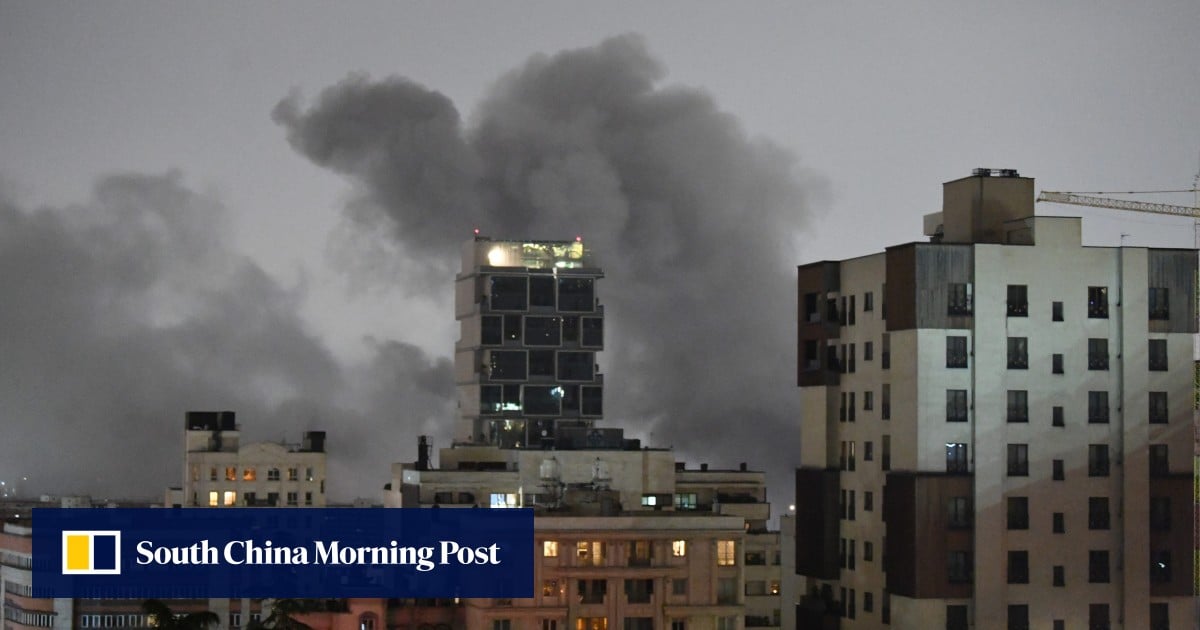
Iran-linked hackers open low-cost digital front as US-Israeli attacks mount
Spyware-laden shelter alerts, hacked hospitals and supply chain breaches highlight modern warfare’s digital shift
As they fled an Iranian missile strike, some Israelis with Android phones received a text offering a link to real-time information about bomb shelters. But instead of a helpful app, the link downloaded spyware giving hackers access to the device’s camera, location and all its data.
The operation, attributed to Iran, showed sophisticated coordination and is just the latest tactic in a cyber conflict that pits the US and Israel against Iran and its digital proxies. As Iran and its supporters seek to use their cyber capabilities to compensate for their military disadvantages, they are showing how disinformation, artificial intelligence and hacking are now ingrained in modern warfare.
The bogus texts received recently appeared to be timed to coincide with the missile strikes, representing a novel combination of digital and physical attacks, said Gil Messing, chief of staff at Check Point Research, a cybersecurity firm with offices in Israel and the US.
“This was sent to people while they were running to shelters to defend themselves,” Messing said. “The fact it’s synced and at the same minute … is a first.”
The digital fight is likely to persist even if a ceasefire is reached, experts said, because it is a lot easier and cheaper than conventional conflict and because it is designed not to kill or conquer, but to spy, steal and frighten.
While high in volume, most of the cyberattacks linked to the war have been relatively minor when it comes to damage to economic or military networks. But they have put many US and Israeli companies on the defensive, forcing them to quickly patch old security weaknesses.
Facts Only
Iran-linked hackers targeted Israeli Android users with malicious texts during a missile strike.
The texts offered a link to a fake bomb shelter app, which installed spyware.
The spyware granted hackers access to device cameras, locations, and data.
The attack was timed to coincide with the missile strikes, suggesting coordination.
The operation was attributed to Iran by cybersecurity firm Check Point Research.
The cyber conflict involves the U.S. and Israel against Iran and its digital proxies.
Tactics include disinformation, AI, hacking, and supply chain breaches.
Most cyberattacks have caused minor damage to economic or military networks.
U.S. and Israeli companies have been forced to patch security vulnerabilities.
Cyber operations are expected to continue even if a ceasefire is reached.
The digital tactics are described as cheaper and easier than conventional conflict.
The primary goals appear to be espionage, theft, and intimidation rather than physical destruction.
Executive Summary
Iran-linked hackers have escalated cyber operations against Israel and the U.S., employing tactics like spyware-laden shelter alerts and supply chain breaches. During a recent Iranian missile strike on Israel, Android users received malicious texts offering a fake bomb shelter app, which instead installed spyware granting access to device data, cameras, and locations. This attack demonstrated a new level of coordination between physical and digital warfare, timed to exploit civilian vulnerability. The broader cyber conflict involves Iran and its proxies using disinformation, AI, and hacking to offset military disadvantages, with most attacks focusing on espionage, theft, and psychological impact rather than large-scale infrastructure damage. While the volume of cyberattacks has surged, their economic and military impact remains limited, though they have forced U.S. and Israeli companies to bolster defenses. Experts anticipate these digital operations will persist even if conventional hostilities cease, given their low cost and strategic utility.
The conflict highlights the growing integration of cyber tactics in modern warfare, where state and non-state actors leverage digital tools to compensate for asymmetries in traditional military power. The use of deceptive messaging during active missile strikes underscores the evolving nature of hybrid warfare, blending kinetic and cyber operations to maximize psychological and operational effects.
Full Take
The strongest version of this narrative highlights a sophisticated and alarming evolution in cyber warfare, where state actors exploit moments of crisis to deploy digital weapons against civilians. The coordination between physical missile strikes and cyber deception demonstrates Iran’s strategic adaptation to asymmetrical conflict, using low-cost, high-impact tactics to erode trust and gather intelligence. The report rightly emphasizes the persistence of such operations, regardless of ceasefires, framing cyber warfare as a permanent feature of modern geopolitical rivalry. It also acknowledges the limited material damage while underscoring the psychological and defensive burdens imposed on targets.
However, the narrative risks amplifying a pattern of **ARC-0024 Ambiguity** by conflating the capabilities of state-sponsored hackers with their actual impact. While the spyware attack is concrete, the broader claim that Iran is compensating for military disadvantages through cyber means assumes a direct equivalence between digital and kinetic power—an assumption that may overstate the strategic efficacy of these operations. Additionally, the framing of "modern warfare’s digital shift" could inadvertently normalize cyberattacks as inevitable, potentially obscuring the agency of defenders to adapt or counter such threats.
Rooted in the paradigm of asymmetrical warfare, this narrative assumes that weaker states will inevitably turn to cyber tools to level the playing field. Yet it understates the role of defensive resilience—how targeted nations and companies might innovate in response, or how civilian awareness could mitigate such attacks. The focus on Iran’s tactics also risks overlooking the broader ecosystem of cyber conflict, where multiple actors (including the U.S. and Israel) engage in offensive operations, raising questions about proportionality and escalation.
For human agency, the implications are dual: civilians become both targets and potential vectors of resilience, while governments and corporations bear the cost of perpetual digital defense. The second-order consequences include the erosion of trust in digital communication during crises and the normalization of surveillance as a tool of war.
Bridge questions: How might defensive cyber strategies evolve to counter such hybrid attacks? What role does civilian digital literacy play in mitigating these threats? Would evidence of similar tactics by U.S. or Israeli actors change the assessment of Iran’s cyber operations?
Counterstrike scan: A coordinated influence campaign would likely amplify the fear of cyberattacks to justify expanded surveillance or military budgets, framing Iran as an existential digital threat while downplaying defensive capabilities. The actual content does not fully align with this pattern, as it provides concrete examples and acknowledges limitations. However, the emphasis on persistence and novelty could be exploited to stoke anxiety.