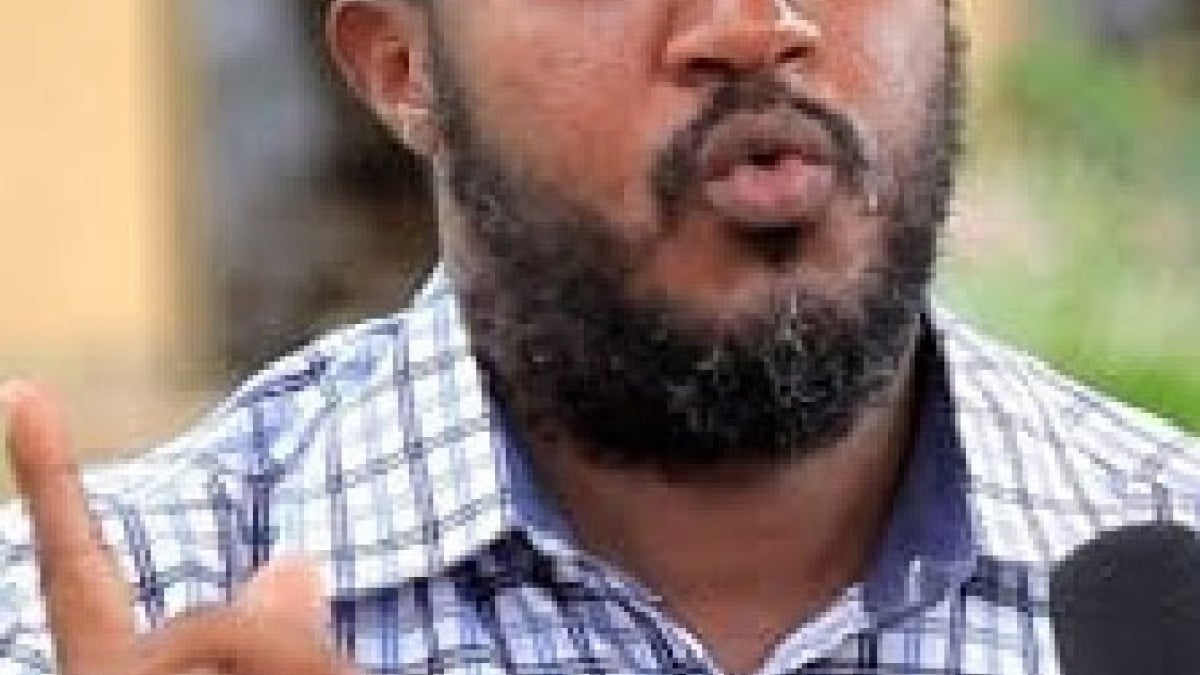
(Nairobi) – Rwandan authorities should conduct an effective, independent, and transparent investigation into the death in custody of Aimable Karasira, a Rwandan academic and outspoken government critic, on the day he was set to be released from prison, Human Rights Watch said today.
Karasira’s prosecution and imprisonment are emblematic of Rwanda’s crackdown on dissent and free expression. His death adds to the list of disappearances and suspicious deaths of perceived critics and government opponents, and the authorities’ failure to deliver justice in these cases sends a deliberately chilling message.
“There are many reasons to question the circumstances surrounding Aimable Karasira’s death in custody, not least the years of harassment and persecution he experienced at the hands of the authorities,” said Clémentine de Montjoye, senior Great Lakes researcher at Human Rights Watch. “The government bears the burden of proving that Karasira was not unlawfully killed, and Rwanda’s partners should be watching closely.”
The Rwandan Correctional Services announced that Karasira had died of a medical overdose as he was set to be released on May 6, 2026. A spokesman for the agency told local media that “he took chunks of medicine which he had been prescribed for a pre-existing condition.” Media reports indicate he died at Nyarugenge District Hospital in Kigali, the capital.
Karasira began facing pressure and threats after he released a video on his YouTube channel in 2020 about losing relatives during the country’s 1994 genocide and to the ruling Rwandan Patriotic Front (RPF) in its aftermath. In August 2020, expressing fear for his safety, he told Human Rights Watch: “I’ve received letters, threats. I get phone calls from phone numbers I don’t know. Someone from the government was sent to negotiate with me and told me to stop publishing my opinions.”
As the threats and harassment escalated, he said that intelligence officials had ordered him to publish false information about government opponents on his YouTube channel. Karasira was arrested in May 2021 and charged with genocide denial and justification as well as divisionism, which are crimes in Rwanda.
Throughout his detention, Karasira faced torture, mistreatment, and denial of medical care. During a hearing on May 30, 2022, Karasira told the court that Nyarugenge prison authorities tortured him—including by depriving him of sleep, with constant light and loud music, and with beatings—to punish him and get him to attend court hearings. Karasira and his lawyer told the court he was being denied medical treatment for his diabetes and mental health issues, and that he had been taken to court by force despite not being fit to participate in the proceedings. He also accused prison authorities of providing inadequate and insufficient food and denying him access to money sent by friends or relatives with which he could buy items in prison.
The prosecution appealed his acquittal on several charges, including genocide denial and justification, and demanded a 30-year sentence, which was pending at the time of his death. But as Karasira had already served four years of his five-year term awaiting trial, his sentence was nearing its end, and he was to be released on May 6.
The Rwandan government has a well-established track record of evading its obligation to ensure transparent and independent investigations into the deaths of detainees and high-profile political critics in state custody, Human Rights Watch said.
Karasira’s death is reminiscent of the 2020 death in custody of the singer and government critic Kizito Mihigo. On February 17, 2020, Rwandan authorities announced that Mihigo had died in a cell at Remera Police Station in Kigali, four days after he was rearrested as he sought to flee the country. Before his death, Mihigo told Human Rights Watch that he was being threatened and feared state agents might kill him.
As with Karasira, Mihigo’s willingness to question elements of the government’s official narrative around the genocide made him a target. The voices and moral authority of both men resonated with the public and caused consternation among officials. In both cases, Rwandan authorities quickly presented official explanations: a suicide in Mihigo’s case and a suspected medication overdose in Karasira’s.
As set out in the Revised United Nations Manual on the Effective Prevention and Investigation of Extra-legal, Arbitrary and Summary Executions (the Minnesota Protocol), the state’s obligations to respect and protect the right to life mean that it is responsible for a death in custody unless proven otherwise, particularly in cases “where the deceased was, prior to his or her death, a political opponent of the government or a human rights defender; was known to be suffering from mental health issues; or committed suicide in unexplained circumstances.”
To establish responsibility for Karasira’s death, the Rwandan authorities should invite an independent body of experts to carry out an impartial, thorough, and transparent investigation, Human Rights Watch said. The experts should include the UN Special Rapporteur on extrajudicial, summary or arbitrary executions and members of the African Commission on Human and Peoples’ Rights Working Group on Death Penalty, Extra-Judicial, Summary or Arbitrary Killings and Enforced Disappearances in Africa. The investigation should include an autopsy and the findings should be made public.
Rwanda’s regional and international partners, which have long remained silent in the face of growing repression, should publicly call for an independent investigation.
“Karasira is just the latest government critic to suffer a suspicious death,” de Montjoye said. “Rwanda’s partners need to speak up for those who risk their lives to express themselves and condemn the worsening pattern of repression against dissenting voices in the country.”
Facts Only
* Aimable Karasira, a Rwandan academic and government critic, died in custody.
* The death occurred on May 6, 2026, while he was set to be released from prison.
* The Rwandan Correctional Services announced Karasira died of a medical overdose.
* Karasira had previously faced threats and harassment from the government and intelligence officials.
* Karasira was arrested in May 2021 and charged with genocide denial and justification, as well as divisionism.
* During detention, Karasira alleged torture, mistreatment, and denial of medical care.
* Karasira claimed prison authorities tortured him by depriving him of sleep, constant light, loud music, and beatings.
* Karasira claimed he was denied medical treatment for diabetes and mental health issues.
* Karasira’s prosecution demanded a 30-year sentence, which was pending at the time of his death.
* The Rwandan government has a track record of evading independent investigations into deaths of detainees.
* Karasira’s death is referenced in comparison to the death in custody of Kizito Mihigo in 2020.
Executive Summary
Full Take
Sentinel — Human
The article is highly specific, fact-grounded, and adopts a clear advocacy stance, exhibiting strong markers of human-written investigative reporting.