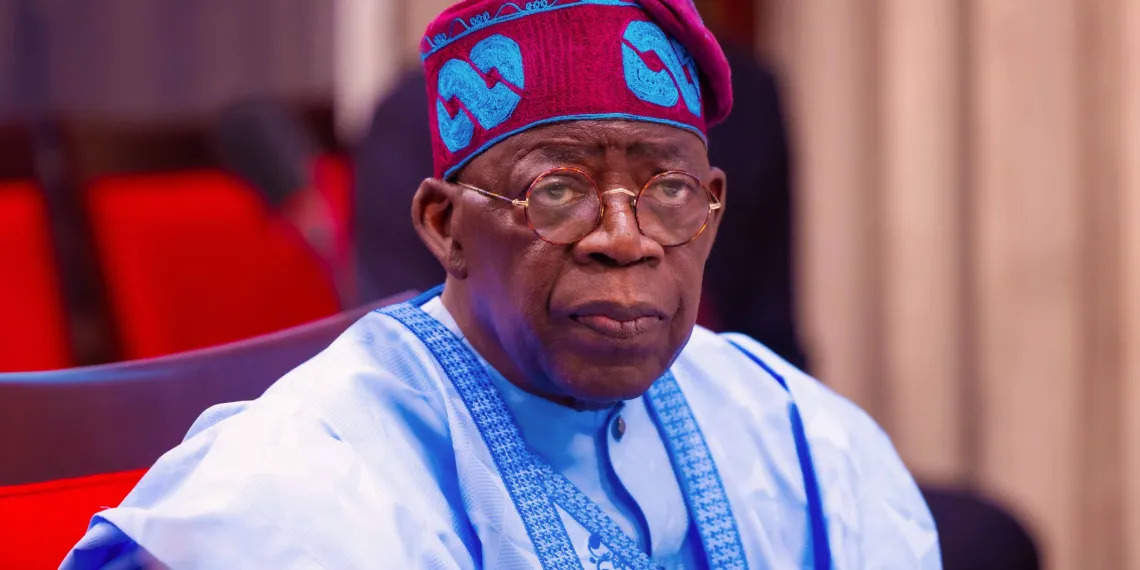
President Bola Tinubu said on Sunday that he was celebrating a low-key birthday because of the “mood of the nation.”
Mr Tinubu, in a statement he signed, said he has adopted that style as a tradition.
“Consistent with my tradition over the years to mark my birthday in line with the mood of the nation each year, I resolved to also observe this year’s birthday low-key.”
The president said he was aware of the tough economic situation Nigerians were facing due to his policies, worsened by the impact of the Israel-US war on Iran.
|
|
|---|
“As I mark this special day, I am reminded of the challenges we’ve faced since we initiated our reforms. I’m glad that our sacrifices have not been in vain, as we can see some glittering light at the end of the tunnel, despite the temporary setback caused by the ongoing Middle East crisis,” he wrote.
Mr Tinubu thanked his wife, Oluremi Tinubu, Vice President Kashim Shettima and others who have felicitated with him on his 74th birthday.
Read the president’s full statement below.
My dear fellow Nigerians,
Today, as I clock another year in the journey of life, I’m filled with joy and gratitude for the opportunity given me to serve this great nation. I want to take this moment to thank Nigerians for their messages, show of love and prayers on the occasion of my 74th birthday. I thank all our citizens for their patriotism, solidarity and support for our administration.
To those who have taken space in newspapers or paid for airtime on radio and television to wish me well, I thank you immensely.
I must thank my wife, First Lady Oluremi Tinubu, for her kind and loving words. I also thank Vice President Kashim Shettima for all he said about me.
Consistent with my tradition over the years to mark my birthday in line with the mood of the nation each year, I resolved to also observe this year’s birthday low-key.
As I mark this special day, I am reminded of the challenges we’ve faced since we initiated our reforms. I’m glad that our sacrifices have not been in vain, as we can see some glittering light at the end of the tunnel, despite the temporary setback caused by the ongoing Middle East crisis.
The credit for the positive outcomes we have achieved does not belong solely to me, our Renewed Hope team and to our government. We achieved the gains together.
As we march towards the third anniversary of our administration, it is my deepest conviction that we shall succeed in building a brighter future for our citizens and future generations.
READ ALSO: ‘I’ll stake everything on Tinubu’ — Seyi Law insists amid criticism
We are determined to confront some of the challenges we face today, and with your continued support, we shall overcome.
Let us continue to work together to build a stronger, prosperous and more resilient nation that will make Nigeria the pride of Africa.
Thank you all, and happy 74th birthday to me!
Bola Ahmed Tinubu
President of the Federal Republic of Nigeria
Facts Only
President Bola Tinubu celebrated his 74th birthday on Sunday.
He chose a low-key celebration, citing the "mood of the nation" as the reason.
Tinubu stated this approach aligns with his tradition of adjusting birthday observances based on national sentiment.
He acknowledged economic challenges faced by Nigerians due to his administration's reforms.
He mentioned the Israel-US war on Iran as a factor worsening economic conditions.
Tinubu expressed gratitude to his wife, Oluremi Tinubu, Vice President Kashim Shettima, and citizens for birthday wishes.
He claimed reforms are showing "glittering light at the end of the tunnel" despite temporary setbacks.
The statement was signed by Tinubu himself.
He thanked those who placed newspaper advertisements or paid for radio/TV airtime to wish him well.
Tinubu framed the reforms' positive outcomes as a collective achievement.
He reaffirmed his administration's commitment to building a brighter future for Nigeria.
The statement was released as part of his birthday message to Nigerians.
Executive Summary
President Bola Tinubu marked his 74th birthday with a low-key celebration, citing the "mood of the nation" as the reason for his subdued approach. In a personal statement, he acknowledged the economic hardships Nigerians are facing due to his administration's reforms, compounded by global disruptions like the Middle East crisis. Tinubu expressed gratitude for birthday wishes from citizens, his wife Oluremi, and Vice President Kashim Shettima, while emphasizing collective progress despite challenges. He framed the reforms as necessary sacrifices yielding early signs of success, though he admitted temporary setbacks. The president reiterated his commitment to building a prosperous Nigeria, urging unity and resilience. His message balanced personal reflection with political messaging, blending gratitude with a call for continued public support amid ongoing economic struggles.
The statement reflects a deliberate effort to align personal milestones with national sentiment, a strategy Tinubu described as a longstanding tradition. While he highlighted positive outcomes from his policies, he also tied current difficulties to external factors like geopolitical tensions. The tone was conciliatory yet resolute, positioning his leadership as both empathetic and determined. The absence of specific policy details or data leaves room for interpretation, but the focus on collective effort and future optimism was clear.
Full Take
**Steelman:** Tinubu’s statement is a strategic blend of personal humility and political messaging. By framing his low-key birthday as a response to national hardship, he demonstrates awareness of public sentiment—a savvy move for a leader facing economic backlash. The acknowledgment of challenges, paired with optimism about reforms, positions him as both empathetic and resolute. Crediting collective effort for progress is a unifying tactic, while externalizing some blame (e.g., Middle East crisis) softens criticism of his policies. The tone is carefully calibrated to balance accountability with hope, a classic leadership playbook during turbulent times.
**Pattern Scan:** The narrative employs several subtle framing techniques. The "glittering light at the end of the tunnel" metaphor is a classic **ARC-0012 Hope-Based Framing**, designed to sustain public patience amid hardship. The attribution of economic woes to external factors (Middle East crisis) risks **ARC-0024 Ambiguity**, as the direct impact of regional conflicts on Nigeria’s economy isn’t clarified. The emphasis on collective sacrifice and unity could be read as **ARC-0037 Appeal to Collective Identity**, a tool to rally support while deflecting individual policy scrutiny. However, the statement avoids overt manipulation, sticking to broad strokes rather than verifiable claims.
**Root Cause:** The paradigm here is crisis leadership—balancing transparency with morale-boosting rhetoric. The unstated assumption is that short-term pain will yield long-term gain, a gamble common in reformist agendas. Historically, this echoes post-structural adjustment narratives in Africa, where leaders frame austerity as necessary for future prosperity, often with mixed results.
**Implications:** For human agency, the message implies that endurance is the path to dignity, but it sidesteps the immediate costs borne by ordinary Nigerians. The beneficiaries are framed as future generations, while the current administration avoids direct accountability for hardship. Second-order consequences could include normalized acceptance of economic strain as "temporary," potentially delaying demands for tangible relief.
**Bridge Questions:**
1. How might Nigerians distinguish between necessary reforms and policy missteps if external factors (like geopolitical crises) are consistently blamed for economic pain?
2. What metrics would signal that the "light at the end of the tunnel" is more than rhetorical—e.g., measurable improvements in living standards?
3. If collective sacrifice is invoked, what mechanisms ensure the burden is shared equitably across social classes?
**Counterstrike Scan:** A coordinated influence campaign would amplify the "external factors" narrative to deflect blame, pair optimism with vague timelines, and leverage patriotic language to suppress dissent. This statement aligns partially—it uses external blame and hopeful framing—but stops short of outright suppression. The focus on unity over specifics suggests a cautious PR strategy rather than a full-throated manipulation playbook. No structural red flags detected.
Patterns detected: **ARC-0012 Hope-Based Framing, ARC-0024 Ambiguity, ARC-0037 Appeal to Collective Identity**