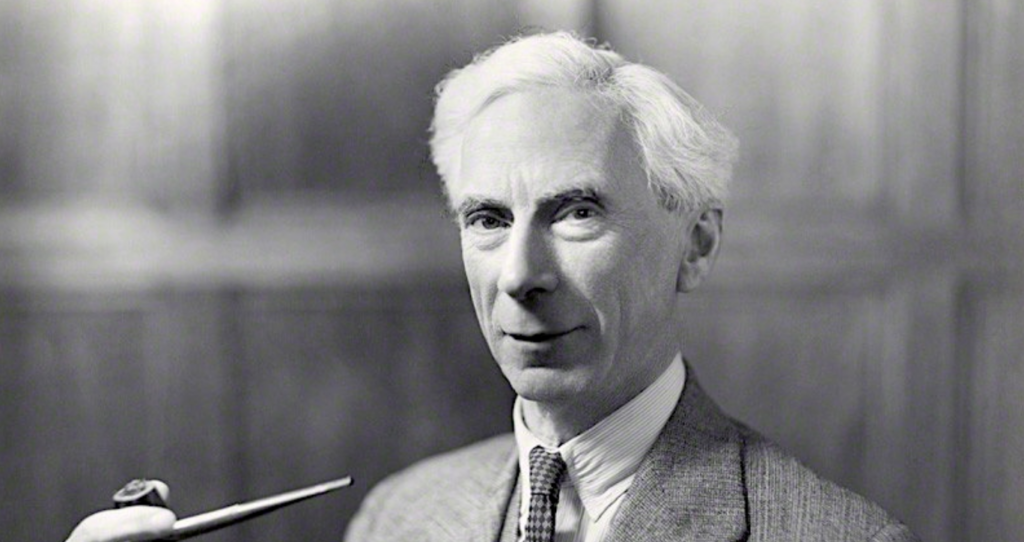
Image by National Portrait Gallery, via Wikimedia Commons
Advice on how to grow old frequently comes from such banal or bloodless sources that we can be forgiven for ignoring it. Public health officials who dispense wisdom may have good intentions; pharmaceutical companies who do the same may not. In either case, the messages arrive in a form that can bring on the despair they seek to avert. Elderly people in well-lit photographs stroll down garden paths, ballroom dance, do yoga. Bulleted lists punctuated by dry citations issue gently-worded guidelines for sensible living. Inoffensive blandness as a prescription for living well.
At the other extreme are profiles of exceptional cases—relatively spry individuals who have passed the century mark. Rarely do their stories conform to the model of abstemiousness enjoined upon us by professionals. But we know that growing old with dignity entails so much more than diet and exercise or making it to a hundred-and-two. It entails facing death as squarely as we face life. We need writers with depth, sensitivity, and eloquence to deliver this message. Bertrand Russell does just that in his essay “How to Grow Old,” written when the philosopher was 81 (sixteen years before he eventually passed away, at age 97).
Russell does not flatter his readers’ rationalist conceits by citing the latest science. “As regards health,” he writes, “I have nothing useful to say…. I eat and drink whatever I like, and sleep when I cannot keep awake.” (We are inclined, perhaps, to trust him on these grounds alone.) He opens with a drily humorous paragraph in which he recommends, “choose your ancestors well,” then he issues advice on the order of not dwelling on the past or becoming a burden to your children.
But the true kernel of his short essay, “the proper recipe for remaining young,” he says, came to him from the example of a maternal grandmother, who was so absorbed in her life, “I do not believe she ever had time to notice she was growing old.” “If you have wide and keen interests and activities in which you can still be effective,” Russell writes. “you will have no reason to think about the merely statistical fact of the number of years you have already lived, still less of the probable shortness of your future.”
Such interests, he argues, should be “impersonal,” and it is this quality that loosens our grip. As Maria Popova puts it, “Russell places at the heart of a fulfilling life the dissolution of the personal ego into something larger.” The idea is familiar; in Russell’s hands it becomes a meditation on mortality as ever-timely as the so-often-quoted passages from Donne’s “Meditation XVII.” Philosopher and writer John G. Messerly calls Russell’s concluding passage “one of the most beautiful reflections on death I have found in all of world literature.”
The best way to overcome it [the fear of death]—so at least it seems to me—is to make your interests gradually wider and more impersonal, until bit by bit the walls of the ego recede, and your life becomes increasingly merged in the universal life. An individual human existence should be like a river: small at first, narrowly contained within its banks, and rushing passionately past rocks and over waterfalls. Gradually the river grows wider, the banks recede, the waters flow more quietly, and in the end, without any visible break, they become merged in the sea, and painlessly lose their individual being. The man who, in old age, can see his life in this way, will not suffer from the fear of death, since the things he cares for will continue. And if, with the decay of vitality, weariness increases, the thought of rest will not be unwelcome. I should wish to die while still at work, knowing that others will carry on what I can no longer do and content in the thought that what was possible has been done.
Read Russell’s “How to Grow Old” in full here. And see many more eloquent meditations on aging and death—from Henry Miller, André Gide, Ursula K. Le Guin, and Grace Paley—at The Marginalian.
Note: An earlier version of this post appeared on our site in 2018.
Related Content:
Simone de Beauvoir’s Philosophy on Finding Meaning in Old Age
Josh Jones is a writer and musician based in Durham, NC.
Leave a Reply
Facts Only
Bertrand Russell wrote the essay "How to Grow Old" at age 81.
Russell lived to age 97, dying sixteen years after writing the essay.
The essay was referenced in a 2018 post and resurfaced in this discussion.
Russell's advice includes not dwelling on the past or becoming a burden to children.
He describes his personal habits: eating and drinking freely, sleeping when tired.
Russell's central idea is to cultivate wide, impersonal interests to mitigate the fear of death.
He uses the metaphor of a river merging into the sea to describe a fulfilling life.
The article mentions other writers like Henry Miller, André Gide, Ursula K. Le Guin, and Grace Paley as contributors to discussions on aging.
Public health officials and pharmaceutical companies are cited as sources of conventional, often superficial aging advice.
The National Portrait Gallery image is sourced via Wikimedia Commons.
The article links to Russell's full essay and additional meditations on aging at The Marginalian.
Josh Jones, a writer and musician based in Durham, NC, is credited as the author of the piece.
Executive Summary
Full Take
The strongest version of this narrative is its critique of reductive aging advice and its elevation of Russell’s humanistic philosophy as a more meaningful alternative. Russell’s essay stands out for its refusal to engage with scientific or prescriptive health advice, instead offering a meditative, almost poetic approach to mortality. His emphasis on dissolving the ego into broader, impersonal interests resonates as a counter to both the individualism of modern wellness culture and the fear-driven marketing of longevity products. The pattern here is less about manipulation and more about a refreshing departure from the usual framing of aging as either a medical problem or a statistical anomaly.
However, the piece does engage in a subtle form of authority borrowing by invoking Russell’s name and the gravitas of other literary figures. While not inherently manipulative, this could be seen as an appeal to intellectual prestige rather than empirical evidence. The contrast between Russell’s personal habits (indulgent eating, sleeping when tired) and conventional health advice also risks being misread as a strawman of public health guidance, which often acknowledges the role of mental and social well-being alongside physical health.
Rooted in existential philosophy, this narrative assumes that the primary challenge of aging is psychological—facing mortality with dignity—rather than socioeconomic or systemic. It echoes the Stoic and Buddhist traditions of accepting impermanence, but it doesn’t address the material realities that make "impersonal interests" a luxury for some. The implications for human agency are profound: Russell’s approach empowers individuals to reframe aging as a continuation of purpose rather than a decline. Yet, it may overlook those whose circumstances limit their ability to cultivate such interests.
Bridge questions: How might Russell’s philosophy apply to those whose aging is marked by isolation or economic hardship? Does the focus on ego dissolution risk dismissing the very real fears of dependency or suffering in old age? What would a synthesis of Russell’s humanism and evidence-based gerontology look like?
Counterstrike scan: A bad actor pushing this narrative might weaponize it to dismiss public health advice entirely, framing it as "banal" to sell alternative, unproven "spiritual" solutions. However, the actual content resists this by focusing on Russell’s genuine philosophical depth rather than promoting a product or ideology. The alignment is minimal—this appears to be a sincere engagement with ideas rather than a coordinated influence campaign.
Patterns detected: none
Sentinel — Human
The article appears to be human-written, displaying natural variations in sentence length, a personal voice, and no obvious signs of coordinated synthetic production or argumentative skeletons. However, it is important to note that while the probability of this being a human-written text is high, there are always exceptions, and AI-generated content can sometimes mimic human writing.