In a world of protein-maxxing and fiber-counting, it’s hard to remember a time when a baked good itself could be a fad.
But a decade ago, people underwent a frenzy for cupcakes. Adults would line up around the block for cupcakes that came out of vending machines; a company selling jumbo cupcakes with custard filling IPO’d at $13 a share, and people raced to buy a sheet of miniature tie-dye cupcakes for $45. The frenzy was so massive, the cupcake boom moved 669 million units in a single year, but like an overdone cupcake in the oven, it deflated just as quickly as it went up. Crumbs went from a Nasdaq darling to bankrupt in three years. Sprinkles, the brand that invented the cupcake ATM, shut its doors for good just weeks ago. Nearly every gourmet cupcake company from that era has dramatically flared out and died—except one.
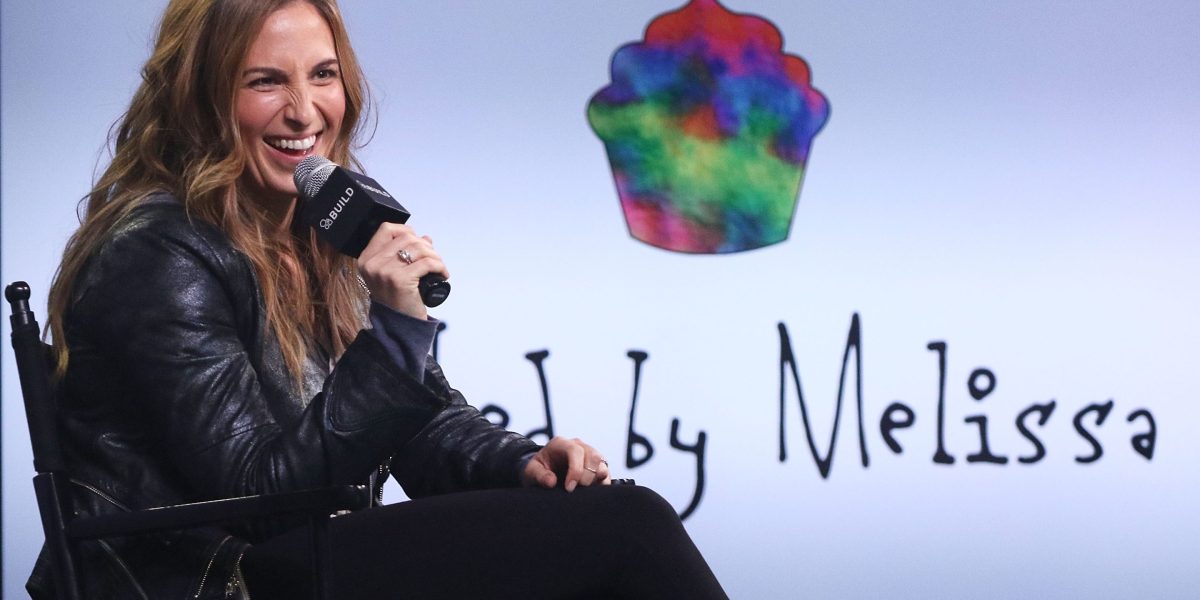
Melissa Ben-Ishay founded Baked by Melissa in 2008 after getting fired from her job as an assistant media planner at 24. Eighteen years and more than 500 million bite-sized cupcakes later, she’s stepping down as CEO—and for the first time, she says the company is open to a sale.
Ben-Ishay will transition to president—a title she held before the board installed her as CEO in late 2019—while Sanjay Khetan, the company’s current CFO, takes over as chief executive. In an exclusive Fortune interview with both Khetan and Ben-Ishay, Ben-Ishay said she’d planned to bring Khetan on with the intention of finding someone who could replace her. On her first day of being the President and not the CEO of her company, Ben-Ishay described the move candidly: “I am so freaking thrilled that I am no longer needed in that seat,” she said, “so I can focus on the areas of the business that I can uniquely drive.”
The openness to a sale marks a reversal for Ben-Ishay. In a 2025 interview with the Food Institute, Ben-Ishay said that maintaining quality standards was one of the reasons she’d “avoided acquisitions.” When Fortune read the quote back to her, she said she didn’t remember making it, then acknowledged the shift in her perspective. “It’s something we’re definitely interested in exploring and working towards,” she said. She noted that the company fields acquisition offers regularly. “Every day we get offers in my inbox,” she said.
Asked what Baked by Melissa figured out while other brands from that era burned out, Ben-Ishay credited its bite-sized format—mess-free, with no knife or fork required—and a “best in class” shipping experience. That, and a refusal to scale recklessly. “We didn’t try and grow too quickly,” she said. The company now has nine retail locations, nationwide shipping, and claims continued year-over-year top-line growth. Where Crumbs chased a Nasdaq listing and Sprinkles sold to private equity, Baked by Melissa stayed private, taking in just $6 million in outside funding in their 18 year tenure and keeping a light footprint.
Going viral for the opposite of cupcakes
Ben-Ishay had been CEO for barely three months when COVID shuttered stores across New York. “I was scared out of my mind,” she said, unsure of how to scale the business. Ben-Ishay has been open about the imposter syndrome that defined her early years—she has previously told Fortune she didn’t think she deserved the CEO title. Asked whether she ever felt the company had outgrown her, she was unequivocal. “Never,” she said.
In her first year of being a CEO and during a pandemic, she said the company grew e-commerce revenue roughly 99% year over year. It was also during the pandemic that Ben-Ishay accidentally built what she now calls “a business within my business”—going viral on TikTok not for cupcakes but for her Green Goddess salad recipe, which racked up over 27 million views. Her social following has spawned a brand partnerships division, two cookbooks (including a New York Times bestseller), and collaborations with Oatly, Squishmallows, and Ferrero.
Ben-Ishay’s TikToks are chaotic—food bits flying, kids yelling, smoke detector beeping—with the overachieving-burnt-out-mom energy that millennials have made aspirational. It clearly speaks to a strong contingent: Baked by Melissa has nearly 3 million followers on TikTok alone. On the call with Fortune, the vibe wasn’t all that different; Ben-Ishay took part of the interview from the passenger seat of a car, at one point pausing to hug and chat with someone while Khetan answered questions.
For Ben-Ishay, that comes with territory of being a high-powered, ambitious person. “I am a mom with young kids. I am a creator. I am a cookbook author—New York Times bestselling cookbook author—and an executive co-founder of Baked by Melissa,” she said. “Today, president and co-founder. Yesterday, CEO and co-founder,” which, she said, means she wears “many, many hats. And I have my priorities straight: I think this transition is not only best for Baked by Melissa, but best for me so I can breathe, like, a tiny bit.”
The question of what happens to the brand’s social media presence—arguably its most valuable marketing asset, built almost entirely on Ben-Ishay’s personal content—seems central to the transition. But she said she expects the shift to give her more time to create, not less. She has resisted the label “influencer” even as her following has grown. “I’m not an influencer by trade,” she said. “I have this greater responsibility, not only to Baked by Melissa, but also to my customer.”
The company’s founding story has always been a family affair. Ben-Ishay’s brother Brian Bushell co-founded the business and served as its first CEO until 2016. He remains a shareholder and is involved in high-level strategic conversations, according to Ben-Ishay. She declined to comment on a books-and-records inspection lawsuit that Bushell appears to have filed against the company. (Bushell has not responded to a request for comment). Her husband, Adi Ben-Ishay, also works at Baked by Melissa and will continue to report to Khetan.
Khetan said the partnership works because the division of labor is clean: Ben-Ishay leads brand and creative, he handles operations and finance. “The potential to create more value over the next couple of years is extraordinary,” he said.
Ben-Ishay offered a final thought. “Baked by Melissa—we make bite-sized stuffed cupcakes in a variety of flavors that make you feel like a kid again, and we ship nationwide,” she said. “And hop to it, because Easter is on its way.” Eighteen years in, and she’s still closing.
Facts Only
* Founded in 2008 by Melissa Ben-Ishay.
* The company sold over 500 million bite-sized cupcakes by 2023.
* In 2009, a jumbo cupcake company with custard filling IPO’d at $13 a share.
* The “cupcake boom” generated 669 million units sold in a single year.
* Crumbs, a similar cupcake chain, declared bankruptcy in three years.
* Sprinkles, a brand that popularized cupcake ATMs, shut down in 2023.
* Melissa Ben-Ishay is stepping down as CEO and transitioning to president.
* Sanjay Khetan is taking over as chief executive.
* Baked by Melissa now has nine retail locations nationwide.
* The company fields acquisition offers regularly.
* The company’s bite-sized format has been a key element of its success.
* The company ships nationwide and has experienced year-over-year top-line growth.
* The company has raised $6 million in outside funding.
Executive Summary
Full Take
The narrative of Baked by Melissa’s survival isn't simply a story of a successful brand; it's a micro-case study in trend-driven capitalism and the dangers of pursuing “peak hype.” The article expertly highlights the systemic failure of "Crumbs" and "Sprinkles," brands that prioritized rapid expansion and chasing a fleeting fad, ultimately collapsing under their own weight. Ben-Ishay’s strategic decision to avoid scaling recklessly—a deliberate choice to remain “under the radar”—provides a crucial counterpoint to this pattern. However, the shift towards openness to a sale, coupled with the belated realization of the company’s value through TikTok’s viral marketing, reveals a significant reckoning. The “imposter syndrome” Ben-Ishay admits to underscores a deeper tension: the struggle to maintain a brand identity forged in chaotic creativity while navigating the demands of a commercially driven enterprise.
Pattern detected: ARC-0043 Motte-and-Bailey – Ben-Ishay’s initial reluctance to consider acquisitions, followed by her later openness, represents a shift in position that’s framed as a pragmatic adaptation. The quote about quality standards initially presented as a barrier now reads as a defensive reaction to the unsustainable demands of the initial boom. The article doesn’t truly grapple with the fundamental question of whether a brand built on disposable trends can truly achieve sustainable success, instead offering a tactical explanation of survival. This pattern is further reinforced by the almost clinical presentation of the company’s data – units sold, funding raised – which avoids any judgment about the nature of the phenomenon.
The reliance on a single, almost mythical, “TikTok moment” as the explanation for the company’s longevity is concerning. While the viral salad recipe undeniably expanded the brand’s reach, it’s presented as the *sole* factor in their continued success, effectively obscuring the significant strategic choices made early on – specifically, the deliberate restraint that allowed them to avoid the explosive, unsustainable growth of their competitors. This frames a complex reality – a blend of strategic adaptation and fortunate timing – in a deceptively simple narrative. The inclusion of her brother, Brian Bushell’s legal action, adds an element of unresolved conflict, hinting at deeper internal divisions and potentially unaddressed liabilities.
Questions remain: If Baked by Melissa is truly recognizing the need for a sale, what specific valuation are they seeking? How does the brand’s evolving identity – now intertwined with a highly engaged social media following – impact the potential strategic options? Furthermore, does the reliance on Ben-Ishay’s personal brand – a deliberately chaotic and “overachieving-burnt-out-mom” persona – represent a sustainable marketing strategy for the long term? The article’s framing implicitly suggests a romanticized view of entrepreneurship—a charmingly flawed founder fighting against the system—rather than a hard-nosed assessment of business fundamentals.
Sentinel — Likely Human
This article presents a narrative portrait of Baked by Melissa’s leadership transition, utilizing a blend of direct quotes and contextual detail. While the article relies on a balanced and conversational tone, several stylistic elements – including emphatic phrasing and personal anecdotes – suggest it was written by a human journalist rather than generated by AI.