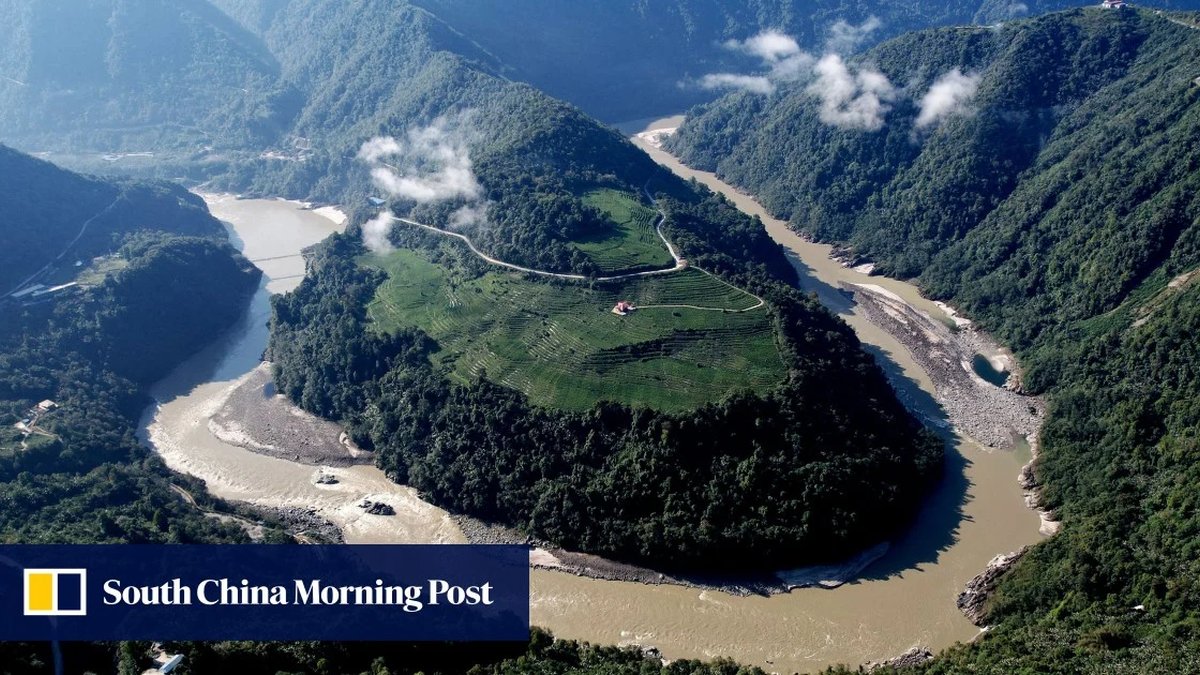
New analysis brings call for slope reinforcement for massive mega-dam project in Tibet to mitigate risks of landslides and collapses
The scientists said a fracture in the Earth’s crust in the eastern Himalayan region would significantly affect the integrity of the massive hydropower project’s infrastructure.
In a paper published last month in the Chinese-language journal Sedimentary Geology and Tethyan Geology, supervised by the state-owned China Geological Survey, the team urged engineers to strengthen slope stability and implement retaining protections to mitigate the risk of landslides and collapses.
The study was conducted by geologists from the Chengdu University of Technology, the Civil-Military Integration Centre of the China Geological Survey, and the Middle Yarlung Zangbo River Natural Resources Observation and Research Station.
“The Paizhen Fault, which has been highly active since the Pleistocene [also known as the Ice Age], will have a major impact on the structural stability and construction of nearby structures, including dams, roads, bridges and tunnels, as well as the reservoir area,” the researchers wrote.
Sentinel — Human
This text reads like a factual summary derived from an official scientific publication, exhibiting structural characteristics consistent with established journalistic or academic reporting rather than synthetic narrative generation.