Liam Gaughan is a film and TV writer at Collider. He has been writing film reviews and news coverage for ten years. Between relentlessly adding new titles to his watchlist and attending as many screenings as he can, Liam is always watching new movies and television shows.
In addition to reviewing, writing, and commentating on both new and old releases, Liam has interviewed talent such as Mark Wahlberg, Jesse Plemons, Sam Mendes, Billy Eichner, Dylan O'Brien, Luke Wilson, and B.J. Novak. Liam aims to get his spec scripts produced and currently writes short films and stage plays. He lives in Allentown, PA.
The word “bravery” is sometimes overused when describing the filmmaking process; while it does take stamina to put one’s creative ideas on display, making a film is rarely a legitimately dangerous act. However, the acclaimed Iranian filmmaker Mohammad Rasoulof was targeted by the government prior to the premiere of his film The Seed of the Sacred Fig, as it was deemed “propaganda” by the authorities. Rasoulof had previously been arrested for protesting the government but was released and able to film The Seed of the Sacred Fig in secret so that it could debut at the Cannes Film Festival. And now you can watch this powerful film on Hulu.
Although he was sentenced to eight years in prison, Rasoulof fled by foot to Europe and was able to complete editing The Seed of the Sacred Fig in Germany. Although The Seed of the Sacred Fig was submitted and nominated as Germany’s entry for the Academy Award for Best International Feature, italso stands as an important work of political filmmaking that should turn the eyes of the world to the horrific situation going on in Tehran.
What Is ‘The Seed of the Sacred Fig’ About?
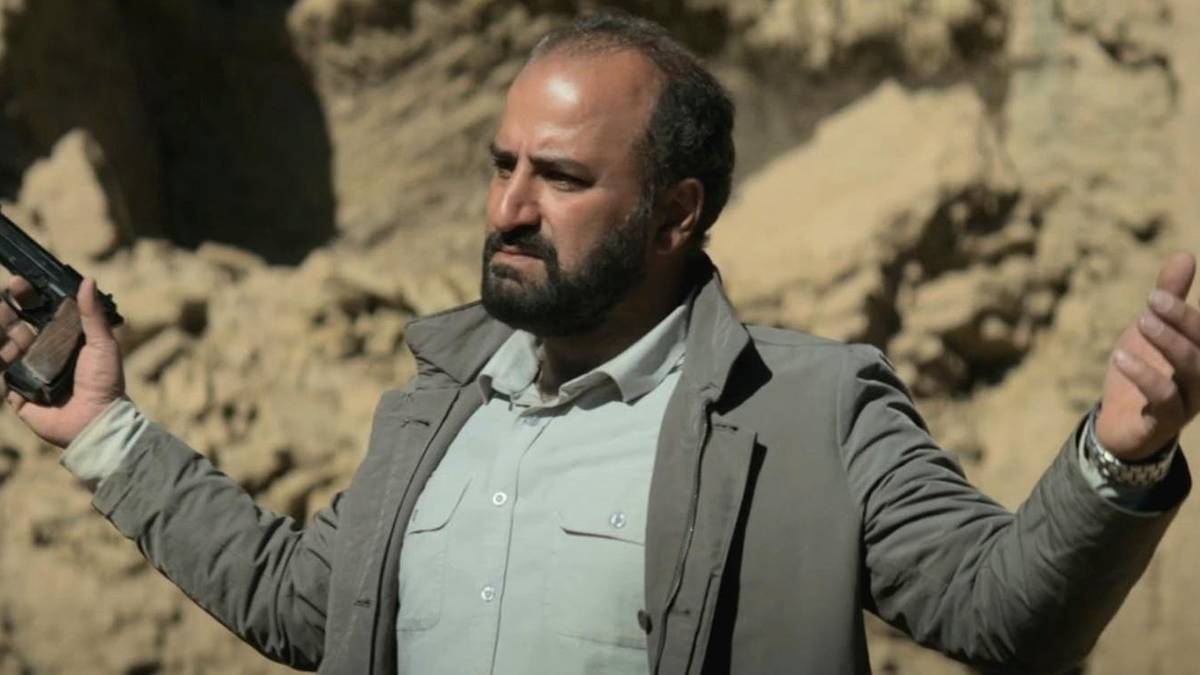
Although the story of the film is fictional, The Seed of the Sacred Fig is set during the real Iranian protests in 2022, in which critics of the government took to the streets after a young woman was killed under suspicious circumstances; real footage from the events was incorporated by Rasoulof to provide contextual information. The film centers on the lawyer Iman (Missagh Zareh), who is appointed to be a federal judge within the Revolutionary Court and given a gun to defend himself. Iman begins to grow agitated about his work, as he learns that he will pass execution orders given to him by higher-ranking officials; he is also not allowed to pass along any information about the nature of his work to his wife, Najmeh (Soheila Golestani), who raises their adolescent children Rezvan (Mahsa Rostami) and Sana (Setareh Maleki). The situation spirals out of control when Iman discovers that the gun is missing, leading him to question the loyalties of the family he thought he could trust.
COLLIDER.
Collider · Quiz
Collider Exclusive · Oscar Best Picture QuizWhich Oscar Best Picture Is Your Perfect Movie?Parasite · Everything Everywhere · Oppenheimer · Birdman · No Country
Five Oscar Best Picture winners. Five completely different visions of what cinema can be — and what it can do to you. One of them is the film that was made for the way your mind works. Ten questions will figure out which one.
🪜Parasite
🌀Everything Everywhere
☢️Oppenheimer
🐦Birdman
🪙No Country for Old Men
QUESTION 1 / 10TONE
01
What kind of film experience do you actually want?The best movies don't just entertain — they leave something behind.
QUESTION 2 / 10THEME
02
Which idea grabs you most in a film?Great films are driven by a central obsession. What's yours?
QUESTION 3 / 10STRUCTURE
03
How do you like your story told?Form is content. The way a story is shaped changes what it means.
QUESTION 4 / 10VILLAIN
04
What makes a truly great antagonist?The opposition defines the protagonist. What kind of opposition fascinates you?
QUESTION 5 / 10ENDING
05
What do you want from a film's ending?The final note is the one that lingers. What do you want it to sound like?
QUESTION 6 / 10WORLD
06
Which setting pulls you in most?Where a film takes place shapes everything — mood, stakes, what's even possible.
QUESTION 7 / 10CRAFT
07
What cinematic craft impresses you most?Every great film has a signature — a technical or artistic element that makes it unmistakable.
QUESTION 8 / 10PROTAGONIST
08
What kind of main character do you root for?The protagonist is the lens. Who you choose to follow says something about you.
QUESTION 9 / 10PACE
09
How do you feel about a film that takes its time?Pace is a choice. Some films sprint; others let tension accumulate slowly, deliberately.
QUESTION 10 / 10AFTERMATH
10
What do you want to feel walking out of the cinema?The best films leave a mark. What kind of mark do you want?
The Academy Has DecidedYour Perfect Film Is…
Your answers have pointed to one Oscar Best Picture winner above all others. This is the film that was made for the way your mind works.
BEST PICTURE 2020
Parasite
You are drawn to films that operate on multiple levels simultaneously — that begin in one genre and quietly, brilliantly migrate into another. Bong Joon-ho's Parasite is a film about class, desire, and the architecture of inequality that manages to be darkly funny, deeply suspenseful, and genuinely shocking across a single extraordinary running time. Your instinct is for cinema that hides its true intentions until the moment it's ready to reveal them. Parasite is exactly that — a film that rewards close attention and punishes assumptions, right up to its devastating final image.
BEST PICTURE 2023
Everything Everywhere All at Once
You want it all — and this film gives you all of it. The Daniels' Everything Everywhere All at Once is one of the most maximalist films ever made: action comedy, multiverse sci-fi, family drama, existential crisis, and a genuinely earned emotional core that sneaks up on you amid the chaos. You are someone who responds to ambition, who doesn't want cinema to choose between being entertaining and being meaningful. This film refuses that choice entirely. It is overwhelming by design, and its overwhelming nature is precisely the point — because the feeling of being crushed by infinite possibility is exactly what it's about.
BEST PICTURE 2024
Oppenheimer
You are drawn to cinema on a grand scale — films that understand history not as a backdrop but as a force, and that place their characters inside that force and watch what happens. Christopher Nolan's Oppenheimer is a film about the terrifying gap between what we can do and what we should do, told with the full weight of one of the most consequential moments in human history behind it. You want your films to feel important without feeling self-important — to earn their ambition through sheer craft and the gravity of their subject. Oppenheimer does exactly that. It is enormous, complicated, and refuses easy comfort.
BEST PICTURE 2015
Birdman
You are drawn to films that foreground their own construction — that make the how of the filmmaking part of the what it's about. Alejandro González Iñárritu's Birdman, shot to appear as a single continuous take, is cinema examining itself through the cracked mirror of a fading actor's ego. You respond to formal daring, to the feeling that a film is doing something that probably shouldn't be possible. Michael Keaton's performance and Emmanuel Lubezki's restless camera create something genuinely unlike anything else — a film that is simultaneously about creativity, relevance, self-destruction, and the impossibility of ever truly knowing if your work means anything at all.
BEST PICTURE 2008
No Country for Old Men
You are drawn to cinema that trusts silence, that refuses to explain itself, and that treats dread as a form of meaning. The Coen Brothers' No Country for Old Men is a film about the arrival of a new kind of evil — implacable, arbitrary, and utterly indifferent to the moral frameworks we use to make sense of the world. It is one of the most formally controlled films ever made, and its controlled restraint is what makes it so terrifying. You want your films to haunt you, not comfort you. You are not interested in resolution if resolution would be dishonest. No Country for Old Men is honest in a way that most cinema never dares to be.
The Seed of the Sacred Fig explores how the governmental practices in Iran cause the splintering of one family, as the film is tightly focused on how paranoia and fear cause Iman to act irrationally. Iman is so used to being tracked by the government that he knows that any mistake on his part could cause significant consequences; since the gun was registered to him, its involvement in any crime could be traced back to him. Iman’s situation is more strenuous because he does not feel that there is anyone that he can trust; while he is afraid that any other government employees would inform on him to steal his position, he also comes to suspect his family, as Rezvan has become increasingly interested in the revolutionary movement. Although Iman is terrified of the power that the authoritative regime holds, he also fears that he could be targeted by protesters if they knew of his real employment.
What Impact Will ‘The Seed of the Sacred Fig’ Have?
The Seed of the Sacred Fig examines why Iran is in a period of political stagnation, as many people who disagree with the government are forced into isolation. While Rezvan discovers that there are many others on social media that share her resentment towards the law enforcement process, Iman is so obsessed with avoiding political conversations that he prevents the family from watching television news or having any active conversations about controversial topics. Although Iman acts in ways that may seem irrational, it's easy to understand how a man with no support system would be willing to put his family in such intense situations.
The Seed of the Sacred Fig is a great piece of filmmaking, as it is rare to find a film nearly three hours in length in which every scene advances the narrative and reveals something new about the characters. However, the danger that Rasoulof experienced shows how powerful cinema can be, as there was genuine fear on the part of the Iranian government that The Seed of the Sacred Fig could inspire sympathy for the protesters. Rasoulof has earned his place among the great filmmakers working today, but he’s also helped to influence important conversations about an experience that many viewers may be ignorant of.
Facts Only
Mohammad Rasoulof is an Iranian filmmaker who directed *The Seed of the Sacred Fig*.
The film premiered at the Cannes Film Festival.
Rasoulof was arrested for protesting the Iranian government but was later released.
He filmed *The Seed of the Sacred Fig* in secret due to government opposition.
The film was deemed "propaganda" by Iranian authorities.
Rasoulof was sentenced to eight years in prison but fled to Europe on foot.
He completed editing the film in Germany.
The film was submitted as Germany’s entry for the Academy Award for Best International Feature.
*The Seed of the Sacred Fig* is set during the 2022 Iranian protests.
The story follows Iman, a lawyer appointed as a federal judge, who struggles with his role in the Revolutionary Court.
The film incorporates real footage from the 2022 protests.
Rasoulof’s previous arrests and the film’s secret production highlight the risks faced by artists in repressive regimes.
The film is now available to stream on Hulu.
Executive Summary
Full Take
The narrative around *The Seed of the Sacred Fig* presents a compelling case for the power of art as resistance, but it also invites deeper scrutiny of how political narratives are framed in global media. The strongest version of this story—its steelman—is that Rasoulof’s film serves as both a creative achievement and a courageous act of dissent, exposing the human cost of authoritarianism. The film’s use of real protest footage and its focus on a family’s unraveling under state pressure amplify its emotional resonance, making it a potent tool for raising awareness about Iran’s political climate.
However, the framing of Rasoulof’s work as "propaganda" by Iranian authorities—while intended as a condemnation—ironically aligns with the film’s potential to influence public opinion. This raises questions about the line between art and activism, and whether Western audiences might uncritically embrace the film as a definitive portrayal of Iran’s struggles without considering its fictionalized elements or the complexities of Iranian society. The narrative also leans on the trope of the "brave artist" defying oppression, which, while true in this case, can sometimes oversimplify the broader systemic issues at play.
Root cause: The paradigm here is the tension between artistic expression and state control, a recurring theme in authoritarian regimes. The unstated assumption is that art can—and should—challenge power, but this also presupposes that Western audiences will interpret the film through a lens of moral clarity, without nuance about Iran’s internal dynamics.
Implications: The film’s global release could amplify international pressure on Iran’s government, but it may also reinforce a binary view of "oppressor vs. oppressed," potentially overlooking the diverse perspectives within Iran itself. The cost of Rasoulof’s bravery is personal—exile, imprisonment—but the benefit is a broader conversation about censorship and resistance.
Bridge questions: How might Iranian audiences, particularly those sympathetic to the government, interpret this film differently? What role does fiction play in shaping political narratives, and where does it risk oversimplifying reality? Would the film’s impact change if it were framed as a work of art rather than a political statement?
Counterstrike scan: If this were part of a coordinated influence campaign, the playbook would involve amplifying the film’s political messaging to undermine Iran’s government while positioning Rasoulof as a martyr for free speech. However, the content itself—focused on a personal, familial drama—does not appear to be a direct tool of propaganda. The alignment is structural but not manipulative; the film’s power lies in its authenticity, not in a calculated agenda.
Patterns detected: none