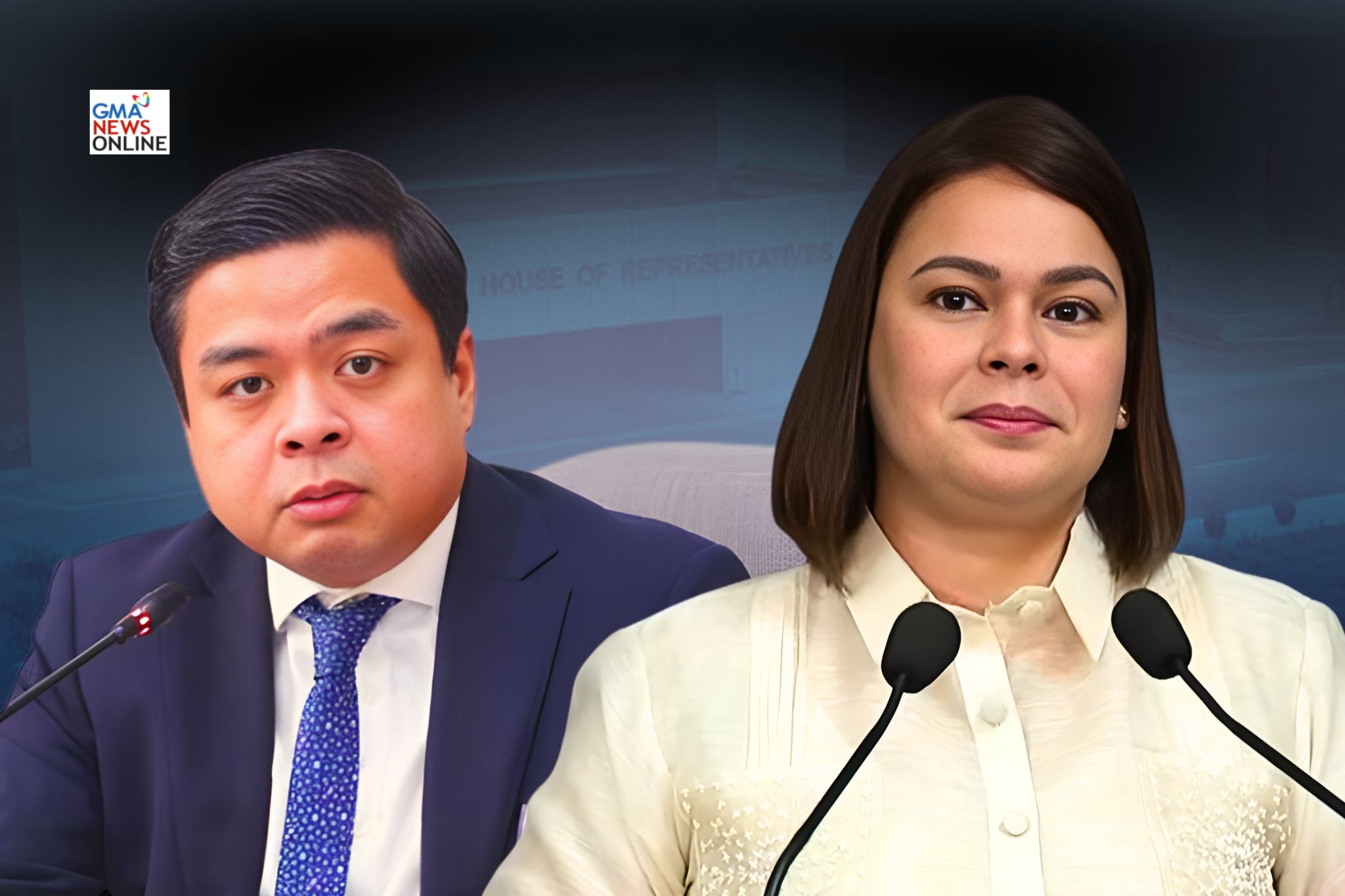
Bicol Saro party-list Rep. Terry Ridon on Sunday said he believes the Supreme Court will likely dismiss a petition seeking to stop the House of Representatives from proceeding with impeachment complaints against Vice President Sara Duterte.
“Ito ay isang petisyon na, sa tingin ko, ibabasura ng Korte Suprema dahil wala namang ligal na personalidad itong mga abogado at alyado ng Pangalawang Pangulo na magsampa ng kasong ito,” Ridon told Super Radyo dzBB.
(“I believe the Supreme Court will dismiss this petition because these lawyers and allies of the Vice President have no legal personality to file this case.”)
The lawmaker said petitions of this nature must be anchored on legal standing.
“Ang sinasabi nila, nagpa-file sila bilang taxpayers. Hindi pwede 'yun. Kapag taxpayers' suits, kailangan ang pinag-uusapan ay disbursement ng public funds, eh impeachment ang pinag-uusapan,” Ridon said.
(“They said they filed the petition as taxpayers, which is not allowed because taxpayer suits must involve the disbursement of public funds, while this case involves impeachment.”)
“Ang tanging pwedeng mag-challenge ng isang impeachment proceedings ay impeachable official katulad ng Pangalawang Pangulo,” he added.
(“The only one who can challenge impeachment proceedings is the impeachable official, such as the Vice President.”)
In a 186-page petition, the petitioners asked the Supreme Court to issue a temporary restraining order (TRO) and declare that the House Committee on Justice gravely abused its discretion when it sustained the third and fourth impeachment complaints against Duterte, arguing that these lacked sufficiency in form and substance.
They also sought a ruling declaring that the complaints should have been dismissed outright for alleged insufficiency in form and/or substance.
Ridon rejected the petitioners’ claims, saying the impeachment proceedings are being conducted in accordance with the 1987 Constitution and the House Rules on Impeachment.
“Walang batayan ang sinasabi nila na ito ay isang malaking ‘fishing expedition,’ lalo’t higit may buong kapangyarihan ang Kongreso at komite na mag-isyu ng mga subpoena para magbigay ng paglilinaw sa mga paratang ng complainants natin,” the lawmaker said.
(“There is no basis for their claim that this is a ‘fishing expedition,’ especially since Congress and its committee have full authority to issue subpoenas to clarify the allegations.”)
Vice President Duterte earlier said she would rather focus on assisting those affected by rising petroleum prices than attend the hearings, which she described as a “third fishing expedition” against her.
In a separate statement on Sunday, Deputy Speaker and La Union Rep. Paolo Ortega II said he expects Duterte’s trust rating to decline further amid the ongoing impeachment proceedings.
“Tingin ko babagsak pa ‘yang trust ratings niya. Matagal nang nakabitin ‘yung mga isyu na ‘yan na hindi niya maipaliwanag kasi wala naman siyang sagot diyan.
(“I think her trust ratings will drop further. These issues have long been unresolved, and she has not been able to explain them.)
‘Yan ang nakatanim na sa isipan ng taong bayan, kaya ganyan kalawak ang distrust sa kanya,” Ortega said.
(That is already in the public’s mind, which is why distrust toward her is widespread.”)
Ortega cited a Pulse Asia survey indicating that 51.5% of respondents said alleged involvement in corruption was the main reason for their distrust.
He noted that the survey was conducted before Duterte declined an invitation from the House Committee on Justice and before the petition was filed before the Supreme Court.
Meanwhile, members of the House Committee on Justice said they will continue their hearings on the impeachment complaints despite the pending petition before the Supreme Court questioning the proceedings.—MCG, GMA Integrated News
Facts Only
Bicol Saro party-list Rep. Terry Ridon believes the Supreme Court will dismiss a petition to stop impeachment proceedings against Vice President Sara Duterte.
The petition was filed by lawyers and allies of Duterte, seeking a temporary restraining order (TRO) against the House of Representatives.
Petitioners argue the House Committee on Justice abused its discretion in sustaining the third and fourth impeachment complaints against Duterte.
The petition claims the complaints lack sufficiency in form and substance.
Ridon states the petitioners lack legal standing, as taxpayer suits must involve public funds, not impeachment.
Ridon asserts only the impeachable official, such as the Vice President, can challenge impeachment proceedings.
The impeachment proceedings are conducted under the 1987 Constitution and House Rules on Impeachment.
Vice President Duterte has called the hearings a "fishing expedition" and declined to attend.
Deputy Speaker Paolo Ortega II predicts Duterte's trust ratings will decline due to unresolved corruption allegations.
A Pulse Asia survey shows 51.5% of respondents distrust Duterte due to alleged corruption.
The House Committee on Justice will continue hearings despite the pending Supreme Court petition.
Executive Summary
Full Take
The strongest version of this narrative centers on the legal and procedural legitimacy of the impeachment process against Vice President Sara Duterte. Proponents argue that the House of Representatives is acting within its constitutional authority, while critics, including Duterte’s allies, claim the process is politically motivated and lacks substantive grounds. The debate hinges on whether the Supreme Court will intervene, with Ridon’s argument that the petitioners lack standing being a key legal hurdle.
Patterns detected: ARC-0024 Ambiguity (use of terms like "fishing expedition" without clear legal definition), ARC-0043 Motte-and-Bailey (shifting between broad claims of abuse of discretion and specific procedural arguments).
The root cause appears to be a clash between institutional accountability and political maneuvering. The impeachment process, while constitutionally grounded, is inherently political, and the legal challenges reflect broader tensions over how such proceedings should be conducted. The narrative echoes historical patterns of impeachment being used as a tool for political opposition, raising questions about whether the process is being weaponized or legitimately pursued.
Implications for human agency and dignity include the potential erosion of public trust in institutions if the process is perceived as partisan. The second-order consequences could include further polarization, with Duterte’s supporters viewing the proceedings as a witch hunt and critics seeing them as necessary accountability. The cost is borne by the public, whose trust in governance may diminish if the process is seen as unfair or politically driven.
Bridge questions: What evidence would change your view on the legitimacy of these impeachment proceedings? How should the balance between legal standing and political accountability be struck in such cases? What safeguards could prevent impeachment from becoming a tool for partisan attacks?
Counterstrike scan: A coordinated influence campaign would likely amplify claims of political persecution while downplaying procedural legitimacy. The actual content does not fully match this pattern, as it presents both legal arguments and political context without overt manipulation. However, the framing of the petitioners' claims as lacking standing could be used to delegitimize opposition voices, which warrants scrutiny.