By Dan Williams, Kateryna Kadabashy and Dana Khraiche
Mar 28, 2026 (Bloomberg) —Houthi militants launched ballistic missiles at Israel on Saturday morning, marking their entry into the month-long Iran war that has already caused chaos in energy markets and killed thousands of people.
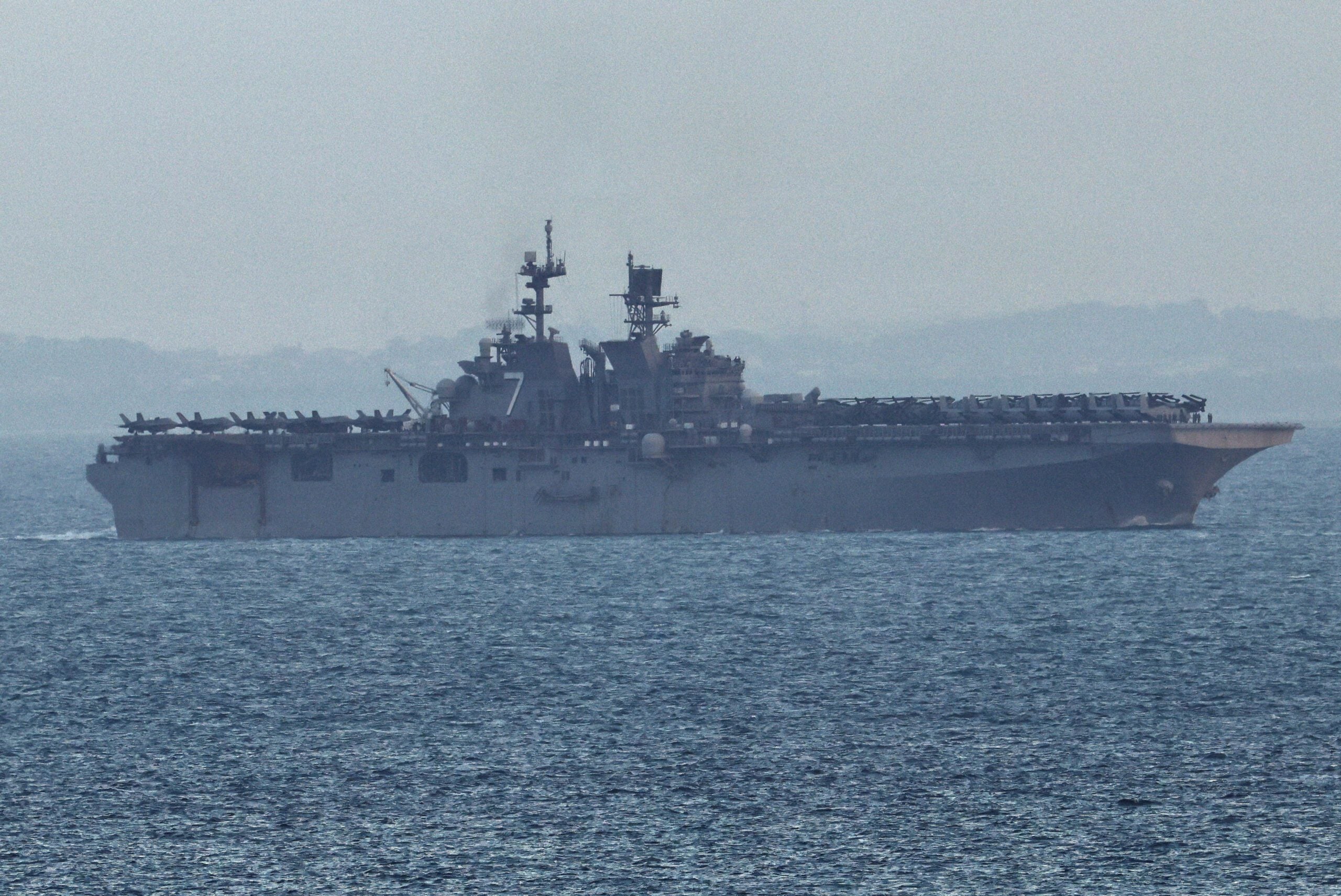
Some 3,500 sailors and Marines arrived in the region on an amphibious assault ship, according to the US military. Israel continued bombing Iran overnight and on Saturday, while Tehran stepped up strikes across the region and wounded more than a dozen American personnel in an attack on a Saudi base, according to multiple media reports.
The Yemen-based Houthis, who are supported by Iran, said they would continue operations until US-Israeli attacks on the Islamic Republic and its proxy militant groups, including Hezbollah in Lebanon, cease. Later Saturday, the Houthis said they carried out a second military operating targets Israel with cruise missiles and drones.
Israel’s military said it identified the launch of a missile from Yemen toward its territory, but did not immediately say if the projectile was intercepted.
The move by the Houthis — announced via a statement on Telegram — opens a new front in the war and raises fresh risks for the oil market. The group hasn’t launched strikes on Israel since a ceasefire in the country’s war against Hamas in Gaza began in October.
While the Houthis didn’t say they would target tankers or other vessels transiting the southern Red Sea and the Bab El-Mandeb Strait, they have the capability to do so. The group effectively shut the waterway to most Western shippers after the war in Gaza began in 2023, forcing vessels to reroute and disrupting a key shipping corridor.
The Saudi Arabian port of Yanbu, which the kingdom is using to bypass the closed Strait of Hormuz for its oil exports, is well within the range of Houthi missiles.
For now, the Houthis are likely to avoid targeting Saudi oil sites, New York-based political consultancy Eurasia Group said in a note to clients. The Islamist militants agreed a truce with Saudi Arabia in 2022, which has largely held and involved the Saudi government making some payments to areas under Houthi control.
While the Houthis “need to be seen as participating in the war effort, they remain inclined towards minimizing the downsides of further entanglement in the war and keeping their tacit understanding with Saudi alive,” Eurasia analysts including Firas Maksad said on Saturday. “The Houthis may still target Saudi oil exports under pressure from Iran in case of escalation.”
Iran launched what it said were retaliatory strikes on Gulf Arab states and Israel after US-Israeli attacks on its atomic facilities and steel plants on Friday.
The United Arab Emirates on Saturday reported fires at its Kezad industrial site in the emirate of Abu Dhabi. Those followed ballistic missile interceptions that wounded at least six people.
Emirates Global Aluminum, the Middle East’s largest producer, said its Al Taweelah site at Kezad was damaged significantly by Iranian drone and missile attacks. Hours later, Iran struck a facility run by Aluminium Bahrain.
A strike on Prince Sultan Air Base in Saudi Arabia on Friday left at least 15 US troops wounded, including five seriously, and damaged several refueling aircraft, the Associated Press reported. One of the damaged airplanes was an E-3 Sentry, which is equipped with airborne warning and control system radar to help track drones and missiles, according to the Wall Street Journal.
Iran fired six ballistic missiles and almost 30 drones at the base, the AP reported, citing unnamed officials. The US military hasn’t commented yet publicly. The AP also said more than two dozen US troops have been wounded in Iranian attacks on the same base — about 60 miles (97 kilometers) southeast of Riyadh — in the past week.
Kuwait said its airport came under several drone attacks on Saturday, with a radar system sustaining major damage. In Oman, Salalah port was targeted by multiple drones, halting operations and injuring one person.
One person was killed in an Iranian strike on Tel Aviv, according to Israel’s emergency services. The Israeli military also said nine soldiers were injured, at least one of them severely, in southern Lebanon on Friday.
The US military said in a social media post on Saturday that it had struck more than 11,000 targets and destroyed more than 150 Iranian vessels since the conflict began.
The escalation is adding to fears the conflict will drag on. There’s still little sign that Iran and the US will meet for peace talks soon, even though President Donald Trump has pushed for negotiations this week. He delayed his deadline to April 6 for Tehran to agree to reopen the vital Strait of Hormuz or have its power plants demolished.
Iran rejected a 15-point proposal from Trump, which essentially offered Tehran sanctions relief in return for it dismantling nuclear facilities and reducing its missile arsenal, as well as reopening Hormuz. The waterway — through which a fifth of the world’s oil and liquefied natural gas supplies normally flow — has been all but closed since the US and Israel started the war on Feb. 28 with strikes on Iran.
Iran, for its part, is insisting on war reparations, recognition of some form of control over Hormuz and pledges that the US and Israel won’t attack it in future.
The foreign ministers of Pakistan, Saudi Arabia, Turkey and Egypt are set to meet in Islamabad on March 29-30 to discuss efforts to deescalate the conflict. Pakistani Prime Minister Shehbaz Sharif spoke to Iranian President Masoud Pezeshkian for more than an hour on Saturday as part of those mediation efforts.
Pakistan has emerged as a key mediator and has offered itself as a venue for any US-Iran talks.
Pakistani Foreign Minister Ishaq Dar said in a post on X that Iran had agreed to allow 20 Pakistani-flagged ships to pass through the Strait of Hormuz and will allow two a day going forward. “It is a harbinger of peace,” he said.
Oil Rises
Oil continued to rise in the past few days, with traders’ optimism about a ceasefire in the near-term fading. Brent crude closed on Friday above $112 a barrel, extending the international benchmark’s advance since the start of the conflict to more than 55%.
The conflict has caused fuel shortages and led to fears of lower growth and faster inflation, or stagflation, across the global economy.
The war has left over 4,500 people dead, according to governments and non-governmental agencies. Around three-quarters of fatalities have been in Iran, while almost 1,100 people have died in Lebanon, where more than a million people have been displaced. Dozens of people have been killed in Israel and Arab Gulf states.
Friday’s airstrikes by the US-Israeli alliance targeted a heavy water research reactor that’s part of Iran’s Arak nuclear complex, as well as a yellowcake production plant in Yazd province. Two of Iran’s biggest steelmakers were also hit.
Fars reported explosions across several districts of Tehran early Saturday, including strikes near Mehrabad Airport west of the capital. It’s the main hub for domestic flights.
For all that Trump says Iran should negotiate peace, he is also saying the US can continue with strikes on the Islamic Republic. On Friday, he said more than 3,500 targets remained in Iran and “that’ll be done pretty quickly.”
“They are talking now, they want to make a deal,” Trump told reporters in Miami. “Iran is being decimated.”
US Secretary of State Marco Rubio told his Group of Seven counterparts on Friday that the war would take more weeks, but not months, according to a person familiar with the matter.
Trump’s extended deadline to April 6 allows more time for the US to amass troops in the region, with speculation growing of a land deployment.
Yet his administration is signaling to allies that it has no immediate plans for a ground invasion of Iran, according to people familiar with the matter, who asked not to be identified discussing private deliberations.
© 2026 Bloomberg L.P.Share
Editorial Standards · Corrections · About gCaptain
This article contains reporting from Bloomberg, published under license.
Facts Only
Houthi militants launched ballistic missiles at Israel on March 28, 2026, marking their entry into the Iran war.
The US military deployed 3,500 sailors and Marines to the region on an amphibious assault ship.
Israel continued bombing Iran overnight and on March 28, while Iran conducted retaliatory strikes across the region.
A Houthi attack wounded over a dozen American personnel at a Saudi base.
The Houthis stated they would continue operations until US-Israeli attacks on Iran and its proxy groups cease.
The Houthis launched a second attack on Israel using cruise missiles and drones later on March 28.
Israel’s military identified a missile launch from Yemen toward its territory but did not confirm interception.
The Saudi port of Yanbu, used to bypass the Strait of Hormuz, is within range of Houthi missiles.
Iran launched retaliatory strikes on Gulf Arab states and Israel after US-Israeli attacks on its atomic facilities and steel plants on March 27.
The UAE reported fires at its Kezad industrial site in Abu Dhabi, with at least six people wounded.
Emirates Global Aluminum confirmed significant damage to its Al Taweelah site from Iranian drone and missile attacks.
Iran struck a facility run by Aluminium Bahrain hours after the UAE attack.
A strike on Prince Sultan Air Base in Saudi Arabia wounded at least 15 US troops and damaged refueling aircraft.
Kuwait’s airport and Oman’s Salalah port were targeted by drone attacks on March 28.
One person was killed in an Iranian strike on Tel Aviv, and nine Israeli soldiers were injured in southern Lebanon.
The US military reported striking over 11,000 targets and destroying more than 150 Iranian vessels since the conflict began.
Oil prices rose above $112 per barrel, a 55% increase since the start of the conflict.
Over 4,500 people have died in the war, with three-quarters of fatalities in Iran.
The US and Israel targeted Iran’s Arak nuclear complex and a yellowcake production plant in Yazd province on March 27.
US President Donald Trump delayed a deadline for Iran to reopen the Strait of Hormuz to April 6.
Iran rejected a US proposal offering sanctions relief in exchange for dismantling nuclear facilities and reducing its missile arsenal.
Pakistan is mediating between the US and Iran, with foreign ministers from Pakistan, Saudi Arabia, Turkey, and Egypt set to meet on March 29-30.
Pakistan secured an agreement for 20 Pakistani-flagged ships to pass through the Strait of Hormuz.
Executive Summary
The conflict between Iran and a US-Israeli alliance has escalated significantly, with Houthi militants in Yemen launching ballistic missiles at Israel, marking their direct involvement in the month-long war. The Houthis, backed by Iran, stated they would continue operations until US-Israeli attacks on Iran and its proxy groups cease. Meanwhile, Israel continued airstrikes on Iran, and Tehran retaliated with strikes across the region, including attacks on Saudi Arabia and the UAE, wounding American personnel and damaging critical infrastructure. The war has disrupted global energy markets, with oil prices surging over 55% since the conflict began, and has caused over 4,500 deaths, primarily in Iran and Lebanon. Diplomatic efforts are underway, with Pakistan mediating and offering to host US-Iran talks, though Iran has rejected a US proposal for sanctions relief in exchange for dismantling nuclear facilities. The US has delayed a deadline for Iran to reopen the Strait of Hormuz, a vital oil shipping route, while continuing military strikes. The situation remains volatile, with no immediate signs of de-escalation.
The conflict has expanded beyond direct combatants, drawing in regional actors like the Houthis and affecting global oil supplies. While the Houthis have avoided targeting Saudi oil infrastructure so far, their involvement raises risks for energy markets. The US has signaled no immediate plans for a ground invasion but continues to amass troops in the region. Diplomatic efforts, including a meeting of foreign ministers from Pakistan, Saudi Arabia, Turkey, and Egypt, aim to de-escalate tensions, but Iran's demands for war reparations and control over the Strait of Hormuz complicate negotiations. The human toll is severe, with thousands dead and millions displaced, while economic consequences include fuel shortages and fears of stagflation.
Full Take
The strongest version of this narrative presents a rapidly escalating regional conflict with clear geopolitical and economic stakes. The involvement of the Houthis, backed by Iran, expands the war’s scope, threatening global energy markets and drawing in additional actors. The US and Israel’s continued strikes on Iran, coupled with Iran’s retaliatory attacks, create a cycle of escalation with no immediate diplomatic resolution in sight. The article effectively highlights the human cost—thousands dead, millions displaced—and the economic fallout, including surging oil prices and potential stagflation. Diplomatic efforts, particularly Pakistan’s mediation, offer a glimmer of hope, but Iran’s rejection of US terms underscores the deep divisions. The piece avoids overt emotional manipulation, focusing instead on verifiable events and their consequences.
Patterns detected: none
This conflict echoes historical patterns of proxy wars and great-power competition, where regional actors become pawns in broader geopolitical struggles. The unstated assumption here is that military pressure will force Iran to negotiate, a paradigm that has repeatedly failed in similar conflicts. The human cost is severe, with civilians bearing the brunt of the violence, while global markets face disruption. The second-order consequences—economic instability, refugee crises, and potential spillover into other regions—are profound. Who benefits? Arms manufacturers, oil speculators, and authoritarian regimes that thrive on chaos. Who bears the cost? Ordinary citizens in the region and consumers worldwide facing higher energy prices.
Bridge questions: What would a genuine de-escalation look like, and what concessions would each side need to make? How might this conflict reshape alliances in the Middle East, particularly between Saudi Arabia and Iran? What role could neutral mediators like Pakistan play in breaking the cycle of retaliation?
If this narrative were part of a coordinated influence campaign, the playbook would involve amplifying the threat of Iranian aggression to justify prolonged military engagement, while downplaying the human cost and diplomatic alternatives. The actual content does not fully match this pattern, as it includes critical details about civilian casualties and diplomatic efforts. However, the focus on military actions over humanitarian consequences could still serve to normalize escalation.
Sentinel — Human
This text shows signs of human authorship, with a balanced framing style, diverse sentence lengths, and no hard-to-verify claims. However, the lack of a clear personal voice or stylistic fingerprint may indicate some level of coordination.