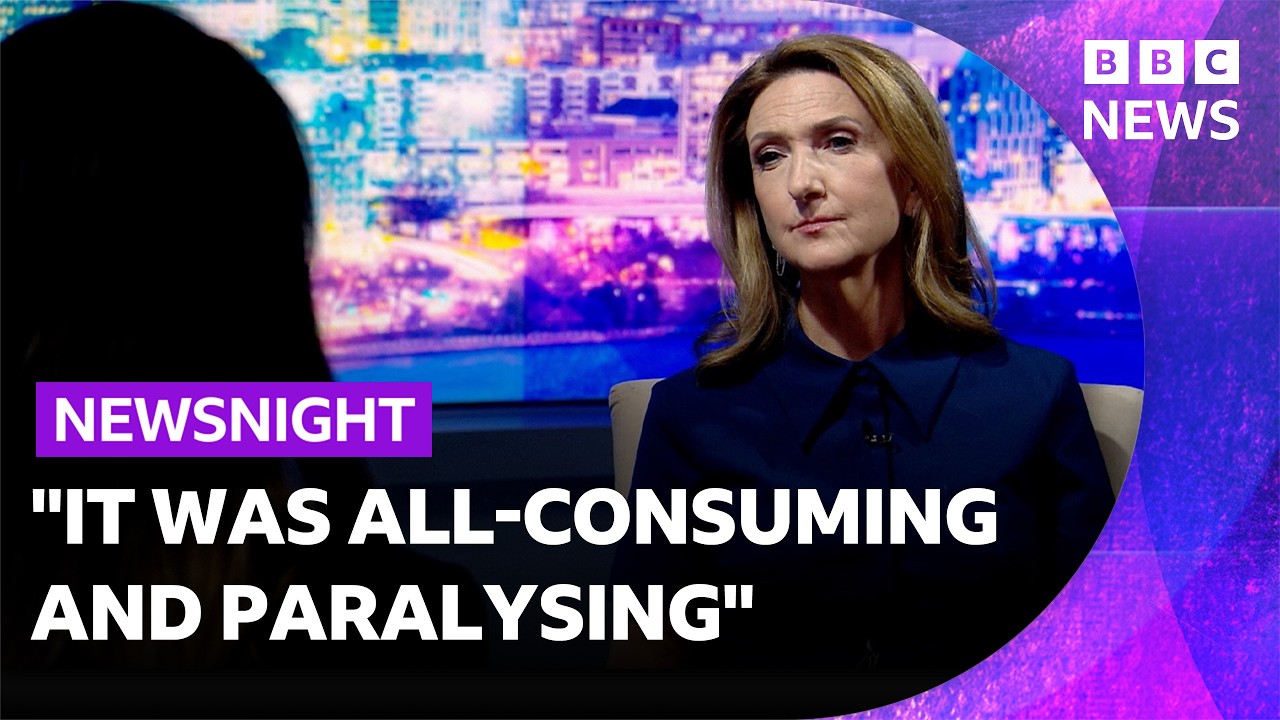
Title: 'Survivors are nothing more than pawns for political discourse' | Epstein survivor speaks | BBC News
Channel: BBC News
Published: 2026-03-31
Duration: 11:24
Views: 12,063
Description:
Warning: This video contains graphic sexual descriptions.
A woman who said she was drugged and raped by convicted sex offender Jeffrey Epstein has spoken publicly for the first time to BBC Newsnight about her ordeal.
The woman who the BBC refers to as Nicky, spoke to the BBC on condition of anonymity. She says she met the disgraced financier when she was 19 and working as a model.
She said that after she gave him a massage at his waterfront mansion in Palm Beach, Florida, he gave her a drink of water and she blacked out for hours, when she believes she was raped by Epstein.
Nicky said she felt encouraged to come forward by other survivors sharing their stories. She is now calling for the US Department of Justice to release all its remaining files on Epstein.
A spokesperson from the Department of Justice said: "As the Department of Justice has consistently said and has done since the January 30, 2026 publication of the Epstein files, if any member of the public, including victims, reported concerns with information in the pages, the Department would review, make any corrections and republish online…"
"As with all documents that have been flagged by the public, the Department is currently reviewing files within that category of the production. Should any document be found to have been improperly tagged in the review process and is responsive to the Act, the Department will of course publish it, consistent with the law.”
Subscribe to our channel here: https://bbc.in/bbcnews
For the latest news download the BBC News app or visit BBC.com/news
#BBCNews
Facts Only
A woman referred to as "Nicky" spoke to BBC Newsnight under anonymity.
Nicky alleges she was drugged and raped by Jeffrey Epstein at his Palm Beach mansion.
The incident reportedly occurred when Nicky was 19 and working as a model.
She claims she blacked out for hours after Epstein gave her a drink during a massage.
Nicky is calling for the U.S. Department of Justice to release all remaining files on Epstein.
The DOJ stated it reviews and corrects inaccuracies in published documents as reported by the public.
The DOJ confirmed it is reviewing files flagged by the public for potential improper redactions.
The interview was published by BBC News on March 31, 2026.
The video contains graphic descriptions of sexual violence.
Nicky said she was encouraged to come forward by other survivors sharing their stories.
The DOJ’s response was provided by an unnamed spokesperson.
The case involves ongoing demands for transparency regarding Epstein’s crimes and associates.
Executive Summary
A woman identified as "Nicky" has come forward to BBC Newsnight, alleging she was drugged and raped by Jeffrey Epstein when she was 19 years old. She claims the incident occurred at Epstein’s Palm Beach mansion after he gave her a drink during a massage session, causing her to black out for hours. Nicky, who was working as a model at the time, stated she was encouraged to speak out by other survivors and is now urging the U.S. Department of Justice to release all remaining files related to Epstein. The DOJ has responded by reiterating its commitment to reviewing and correcting any inaccuracies in previously published documents, in line with its established procedures. The case highlights ongoing public and survivor demands for transparency regarding Epstein’s crimes and potential accomplices, while the DOJ maintains its process is consistent with legal requirements.
The interview underscores the broader issue of how survivors of high-profile crimes are often drawn into political and media narratives, with Nicky expressing concern that their experiences are exploited for discourse rather than justice. The DOJ’s statement emphasizes procedural transparency but does not address the broader calls for full disclosure of all Epstein-related files. The tension between institutional accountability and survivor advocacy remains unresolved, with this case serving as a microcosm of the challenges in balancing legal protocols with public demands for answers.
Full Take
The strongest version of this narrative centers on survivor agency and institutional accountability. Nicky’s decision to speak out, despite the risks, underscores the power of collective testimony in challenging systemic impunity. The DOJ’s response, while procedurally sound, risks reinforcing perceptions of bureaucratic evasion—especially when survivors frame their demands as moral imperatives rather than legal technicalities. The tension here is not just about files but about whose voices shape the narrative: survivors seeking closure or institutions managing liability.
Pattern scan: The framing of survivors as "pawns for political discourse" could imply a broader critique of media and institutional co-optation, but the article itself avoids overt manipulation. The DOJ’s language ("consistent with the law") leans on procedural authority, which may deflect deeper scrutiny—a classic ARC-0024 Ambiguity play, where institutional neutrality masks resistance to transparency. However, the survivor’s direct testimony resists this, grounding the story in lived experience rather than abstraction.
Root cause: This narrative echoes historical patterns where powerful figures evade full accountability, and survivors must fight for recognition. The unstated assumption is that transparency alone can deliver justice—a belief that may underestimate systemic inertia. The paradigm is one of institutional trust deficits: survivors demand action, while institutions default to process.
Implications: For human dignity, the cost of prolonged opacity is re-traumatization. The beneficiaries of delayed disclosure are those who fear exposure—whether individuals or institutions. Second-order consequences include eroded public trust in justice systems and the weaponization of survivor stories for partisan ends.
Bridge questions: What would full transparency actually achieve, and for whom? How might institutional processes be reformed to center survivor needs without compromising legal integrity? What alternative models of justice could address the gaps left by traditional prosecutions?
Counterstrike scan: A coordinated influence campaign might exploit survivor testimonies to undermine trust in the DOJ, framing it as complicit. The actual content, however, presents survivor agency and institutional response without overt distortion. The alignment is minimal—this appears to be genuine advocacy journalism rather than manipulation.
Patterns detected: ARC-0024 Ambiguity (DOJ’s procedural deflection)