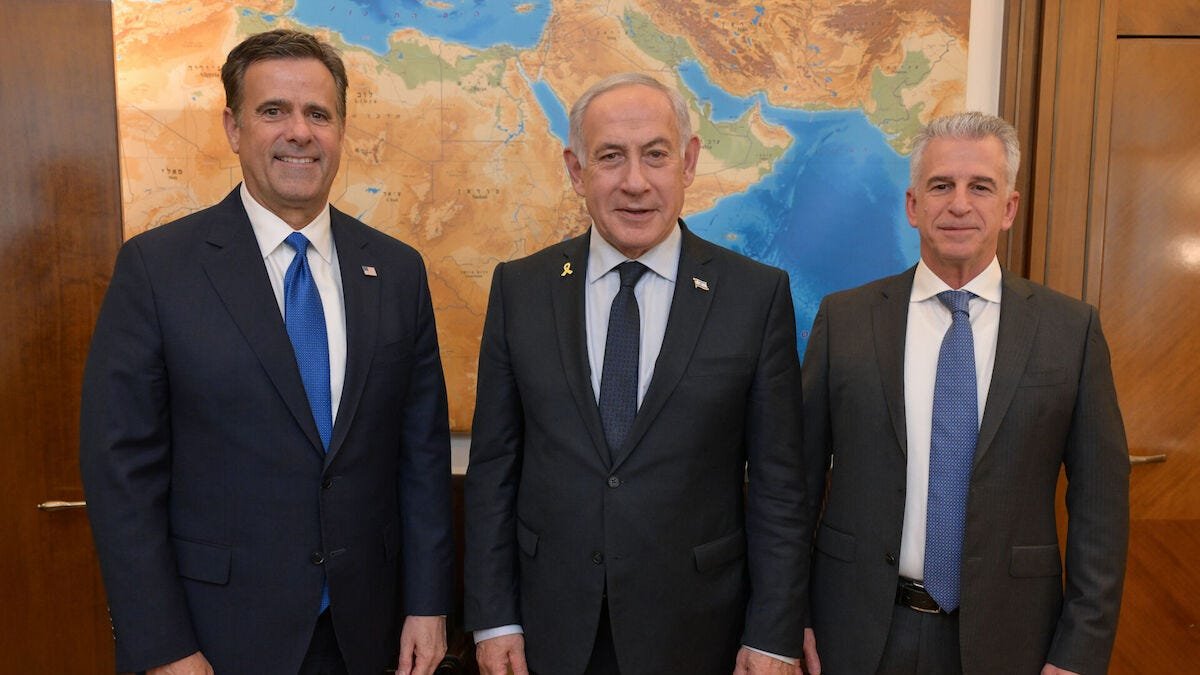
Israelis Offer New Details on Joint Regime-Change Strategy and Mossad-CIA plan for Kurdish Invasion
Finger-pointing, scapegoating sour US-Israeli relations as Iran talks sputter
Soon after Israel’s 12-day air war against Iran last June culminated in the U.S. bombing of Iranian nuclear sites, the Mossad secretly began plotting its next war against the Islamic Republic — this one aimed at nothing less than regime change, according to several newly retired senior Israeli intelligence officials.
The war plan that emerged, these former Mossad and military intelligence officials said, included the now widely publicized Israeli and U.S. airstrikes that decapitated Iran’s top leaders, destroyed Iranian troop concentrations and further degraded Iranian nuclear and ballistic missile infrastructure. But the plan also included previously unreported details surrounding a proposed ground invasion under Israeli and American air cover by Iranian and Iraqi Kurdish forces who were armed, trained and equipped by Israeli and U.S. military advisers, the former officials told SpyTalk.
In addition, they said, the plan called for Mossad and CIA influence operations aimed at inciting popular uprisings against the Tehran regime — all of which, Mossad planners assured President Trump, would eventually lead to the collapse of the country’s radical Islamic government and its replacement by a more pragmatic leadership.
The Trump administration was on board from the get-go, the former Israeli officials say.
“Over the course of several months, we held numerous meetings between our strategic teams and their most senior officials,” one of the former officials told SpyTalk, speaking on condition of anonymity to discuss highly sensitive intelligence matters. “Nearly every idea or proposal we raised was shared with the CIA. Their people reviewed it, offered comments, and put forward counterproposals.”
The former Mossad official’s assertions of the CIA’s deep involvement in the regime-change plan—especially in the efforts to prepare Kurdish fighters for the ground invasion of Iran—appear part of an Israeli effort to push back against a Trump administration narrative that CIA Director John Ratcliffe rejected the major parts of the regime-change plan as “farcical.” In the administration’s telling, Israel and its powerful Washington lobby still managed to convince Trump to green light the remaining components of the plan, dragging him into a war that has failed to achieve his primary goals of regime change and the elimination of the Iranian nuclear threat. Even more upsetting, some administration officials complain, is the war’s precipitation of a new global economic reality: Iranian control of the strategic Strait of Hormuz, the Persian Gulf’s gateway for a fifth of the world’s supply of oil and natural gas.
That’s not quite the way things happened, these former Israeli intelligence officials insist. Moreover, they say, the CIA was a full partner from the very beginning of the planning process, which began soon after the June war last year.
Facts Only
* Former Mossad and military intelligence officials detailed a regime-change strategy.
* The plan included Israeli and U.S. airstrikes that targeted Iranian leaders, troop concentrations, and nuclear/ballistic missile infrastructure.
* The plan involved a proposed ground invasion by Iranian and Iraqi Kurdish forces.
* Kurdish forces were reportedly armed, trained, and equipped by Israeli and U.S. military advisers.
* The strategy called for Mossad and CIA influence operations to incite popular uprisings against the Tehran regime.
* Former officials asserted that the CIA was involved in planning the ground invasion preparation.
* The former officials stated the Trump administration was supportive from the start.
* The plan aimed at collapsing the radical Islamic government and replacing it with a pragmatic leadership.
* The former officials contended the CIA was a full partner from the beginning of the planning process following the June war.
Executive Summary
Full Take
Sentinel — Human
This text appears to be an aggregation of intelligence claims presented through the lens of anonymous sources, exhibiting the texture of leaked reporting rather than purely synthetic generation.