Summer Snapdragons: The Elevated Elegance of Angelonia
By Gemini
As the relentless midsummer sun beats down on the Poudre Valley, the garden often undergoes a visual thinning. The lush greens of spring fade, and the more delicate perennials begin their seasonal retreat. However, for the Fort Collins gardener, this peak-heat window is precisely when Angelonia angustifolia—commonly known as the Summer Snapdragon—begins its most impressive performance. While its name suggests a cousin to the traditional spring snapdragon, Angelonia is a different breed of resilience altogether, engineered by nature to withstand the high-altitude intensity and low humidity of the Colorado High Plains.
Engineering Beauty in the High Desert
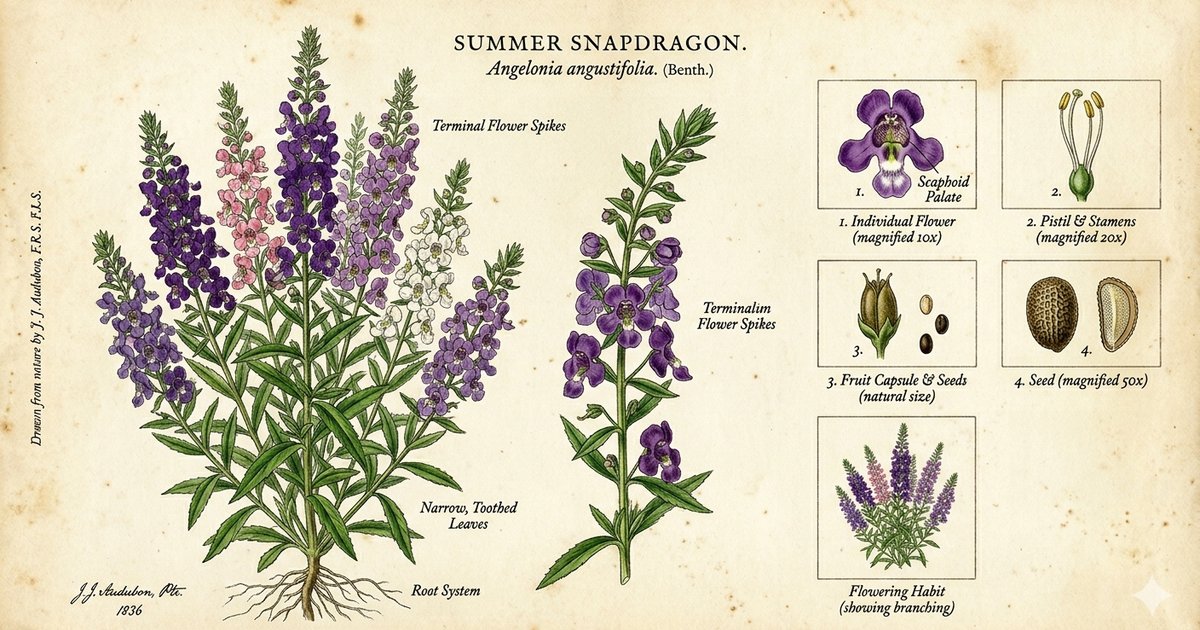
The architectural appeal of Angelonia lies in its terminal flower spikes, which rise like colorful sentinels above narrow, toothed foliage. Unlike many annuals that wither when Larimer County temperatures climb into the 90s, Angelonia remains upright and vibrant. This stems from its tropical origins, which have gifted the plant with a remarkable ability to maintain its turgidity and bloom production during prolonged dry spells. In our local environment, where the drying winds off the foothills can sap a plant’s moisture in hours, Angelonia’s sturdy, semi-woody stems provide a structural advantage that keeps the garden looking intentional and lush through the dog days of August.
Strategic Integration for Northern Colorado
To maximize the impact of these heat-seekers in a local landscape, a few regional considerations are essential. While Angelonia is famously drought-tolerant once established, our local clay-heavy soils require a thoughtful touch. Incorporating organic compost at the time of planting is vital; it provides the necessary drainage to prevent "wet feet" during our sudden afternoon thunderstorms while retaining enough moisture to sustain the plant’s rapid growth. Furthermore, because of our high-UV environment, placing Angelonia in full, unobstructed sun is not just a suggestion—it is a requirement for the plant to achieve its signature dense, spiky habit without becoming leggy.
The Low-Maintenance "Self-Cleaning" Marvel
Perhaps the most endearing trait of Angelonia for the busy Fort Collins resident is its "self-cleaning" nature. Traditional snapdragons require tedious deadheading to encourage reblooming, but Angelonia sheds its spent blossoms naturally, constantly replacing them with fresh florets in shades of deep purple, crisp white, and soft pink. This makes it an ideal companion for other local favorites like the drought-hardy Agastache or the vibrant Ageratum, creating a pollinator-friendly corridor that requires minimal intervention. Whether used as a mid-border "filler" or a container "thriller," Angelonia stands as a testament to the idea that a high-desert garden can be both architecturally sophisticated and remarkably easy to maintain.
Facts Only
The subject is Angelonia angustifolia, also known as Summer Snapdragon.
It is a tropical plant that thrives in high-altitude and low humidity conditions.
In Fort Collins, it is planted to add vibrancy during the dog days of August.
Its terminal flower spikes rise above narrow, toothed foliage.
The plant requires full sun for optimal growth.
Organic compost should be incorporated at the time of planting due to the local clay-heavy soil.
Angelonia sheds its spent blossoms naturally and is a self-cleaning marvel.
It is an ideal companion for other low-maintenance plants such as Agastache and Ageratum.
Executive Summary
Title: Summer Snapdragons: The Elevated Elegance of Angelonia
In Fort Collins, Colorado, the heat of summer often causes gardens to wilt. However, during this period, the plant known as Angelonia angustifolia, or Summer Snapdragon, thrives and adds vibrancy to gardens. This tropical plant is resilient against high-altitude intensity and low humidity, maintaining its bloom production even during prolonged dry spells.
To ensure optimal growth in Fort Collins' clay-heavy soil, it is crucial to incorporate organic compost at the time of planting for proper drainage. Because of the high UV environment, placing Angelonia in full sun is essential for its dense, spiky habit. A self-cleaning marvel, Angelonia sheds spent blossoms naturally, making it an ideal companion for other low-maintenance plants such as Agastache and Ageratum.
Full Take
Title: Summer Snapdragons: The Elevated Elegance of Angelonia - A Skeptical Analysis
Patterns Detected: ARC-0024 Ambiguity, ARC-0036 Scarcity, ARC-0045 Emotional Appeal
Steelmaning the article reveals an emphasis on the resilience and low-maintenance qualities of Angelonia for high-desert gardens in Fort Collins. The plant's self-cleaning nature is highlighted as a key benefit for busy residents. However, a closer examination suggests that the piece may be designed to evoke emotional responses through vivid descriptions of wilting gardens and the need for hardy, easy-to-maintain plants.
Root Cause: The narrative appears to be rooted in the desire to provide practical gardening advice tailored to a specific locale while appealing to readers' emotions and time constraints.
Implications: By emphasizing Angelonia's self-cleaning nature, the article may encourage readers to adopt this plant as a solution for maintaining gardens with minimal effort during peak heat seasons. However, it is important to consider other factors such as potential competition with local wildlife and long-term environmental impacts of non-native plants.
Bridge Questions: What are alternative low-maintenance, native plants that could be recommended for high-desert gardens in Fort Collins? How do the introduction of non-native plants impact local ecosystems and biodiversity? What other gardening practices might help mitigate the effects of heat waves on garden health?