The World Cup Comes to Prediction Markets
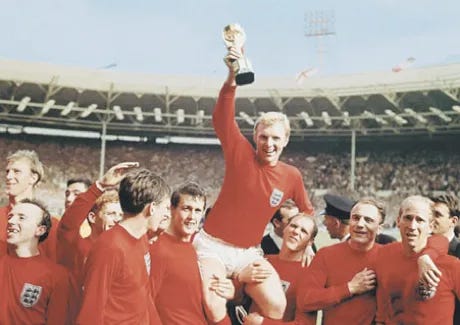
The World Cup is underway and I confess to being a little excited. The tournament has provided a backdrop to my life for as long as I can remember. As an England fan, I have never experienced the joys of victory but moments of promise in Italia 1990, in Saint-Étienne in 1998, in Moscow and Qatar, keep the faith alive. Hope is a sustaining force.
This year I’ll be travelling to Dallas to watch England play Croatia in the teams’ first group game. In a fit of exuberance I also bought tickets to all of England’s knock-out games conditional on them making it through – a total of five possible additional games. When I purchased them in an all-or-nothing ballot, I reckoned that if I wasn’t able to attend, I would be able to sell my seats on the secondary market. Indeed, attending all the games would be hard. Depending on where England finish in the group stage, they could play in stadiums as far afield as Mexico City, Toronto, Los Angeles and Miami.
But it seems I may have misjudged the demand-supply dynamic in this tournament’s ticket market. According to press reports, around 180,000 tickets remain unsold for the group phase of the competition. TV cameras panned across thousands of empty seats at the Korea-Czech Republic match on opening day in Guadalajara. Knock-out games are likely to draw greater demand, but I’m beginning to worry that I may be left long World Cup tickets that I am unable to use.
Fortunately, I have an alternative. We’ve discussed prediction markets here before, in The Wisdom of Crowds in 2024 and then again in Prediction Markets Grow Up in 2025. On the eve of the tournament, these markets had already facilitated bets worth close to $2 billion on which country would win the World Cup. On Polymarket alone, notional volume on the winner has surpassed the Super Bowl, the NBA championship and the Champions League and stands second only to the 2024 US presidential election across all the markets the platform has ever listed. Kalshi, the largest regulated prediction market in the US, is vying for attention with a campaign featuring coach José Mourinho. “I am the special one,” he says, “I see things before they happen.”
Sentinel — Human
The text reads as a personal reflection interwoven with factual reporting, demonstrating a strong, idiosyncratic human voice and organic thematic development.