(Washington, DC) – Venezuela’s new amnesty law has serious shortcomings that exclude many people who have been arbitrarily detained and is being applied in ways that may deny release to people who should be eligible, Human Rights Watch said today.
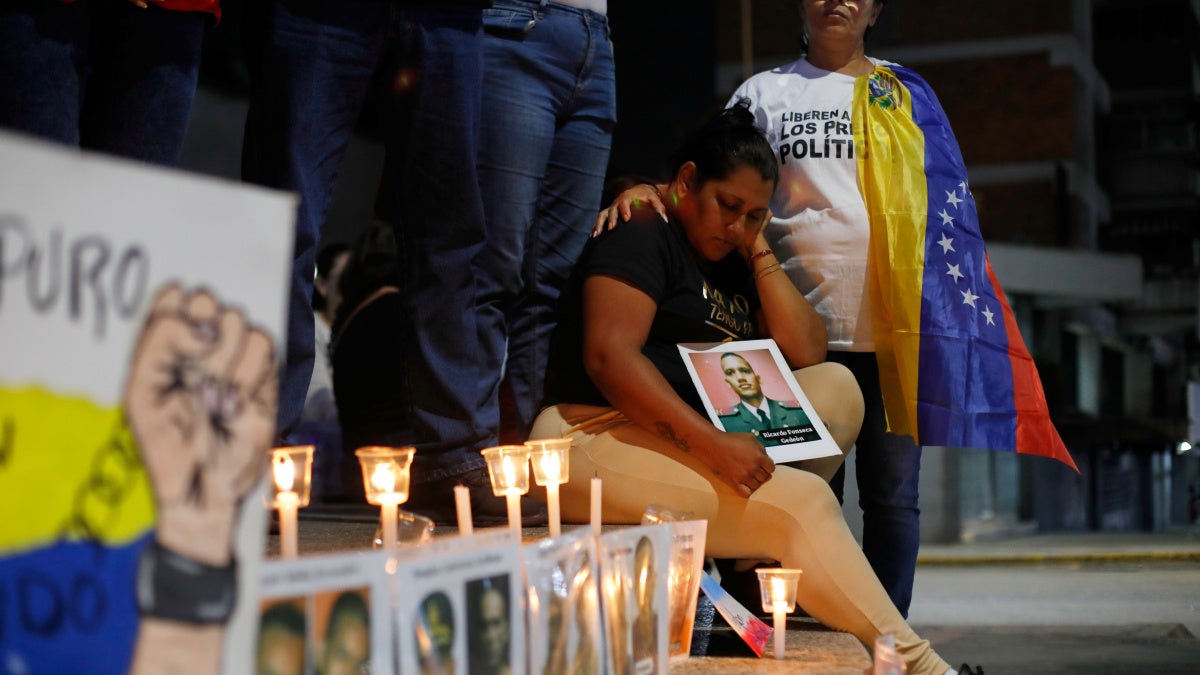
The law is ostensibly an effort to help Venezuela move forward from years of political repression under former President Nicolás Maduro. Venezuelan authorities say that more than 8,600 people, including over 300 who had been imprisoned, have benefited from the law, though without providing a list. However, many opposition members, journalists, and human rights defenders who had been arbitrarily detained have been excluded. At least 457 political prisoners remain behind bars, according to the human rights group Foro Penal
“Venezuela’s new amnesty law falls notably short of ensuring the release of anyone arbitrarily detained for political reasons,” said Juanita Goebertus Estrada, Americas director at Human Rights Watch. “What’s worse, its unfair and opaque implementation has further undermined whatever limited promise it held.”
Venezuela’s National Assembly approved the amnesty law on February 19, 2026, with the stated purpose of “promoting social peace and democratic coexistence” by granting a “full and general amnesty” for certain offenses committed between 1999 and 2026. Venezuelan authorities should ensure that the law is applied transparently and to its fullest extent, and should explore additional legal avenues to drop criminal charges against everyone who has faced arbitrary prosecution, Human Rights Watch said.
Under the law, Venezuelan courts, which lack independence from the executive branch, are responsible for reviewing individual amnesty requests.
Human Rights Watch interviewed 16 people whom Justicia, Encuentro y Perdón and Foro Penal have identified as political prisoners, and whose amnesty requests were denied or pending at the time of the interviews. Researchers also interviewed two lawyers representing potential beneficiaries as well as members of several Venezuelan human rights organizations monitoring its implementation. Human Rights Watch additionally reviewed ten court decisions denying amnesty requests and three appeals.
President Delcy Rodríguez suggested on April 23 that the amnesty law had fulfilled its purpose and was coming to an end. Congressman Jorge Arreaza, who leads a National Assembly commission tasked with monitoring compliance with the law, later clarified that it remained in place. Yet he estimated that the law had already covered most eligible cases. The two lawyers interviewed, as well as Foro Penal, said that some courts had apparently refused to accept new amnesty petitions since Rodríguez’s announcement.
Authorities have denied amnesty to opposition leaders such as Perkins Rocha and Henry Alviarez, members of the opposition party Vente Venezuela; human rights defender Javier Tarazona, director of the human rights organization Fundaredes; a group of union leaders; and journalist and activist Carlos Julio Rojas.
The law contains limitations that seriously undermine its stated purpose. Although the law claims to cover acts committed since 1999, it limits eligibility to those prosecuted “in the context” of specific events occurring in certain years. It also includes vaguely defined provisions that allow judges to deny amnesty to people who have been prosecuted for acts protected under international human rights law.
Even beyond its inherent limitations, the law’s implementation has been marked by significant shortcomings. Some people seeking amnesty, including some who have been imprisoned for years, have not been adequately informed about the accusations or evidence presented against them, making it harder for them to argue that they meet the already narrow eligibility criteria in the law.
In some cases, judges have also failed to explain the legal basis for their decisions to deny amnesty. They have also restricted access to case files and to private legal representation.
Venezuelan authorities should ensure the unconditional release of anyone arbitrarily detained or prosecuted, including for political reasons, Human Rights Watch said.
The new Peace and Democratic Coexistence Program created by President Rodríguez should assess cases in which amnesty has been denied or remains pending, and it should urgently call on the government to proceed without delay in granting people pardons if they were arbitrarily or otherwise wrongfully detained and to release them unconditionally. The program should also review the cases of people who were excluded from the law because they have been accused of violent crimes without basis.
The newly appointed ombudsperson, Eglée González, should closely monitor the law’s implementation and press the authorities to apply it in a transparent, even-handed way that respects due process. The newly appointed attorney general, Larry Devoe, should support amnesty requests by people arbitrarily detained and explore additional legal avenues under Venezuelan law to close arbitrary investigations against critics.
Venezuelan authorities should also take broader steps to restore the independence and integrity of the judiciary, including by ensuring transparent, merit-based appointments to vacant seats in the Supreme Court, Human Rights Watch said. They should also reform or repeal laws that have enabled the arbitrary prosecution of critics, such as the 2017 Law Against Hatred and the 2012 Law Against Organized Crime and Terrorism Financing.
“Foreign governments should monitor the release of political prisoners and the broader efforts to reform the judiciary as key benchmarks to assess whether there is progress in respecting human rights in Venezuela,” Goebertus said.
Loopholes, Other Problems in the Law
The amnesty law claims to cover “all actions or omissions constituting crimes or misdemeanors” committed since 1999. However, it includes three sets of provisions that exclude many people who have been arbitrarily detained.
First, the law limits eligibility to people prosecuted “in the context” of specific events, including the 2014 and 2017 protests and the 2024 and 2025 electoral processes, each confined to narrowly defined time frames.
In some cases, judges have denied amnesty to people who had been arbitrarily detained on the apparent basis that their cases did not fall within the specific events covered by the law, although some decisions fail to articulate a clear basis for denying amnesty.
For example, on March 5, 2026, a judge in Caracas denied amnesty to five union workers who had been detained in 2022 after participating in protests demanding wage increases and better working conditions for the public sector. Among other reasons, the judge cited the fact that their detention was not connected to the specific events covered by the law. In 2023, they were convicted of “conspiracy” and “criminal association.” They were released in December 2023 under the condition of reporting periodically to the courts. The conviction still stands.
Second, the law contains broadly defined provisions allowing judges to exclude people who may have been arbitrarily detained for acts that amount to protected speech. In particular, the law excludes anyone accused of “promoting, instigating, facilitating, financing, or participating in armed or forceful actions against the people, sovereignty, and territorial integrity of Venezuela.”
Third, the law excludes people accused of “military rebellion,” certain violent crimes such as homicide, and human rights violations. Some of these exclusions are reasonable in principle and, to some extent, even required under international human rights law. However, some people in Venezuela have been arbitrarily prosecuted and convicted of such offenses and should be released unconditionally. Venezuelan authorities should explore additional avenues to ensure that such cases are properly reviewed, that those affected are released, and that the cases against them are dropped, based on a broader analysis of the evidence that does not rely solely on the crimes with which they were charged or convicted.
Among others, authorities should analyze the cases of over 180 members of the military whom Foro Penal considers to be political prisoners, along with those involving allegations of attempted murder against Nicolás Maduro.
In one case, Carlos Julio Rojas, a journalist and activist, was detained in April 2024 and accused, among other crimes, of trying to kill Maduro, accusations that he said were fabricated. He was released in January 2026 under conditions requiring him to report periodically to a judge. He told Human Rights Watch he was detained because of his criticism of Maduro’s government and his work as a journalist and human rights defender. In April, a judge denied his request for amnesty.
The law also requires beneficiaries to “cease” their allegedly criminal conduct, although many have been prosecuted for legitimate and lawful exercises of their rights to freedom of expression and association. This underscores the urgent need to reform or repeal laws, such as the 2017 Law Against Hatred, that have enabled such prosecutions in the first place.
It also requires authorities to remove from their records any information related to individuals benefiting from amnesty. While this measure may eliminate the formal consequences of prosecution for beneficiaries, it does not provide for the preservation or use of such records for future accountability or truth-seeking efforts. Authorities should expunge the records from individuals’ personal files while ensuring that they are otherwise preserved, Human Rights Watch said.
Failures in Implementation
Human Rights Watch identified shortcomings that have undermined the ability of people to argue that they meet the criteria established under the law.
Courts have also often exceeded the 15-day legal deadline for issuing decisions on amnesty requests. Human Rights Watch spoke with several people who had waited for more than two months for a decision in their cases or were still waiting. Lawyers and some applicants said that court officials have justified these delays because of a lack of “instructions from above,” pointing to possible political or other undue interference.
Many people interviewed said they were not adequately informed of the accusations or evidence against them, making it difficult if not impossible for them to argue that their cases meet the requirements of the amnesty law. In some cases, the authorities have limited access to case files, which lawyers need to prepare adequate amnesty requests and effectively represent their clients.
For years, courts have also refused to accept documents where the accused critics, political opponents, and others designate a private counsel, effectively forcing defendants to be represented by a public defender. Several people who requested amnesty said that courts continue this practice, which makes it more difficult for individuals to prepare and submit requests.
“I tried to appoint my lawyer,” an opposition figure said. “They put up many obstacles, telling me not to worry because the public defender could proceed with the request.” However, four people whose amnesty requests were denied and two of their lawyers said that public defenders fail to request amnesty or appeal negative decisions. “We are in a total state of defenselessness,” one of them said.
Courts have often failed to articulate a clear basis for their decisions to deny amnesty. Some rulings Human Rights Watch reviewed simply cite several articles in the law, without specifying which requirements had not been met in the judge’s view.
This practice has enabled decisions that are, or appear to be, inconsistent. In one case documented by Human Rights Watch, a judge granted amnesty to six of eight defendants but denied it to the remaining two, including Perkins Rocha (the only one still under house arrest), although all of them had faced the same charges stemming from seemingly similar events and time periods included in the law. In another case, the judge told the detainee that his amnesty request was rejected because he had been charged with “terrorism,” even though other people charged with the same crime have obtained amnesty.
In at least 10 documented cases, judges failed or delayed providing written copies of decisions denying amnesty. “I asked them for a copy of the decision, but they won’t give it to me,” one person said. Without a formal written ruling, affected individuals are severely hampered in their ability to appeal.
Facts Only
Venezuela’s National Assembly approved an amnesty law on February 19, 2026.
The law aims to grant amnesty for offenses committed between 1999 and 2026.
Authorities report over 8,600 beneficiaries, including more than 300 prisoners, but no official list has been released.
At least 457 political prisoners remain detained, according to Foro Penal.
The law excludes many arbitrarily detained individuals, including opposition leaders, journalists, and human rights defenders.
Eligibility is limited to specific events, such as protests in 2014, 2017, and electoral processes in 2024 and 2025.
Judges can deny amnesty for vaguely defined offenses, including "promoting armed actions" or "military rebellion."
Courts, which lack independence from the executive branch, review individual amnesty requests.
Implementation issues include delays beyond the 15-day legal deadline, lack of access to case files, and refusal to accept private legal representation.
Some courts have stopped accepting new amnesty petitions after President Delcy Rodríguez suggested the law’s purpose was fulfilled.
High-profile denials include opposition leaders Perkins Rocha and Henry Alviarez, human rights defender Javier Tarazona, and journalist Carlos Julio Rojas.
Human Rights Watch interviewed 16 political prisoners and reviewed court decisions, finding inconsistent and opaque rulings.
Executive Summary
Full Take
The strongest version of this narrative highlights Venezuela’s attempt to address political repression through an amnesty law, acknowledging its stated goal of reconciliation while exposing its structural and implementation flaws. The law’s narrow eligibility criteria and judicial discretion create loopholes that allow authorities to exclude critics arbitrarily, undermining its credibility. The pattern of vague legal provisions and opaque court decisions suggests a system designed to maintain control rather than deliver justice. This echoes historical patterns of authoritarian regimes using nominal reforms to appease international pressure while preserving repression.
The root cause lies in Venezuela’s lack of judicial independence and the executive’s influence over legal processes. The law’s exclusions—such as "military rebellion" or "terrorism"—are broad enough to criminalize dissent, while its implementation reinforces power imbalances. The consequences are dire for human dignity: arbitrarily detained individuals remain in legal limbo, denied due process, and subjected to conditional releases that perpetuate state control.
Bridge questions: What would genuine judicial independence look like in Venezuela, and how could it be achieved? If the law’s exclusions were removed, how many more political prisoners might qualify for release? What role do international actors play in either enabling or challenging this system?
Counterstrike scan: A coordinated influence campaign would exploit the law’s ambiguities to portray Venezuela as reforming while quietly preserving repression. The actual content aligns with this pattern—authorities tout the law’s benefits without transparency, and courts enforce exclusions inconsistently. However, the presence of critical reporting from Human Rights Watch and Foro Penal suggests countervailing scrutiny, reducing the likelihood of a fully orchestrated deception.
Patterns detected: ARC-0024 Ambiguity, ARC-0043 Motte-and-Bailey
Sentinel — Human
LIKELY_HUMAN (confidence: 0.15)