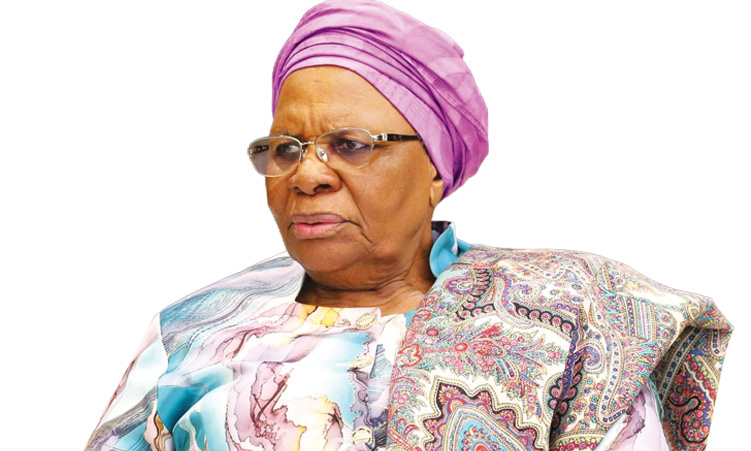
In National Governance, silence is rarely golden; more often than not, it is a breeding ground for suspicion and misinformation.
President Netumbo Nandi-Ndaitwah’s administration is presenting a masterclass in the art of the curt dismissals, treating public accountability as burdensome rather than a constitutional obligation.
In her recent World Press Freedom Day statement, the president said “a vibrant and professional media plays a critical role in strengthening democracy, promoting transparency, and holding institutions accountable.
In Namibia, the media has contributed meaningfully to national dialogue, development and unity, while giving voice to diverse perspectives across our society.”
However, Nandi-Ndaitwah’s communications and, therefore, her commitment to transparency and accountability, have become a study in minimalism.
The president’s lack of action and words appear to indicate the Presidency doesn’t value communicating with the people.
By shielding the executive behind sterile press releases and not answering questions while the nation’s security apparatus goes through unprecedented turmoil, the president is not just shunning the media, she is dismissing the very voters who placed her in the big chair.
At least the president hinted at a time frame in her first firing late last April, with her statement reading: “The termination of tenure takes effect from Wednesday, 23 April 2025, when Dr Mac Hengari should have tendered his resignation.”
But on 26 October 2025, the public was informed via a short, dry statement that Natangwe Ithete was relieved of his duties as deputy prime minister and minister of industries, mines and energy.
While the president assumed his portfolio under the guise of ensuring continuity, the underlying reason remained buried until it was unearthed by the media.
If the dismissal of a Cabinet minister was vague, Tuesday night’s announcement on the ‘removal’ of inspector general Joseph Shikongo was an exercise in obfuscation.
Was he fired, demoted or shuffled into a back-office role without accountability?
The presidency simply announced that major general Anne-Marie Nainda would take over in an acting capacity, leaving Namibians no wiser over the fate of their, until then, most senior police officer.
This reticence is alarming given a backdrop of recent security failings.
The media has diligently tracked a series of concerning events, including the abrupt removal of the presidential security chief, the changing of the president’s security detail, and an inexplicable security breach where a naked man was discovered in the president’s wing at State House.
These incidents, coupled with the uneasy proximity of the Namibian Defence Force to these matters, demand transparency.
In the face of a comedy of errors regarding the president’s security, the Presidency offers no clarity.
When the state remains silent on national security issues, it creates a vacuum where speculation, embellished rumour and misinformation thrive.
Perhaps the most stinging indictment of this communication ‘strategy’ is the president’s choice of audience.
To date, local engagement has been limited to a single interview, and a pseudo-press conference primarily for party optics regarding her relationship with Swapo secretary general Sophia Shaningwa.
The public is not kept abreast of matters that concern them.
In the midst of global uncertainty, the nation needs the commander-in-chief to be more front-facing and communicative.
Opting for international platforms over domestic scrutiny suggests a leader who views her own electorate as an afterthought.
The irony is that Nandi-Ndaitwah can handle the heat.
Her performance at the state of the nation address proved she is capable of navigating tough questions with poise.
Her refusal to do so regularly is, therefore, a choice, not a capability issue.
The Namibian media the president shuns ultimately shapes her image in the eyes of the Namibian public.
In the absence of regular information straight from the horse’s mouth, narratives will be written without the Presidency providing its side of the story.
It is time for the president to stop treating the public’s right to know as an annoyance and to treat it as a priority.
Don’t be dismissive of those who entrusted you with the chair; they are the ones who deserve explanations for the current state of affairs around the president’s security.
In an age of information overload, Sunrise is The Namibian’s morning briefing, delivered at 6h00 from Monday to Friday. It offers a curated rundown of the most important stories from the past 24 hours – occasionally with a light, witty touch. It’s an essential way to stay informed. Subscribe and join our newsletter community.
The Namibian uses AI tools to assist with improved quality, accuracy and efficiency, while maintaining editorial oversight and journalistic integrity.
Stay informed with The Namibian – your source for credible journalism. Get in-depth reporting and opinions for
only N$85 a month. Invest in journalism, invest in democracy –
Subscribe Now!
Facts Only
* President Netumbo Nandi-Ndaitwah made a statement on World Press Freedom Day.
* The president stated that a vibrant and professional media plays a critical role in strengthening democracy, promoting transparency, and holding institutions accountable.
* The media in Namibia has contributed to national dialogue, development, and unity.
* A statement was made regarding the termination of tenure, referencing a date of Wednesday, April 23, 2025, and the expectation that Dr. Mac Hengari should have tendered his resignation.
* On October 26, 2025, Natangwe Ithete was informed of the relief from his duties as deputy prime minister and minister of industries, mines and energy.
* The announcement regarding the 'removal' of Inspector General Joseph Shikongo was made on Tuesday night.
* The presidency announced that major general Anne-Marie Nainda would take over in an acting capacity.
* The media tracked concerning events, including the abrupt removal of the presidential security chief and a security breach where a naked man was discovered in the president’s wing at State House.
Executive Summary
Full Take
Sentinel — Likely Human
The text functions as a piece of highly opinionated political commentary, utilizing specific details and a passionate rhetorical style characteristic of human journalism, although it is framed as an analytical critique.