A recent article in the New York Times has far-reaching and ominous implications for the United States. It reports on findings from researchers at the University of Texas that Russian satellites have been purposely interfering with GPS signals across a broad swath of northern Europe, Greenland and Canada since 2019.
These interference events are evidence of an electronic weapon being covertly exercised. They have been sporadic, very short duration, slightly offset from the main GPS signal, and very difficult to detect. The same satellites have been interfering with Bei Dou, China’s satellite navigation system in a nearly identical way since 2020. This seems to remove any doubt as to the Russian system’s intent and purpose.
While similar events have not been observed in the US, the Russian satellites are able to reach anywhere on the globe. And Moscow has a history of interfering and threatening to interfere with GPS to further its own goals.
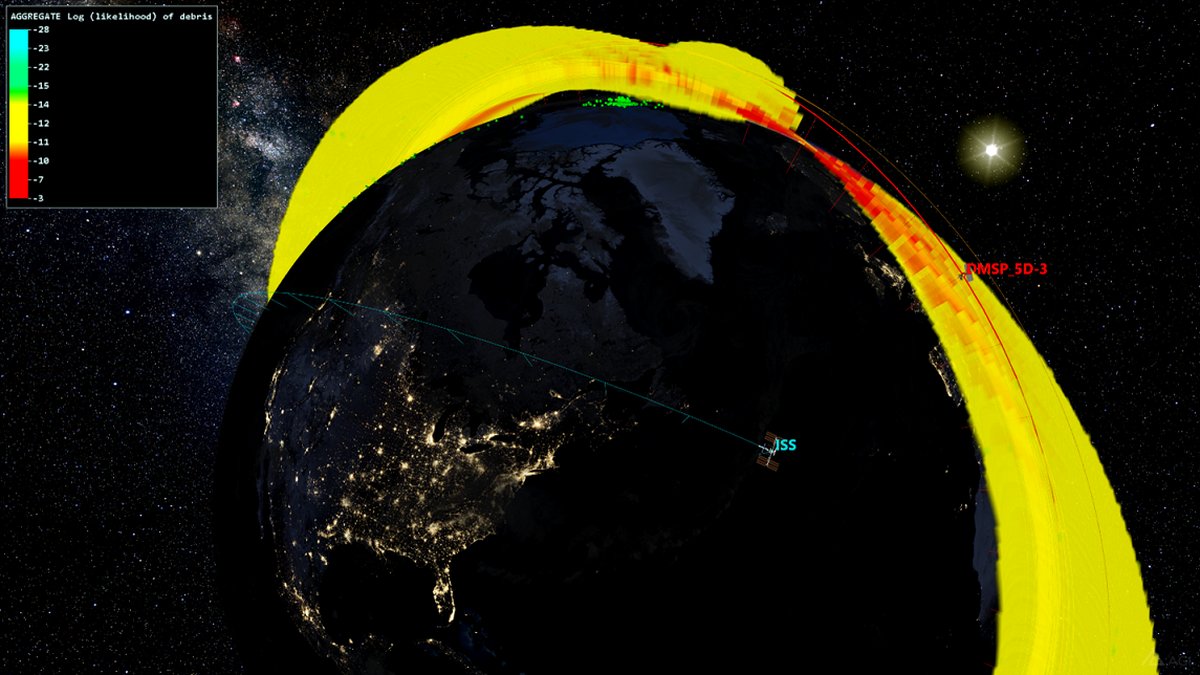
The most ominous example of this was in November 2021 as Russia was massing its troops along the border with Ukraine. In a demonstration akin to China’s anti-satellite test in 2007, Russia destroyed a defunct satellite with a ground-based missile, carelessly generating thousands of pieces of orbital debris to send a threatening message that foreign space systems are not safe. Several days later state-sponsored media made it explicit, threatening that Russia would shoot down all 32 GPS satellites if NATO got in its way in Ukraine.
At the time, analysts agreed Russia didn’t have the ability to follow through on its threat to destroy all the satellites. But the recent analysis indicates that in fact, they did have the ability to deny GPS signals across the globe including Europe and in the US.
We know that Russia and China have terrestrial systems complementing and backing up the essential navigation and timing signals from space that GPS and other satnav systems provide. Unfortunately, we do not.
Our allies in the United Kingdom, France, South Korea, Saudi Arabia, and elsewhere have built or are building terrestrial navigation and timing systems to protect their nations in the event of GPS disruptions. The existence of these backup systems make satnav services much less attractive targets by denying the benefits of an attack on the satellite signals, which is time-honored deterrence theory.
GPS signals underpin virtually every technology and critical infrastructure. A significant disruption could have caused social upheaval and economic chaos. In fact, Marc Berkowitz, the current Assistant Secretary of War for Space Policy, described this “NAVWAR asymmetry” as a significant danger for America in a 2024 paper.
Unfortunately, the US government has yet to act on such a system, despite administration officials and members of Congress citing an urgent need.
For more than 20 years this issue has been the responsibility of a senior cross-government committee led by the Departments of Defense and Transportation. Yet this process has been unable to make any significant progress on an alternative or backup for GPS.
Numerous experts and advisory groups have observed that the nation’s leadership and governance for GPS and the essential positioning, navigation and timing (PNT) services it provides works against success. Responsibility is too diffuse and no leader is tasked and empowered to solve the problem.
This is not a technological issue: we have multiple mature technologies available today to protect America. As one option, private and government analyses have concluded that combining signals from space with terrestrial broadcast and timing over fiber would create a system-of-systems architecture nearly impossible to disrupt. Such an architecture could be quickly implemented through commercial contracts with providers who are ready, willing and able.
But first we need empowered leadership. GPS vulnerability is a serious national security issue and many federal departments have a role. But if this is everyone’s responsibility, no one is responsible.
The administration must task one of the two primary stakeholder departments — either Defense or Transportation — with establishing one or more systems to backup, complement and protect GPS. This must include a consistent source of funding, as well as a realistic but aggressive timeline to get companies on contract. This designation could happen at any point as the statutory authorities rest with the White House, no legislation needed. And while funding is always an issue, the amount needed for this essential capability is “budget dust” compared to the amounts being spent on other national security efforts.
It’s time to move out. Otherwise, we will just be waiting for the day an adversary exploits our vulnerability and damages the nation.
Gen. William Shelton, USAF (ret) served as Commander, Air Force Space Command from 2011 to 2014. He now works as an independent consultant.