Until 2024, the football club of Barrancabermeja, a medium-sized city in central Colombia, was called Alianza Petrolera FC. Its nicknames included the Oilmen and the Refiners. The club rebranded to Alianza FC that year, dropping references to oil.
Barrancabermeja, however, retains its deep connection to black gold. For more than 100 years it has been home to the biggest oil refinery in the country, where as much as 65% of Colombia’s fuel is processed.
It is a fascinating city. Truly beautiful, with its network of rivers and lakes populated by wildlife including reclusive manatees. But it is impossible to escape the spectre of oil: the refinery dominates Barrancabermeja’s skyline.
Like in other Latin American countries, the state oil company Ecopetrol is a source of national pride in Colombia, and oil and gas is seen as central to prosperity.
Colombia’s outgoing president Gustavo Petro has been attempting to change that mindset. Upon taking office in 2022, he paused new oil and gas licenses. Petro has positioned the country as a leader in the anti-fossil-fuel movement by, for example, creating zones in which mining and hydrocarbon enterprise are banned. And in April, the northern coastal city of Santa Marta hosted the first Transition Away conference. The international summit was an attempt to build a “coalition of the willing”: nations that agree on the need to ditch oil and gas.
Petro has had a difficult presidency, with low approval ratings. It has been dragged down by – among other things – ultimately unsuccessful efforts to negotiate with the country’s armed groups. As such, his anti-fossil policies are now under threat.
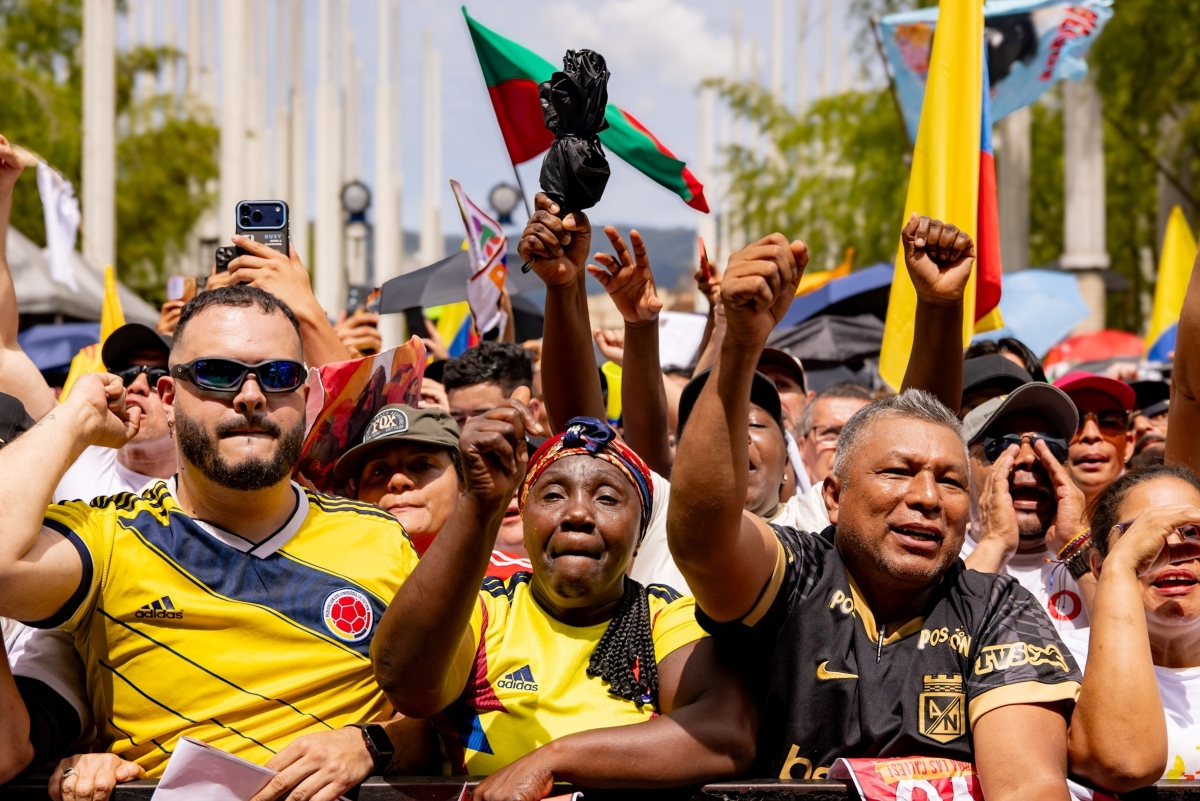
Colombians will vote for his successor this weekend. Polls show a likely victory for Abelardo de la Espriella, a colourful figure who found riches through a range of companies including clothing, wine and rum. The outspoken lawyer and business owner has campaigned on pro-fracking messages and generally advocates for fossil fuels.
A victory for the brash businessman would put a dent in Colombia’s fossil fuel phaseout. It would also cast a shadow over the progress made at Transition Away. Petro’s struggle to win the information war over fossil fuels, even after hosting a major new international conference dedicated to phasing them out, underlines just how challenging this is.
A false dawn?
As well as the oil and gas moratorium, Petro also planned for Ecopetrol to diversify its activities, including into renewables. In 2024, more than 40% of the company’s budget was dedicated to the energy transition; the share of contemporary renewable technology capacity in Colombia grew to 15% during his presidency.
“I think we have to applaud Petro for his leadership on this agenda,” says Gustavo Pinheiro, an analyst at the energy think-tank E3G. “He showed you can walk the talk and lead by example.”
However, while new fossil fuel exploration was paused, this did not impact the 381 production contracts already in effect. Petro’s attempts to outlaw fracking, meanwhile, were unsuccessful.
Additionally, many of the Petro administration’s environmental achievements were carried out by decree, meaning a future administration could easily unravel them. De la Espriella would surely aim to do so.
During his campaign, De la Espriella has advocated for fracking and restarting exploration for hydrocarbons. He has called energy independence a national security issue and suggested scepticism of an accelerated transition: “A serious country doesn’t give up its gas on an ideological whim.” This would mean “developing discovered fields more quickly” and “unblocking” production. In the first round of voting on 31 May, he led with more than 43% of the vote. This puts him ahead of Ivan Cepeda, the candidate for Petro’s Historic Pact party, who received 41%.
The Barrancabermeja problem
Petro’s attempts to wean the country off fossil fuels were met with opposition from the sector. According to the country’s main oil workers’ union, Ecopetrol supports some 100,000 jobs in the country and the oil sector accounts for nearly 6% of Colombia’s GDP.
The Colombian public was also sceptical. A 2025 survey of almost 2,500 adults across 141 cities and municipalities found that 78% agreed the oil and gas industry was necessary to finance the state’s social and public investment programmes. Eighty percent considered oil to be a positive industry for Colombia.
“The idea of the transition was probably the most attacked [policy] from the beginning of Petro’s government,” says Colombia’s Andrés Gómez, head of advocacy for Latin America at the Fossil Fuel Treaty Initiative.
Pinheiro adds that they received a poor response from the markets: “Markets were shaking in the short term. But then everything returned to normality as it usually does, and it was not the end of the world. That’s one of the challenges we have to overcome.”
Economic concerns have been seized upon by De la Espriella. Echoing other leaders in the region and globally, he says doubling down on oil and gas is the answer.
The argument that oil and gas is a route to riches remains compelling for many. But the reality is that fossil fuels continue to require government subsidies to remain profitable, while the costs of developing renewable energy is falling rapidly. As Pinheiro says: “The transition is already happening in the real economy. The price point of wind and solar is so competitive everywhere you look in Latin America.”
While getting that message across to voters is a challenge, there are signs that those most affected by extraction are also likely to oppose further exploration. In Barrancabermeja, nearly 60% of voters in the election’s first round backed Cepeda, who has pledged to continue Petro’s fossil fuel policies.
Yuly Velásquez, a fisher working in the rivers around Barrancabermeja, says she fears for the impact of oil exploration on fish stocks following the election: “We are worried by the shamelessness of [right-wing politicians], who say development is ending. Hydraulic fracturing is what would generate more hunger and displacement.”
The future of Transition Away
The Transition Away conference, which drew attendees from 57 countries, was borne out of frustration with the failure of successive UN climate summits to reach consensus on phasing out fossil fuels. Although the UN’s 2023 climate summit, COP28 in Dubai, led to an agreement for the “beginning of the end” of the fossil fuel era, subsequent meetings have failed to make progress.
The Transition Away conference exists outside of a UN process that aims for unanimous agreement. Instead, Transition Away aims to cultivate a union of countries that have already decided to move away from fossil fuels.
While it was never intended that the first Transition Away conference would result in binding commitments, attending countries expressed a joint intention to draw up national “roadmaps” for weakening fossil fuel reliance. It also established an independent scientific committee that will assist countries in this endeavour. Tuvalu will host the next conference in 2027, supported by Ireland.
If Colombia elects De la Espriella and returns to oil and gas extraction, it will be “difficult” for the movement, Gómez acknowledges – but not a terminal blow: “Now we have Ireland and Tuvalu [leading] the Santa Marta process and that’s something really helpful. [Colombia] did a really good job for movement and there is this crack in the system. There is a real pathway that we as a global movement have to use.”
In Colombia, environmentalists applaud the leadership the country has shown in the push to phase out fossil fuels. Many are now waiting anxiously to discover what comes next.
Meanwhile, Colombian environmentalists like Yuvelis Morales Blanco of Puerto Wilches – a winner of this year’s Goldman Environmental Prize for her work opposing fracking – are deeply worried by De la Espriella’s fossil fuels rhetoric. She has faced threats in response to her campaigning. “It seems to me extremely irresponsible and disrespectful to the communities that such an important issue is taken with such lightness,” she says. “To us, conversations about fracking have almost cost us our lives.”
Facts Only
Barrancabermeja’s football club rebranded from Alianza Petrolera FC to Alianza FC in 2024, removing oil-related nicknames.
Barrancabermeja hosts Colombia’s largest oil refinery, processing up to 65% of the country’s fuel.
Colombian President Gustavo Petro, in office since 2022, paused new oil and gas licenses and created zones banning mining and hydrocarbon activities.
Petro hosted the Transition Away conference in Santa Marta in April 2024, aiming to build a coalition of nations committed to phasing out fossil fuels.
Petro’s administration allocated over 40% of Ecopetrol’s 2024 budget to the energy transition, increasing renewable capacity to 15% of Colombia’s energy mix.
Petro’s attempts to ban fracking were unsuccessful, and existing production contracts (381 in total) remained unaffected by the moratorium.
Presidential elections are being held in Colombia, with polls showing Abelardo de la Espriella leading with over 43% of the vote in the first round.
De la Espriella has campaigned on pro-fracking and pro-hydrocarbon policies, calling energy independence a national security issue.
The oil sector in Colombia supports approximately 100,000 jobs and accounts for nearly 6% of GDP.
A 2025 survey found that 78% of Colombians believe the oil and gas industry is necessary for financing social programs, and 80% view oil as positive for the country.
In Barrancabermeja, nearly 60% of voters in the first election round supported Ivan Cepeda, Petro’s candidate, who pledges to continue anti-fossil-fuel policies.
The Transition Away conference, attended by 57 countries, established a scientific committee to assist nations in reducing fossil fuel reliance and will next convene in Tuvalu in 2027.
Executive Summary
Colombia stands at a crossroads in its energy policy as it prepares to elect a new president. The outgoing administration of Gustavo Petro has pursued an aggressive anti-fossil-fuel agenda, pausing new oil and gas licenses, banning mining in certain zones, and hosting the Transition Away conference—a global summit aimed at building a coalition to phase out fossil fuels. Petro’s policies have included redirecting Ecopetrol’s budget toward renewables, with 40% allocated to the energy transition, and increasing renewable capacity to 15% of Colombia’s energy mix. However, these efforts face significant opposition, both from the oil sector, which supports 100,000 jobs and contributes nearly 6% of GDP, and from the public, with 78% of Colombians viewing oil as necessary for financing social programs.
The leading presidential candidate, Abelardo de la Espriella, has campaigned on reversing Petro’s policies, advocating for fracking and expanded hydrocarbon exploration. His likely victory threatens to unravel Petro’s environmental achievements, many of which were implemented by decree and could be easily overturned. The city of Barrancabermeja, home to Colombia’s largest oil refinery, exemplifies the tension: while the local football club dropped oil-related branding, the region remains economically dependent on fossil fuels. Environmental activists, like Goldman Prize winner Yuvelis Morales Blanco, warn that a return to oil expansion could exacerbate ecological and social harms, including threats to local communities. The outcome of the election will determine whether Colombia continues its push toward renewables or reverts to a fossil fuel-centric economy, with broader implications for global climate efforts.
Full Take
The narrative here hinges on a classic tension between economic pragmatism and environmental idealism, framed through Colombia’s high-stakes presidential election. The strongest version of the story—its steelman—is that Petro’s policies represent a bold but politically fragile attempt to align Colombia with global climate leadership, while De la Espriella’s platform reflects the enduring economic and cultural grip of fossil fuels in a country where oil is tied to jobs, GDP, and national identity. The article avoids overt manipulation but subtly leans into a "progress vs. regression" binary, which risks oversimplifying the trade-offs. For example, while it highlights public skepticism of Petro’s transition (78% support for oil), it doesn’t deeply explore whether renewables could realistically replace those revenues or jobs—a critical gap in the "just transition" argument.
Root causes run deeper than policy: Colombia’s dilemma mirrors a global pattern where fossil fuel dependence is entrenched not just economically but psychologically, as a symbol of development and sovereignty. The Transition Away conference’s focus on a "coalition of the willing" is a tacit admission that universal consensus (e.g., at COP summits) is failing—a pragmatic shift, but one that risks normalizing fragmentation in climate action. The article’s emphasis on Barrancabermeja’s local resistance to fracking, juxtaposed with national support for oil, reveals a paradox: those most affected by extraction often oppose it, while broader populations prioritize stability over systemic change.
Implications for human agency are stark. If De la Espriella wins, Colombia’s reversal could embolden other fossil fuel-dependent nations to delay transitions, undermining the Transition Away movement’s momentum. Yet the article also surfaces a counter-narrative: grassroots activists like Yuvelis Morales Blanco, who face threats for opposing fracking, embody the human cost of extraction. Their voices complicate the "jobs vs. environment" framing by centering dignity and survival over abstract economic metrics.
Bridge questions: What would it take for renewables to match oil’s economic and symbolic weight in Colombia? How might the Transition Away movement address the legitimacy gap between global climate goals and local livelihoods? And if Petro’s decrees are so easily reversible, what structural changes would make energy transitions more resilient to political shifts?
Counterstrike scan: A coordinated influence campaign pushing this narrative might amplify the "economic ruin" framing of Petro’s policies while downplaying renewable viability, using emotional appeals about job losses and national pride. The actual content doesn’t fully match this—it presents both sides—but the underlying tension is ripe for exploitation by actors seeking to polarize the debate.
Patterns detected: ARC-0024 Ambiguity (in the framing of public opinion vs. local resistance), ARC-0043 Motte-and-Bailey (implied dichotomy between "serious" energy independence and "ideological" transition).
Sentinel — Human
This text displays strong characteristics of human investigative journalism or editorial synthesis, characterized by nuanced argumentation, specific data integration, and an idiosyncratic, context-aware voice.