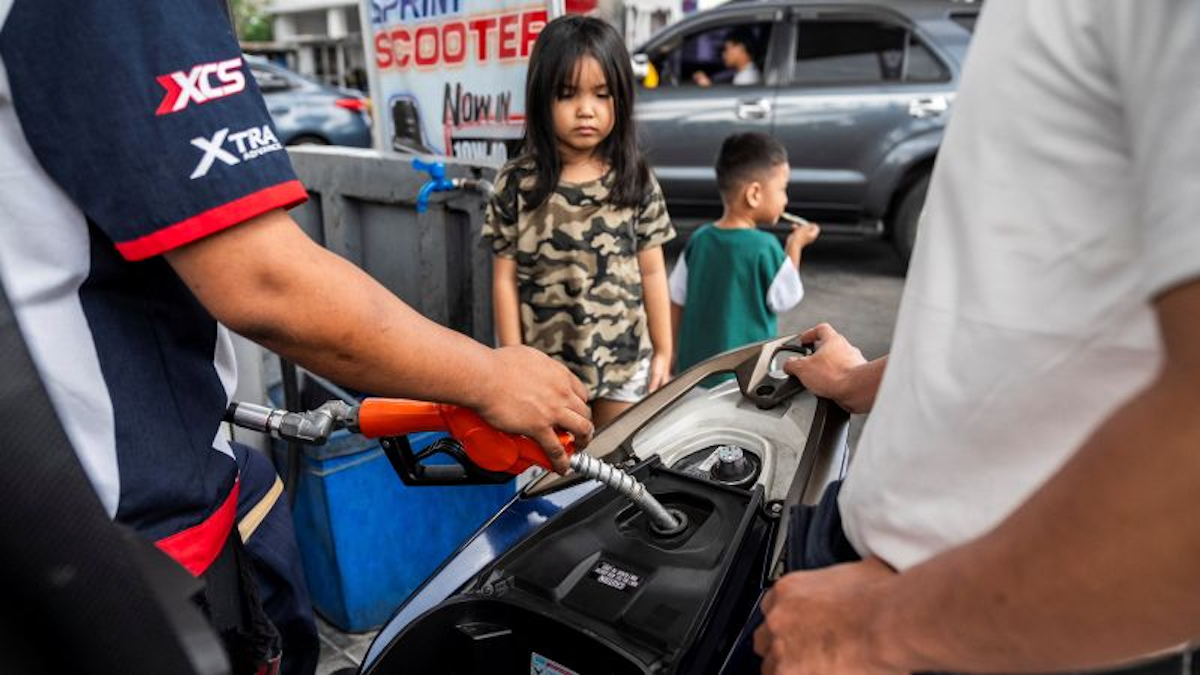
In an unprecedented move underscoring the global reach of Middle East tensions, the Philippines has formally declared a national energy emergency.
This marks the first and most direct emergency declaration by any nation in response to the geopolitical ripples caused by the escalating US-Israel war on Iran, sending far-reaching consequences across the oil-import-dependent archipelago.
On March 25, 2026, Philippine President Ferdinand Marcos Jr issued Executive Order 110, announcing “a state of national energy emergency is hereby declared in light of the ongoing conflict in the Middle East and the resulting imminent danger posed upon the availability and stability of the country’s energy supply.”
This measure grants the government expanded legal authority to swiftly stabilize the country’s energy sector, triggering a coordinated, whole-of-government response.
A high-level committee comprising key cabinet secretaries will oversee the orderly distribution of fuel, food, and other essential goods. The immediate objective remains to safeguard a stable and affordable energy supply for the Philippines.
Beyond crisis management, the committee will maintain economic stability, streamline permitting, and develop strategies to reduce petroleum dependence. The emergency also empowers the state to directly procure fuel, reinforce domestic supply, counter hoarding and profiteering, and make advance payments for fuel contracts.
To ease the burden, the government has rolled out initial support, including free bus rides and a 5,000-peso (US$83) subsidy for public transport workers, to offset sharply rising gasoline and diesel prices.
Tight supplies, volatile prices
Initially set for one year, unless lifted or extended by the president, the declaration came just hours after Energy Secretary Sharon Garin announced plans to boost coal-fired plant output to manage costs amid disrupted liquefied natural gas (LNG) shipments.
The Philippines holds approximately 45 days’ worth of fuel reserves. Garin indicated efforts to secure up to 1 million barrels of oil from diverse suppliers, though this target remains uncertain.
In a recent address following the declaration, Marcos underscored that the move is narrowly targeted with the emergency covering only the energy sector as fallout from the Middle East conflict intensifies.
While acknowledging that global oil prices remain beyond the government’s control, the declaration gives authorities room to act where they can, including stepping in to manage electricity supply and curb sharp price increases.
The Philippine government has the power to temporarily suspend or reduce excise taxes on petroleum products and has released a 20 billion peso emergency fund tapped from the Malampaya gas fund–a long-established offshore natural gas project in the country.
He also moved to calm fears of shortages, assuring that oil will continue to flow even after the country’s current 45-day reserves are used up. Rather than relying on isolated shipments, the government is working to secure a steady pipeline of fuel deliveries while actively searching for new sources as the conflict drags on.
“We have not only gone to the oil suppliers, the traditional oil suppliers, we have tried to explore other sources that are not affected by the war that is ongoing in the Middle East,” the chief executive said, emphasizing that the Philippines is tapping alternative sources and using its strong international ties to lock in more stable energy flows.
The Philippines, a net oil importer, depends overwhelmingly on crude from the Middle East, which accounts for about 98% of its supply.
This deep reliance left the country acutely vulnerable when diesel and petrol prices more than doubled following the outbreak of the conflict on February 28. The price of diesel has surged to nearly 150 pesos per liter ($2.70), directly forcing the energy emergency declaration.
Rising discontent
This surge in costs has fueled public discontent and frustration over economic impacts. The emergency move announced on Tuesday comes as tensions rise on the ground, with transport workers, commuters and consumer groups preparing for a two-day strike.
This move reflects Manila’s heightened vigilance over both its energy security and the safety and economic well-being of its significant Overseas Filipino Workers (OFWs) in the Middle East, whose remittances remain vital to the national economy. Latest estimates indicated 2.4 million Filipinos live and work in the Middle East, with 31,000 in Israel and 800 in Iran.
More broadly, the emergency declaration illustrates how quickly a distant conflict can translate into real economic and security pressures at home, exposing the structural vulnerabilities of import-dependent economies.
Energy security can no longer be managed in isolation from global risk and other countries with similar dependencies may soon face the same reckoning.
For Manila, this marks a clear recognition that distant flashpoints now carry immediate consequences, accelerating the push toward more resilient, diversified and future-proof energy systems.
Stacey Nicole Bellido is a Filipina public and global policy professional based in Paris, with cross-sectoral experience spanning multilateral institutions, government, non-profits, and the private sector.
Her work covers policy research, global advocacy, and partnership-building across the OECD, ICC, ILO, and the Philippine Department of Foreign Affairs, focusing on international relations, inclusive economic growth and EU-ASEAN relations.
Facts Only
Philippines: President Ferdinand Marcos Jr, Energy Secretary Sharon Garin
Event: National energy emergency declared due to Middle East conflict
Date: March 25, 2026
Fuel reserves: Approximately 45 days' worth
Target fuel procurement: Up to 1 million barrels of oil from diverse suppliers
Energy sector objectives: Stable and affordable energy supply, economic stability, permitting streamlining, petroleum dependence reduction
Government actions: Expanded legal authority, high-level committee formation, fuel procurement, domestic supply reinforcement, hoarding and profiteering countermeasures, advance payments for fuel contracts, subsidies for public transport workers, free bus rides
Vulnerability: Deep reliance on Middle East crude (98%)
Economic impact: Diesel and petrol prices more than doubled following the conflict's outbreak
Executive Summary
The Philippines has declared a national energy emergency in response to the escalating US-Israel war on Iran, which poses an imminent danger to their energy supply. This is the first such declaration by any nation directly linked to Middle East tensions. The emergency grants expanded legal authority to the government to stabilize the country's energy sector, focusing on fuel distribution, economic stability, and reducing petroleum dependence. To ease the burden, the government has provided initial support to public transport workers and rolled out free bus rides.
The Philippines is a net oil importer that depends heavily on crude from the Middle East, which accounts for about 98% of its supply. This deep reliance leaves the country vulnerable when diesel and petrol prices surge due to conflicts, as seen in the recent doubling of prices following the outbreak of the conflict on February 28. The emergency move was made in response to rising public discontent and frustration over these economic impacts.
Full Take
The Philippines' national energy emergency declaration underscores the far-reaching consequences of geopolitical tensions in the Middle East for oil-import-dependent archipelagos. The situation illustrates how distant conflicts can translate into real economic and security pressures at home, exposing the structural vulnerabilities of such economies.
This event also highlights the Philippines' heavy reliance on Middle Eastern crude, leaving it acutely vulnerable to price surges caused by regional conflicts. The government's response, including expanded legal authority, fuel procurement efforts, and support for public transport workers, aims to stabilize the energy sector and ease the burden on citizens.
The emergency declaration also underscores the Philippines' concern for its Overseas Filipino Workers (OFWs) in the Middle East, whose remittances are vital to the national economy. The situation serves as a reminder of how global risk cannot be managed in isolation and may lead other countries with similar dependencies to face similar reckonings.
Questions for further inquiry might include: What additional strategies could the Philippines employ to reduce its reliance on Middle Eastern crude? How might this situation impact the broader geopolitical landscape, particularly relations between the US, Israel, and Iran?