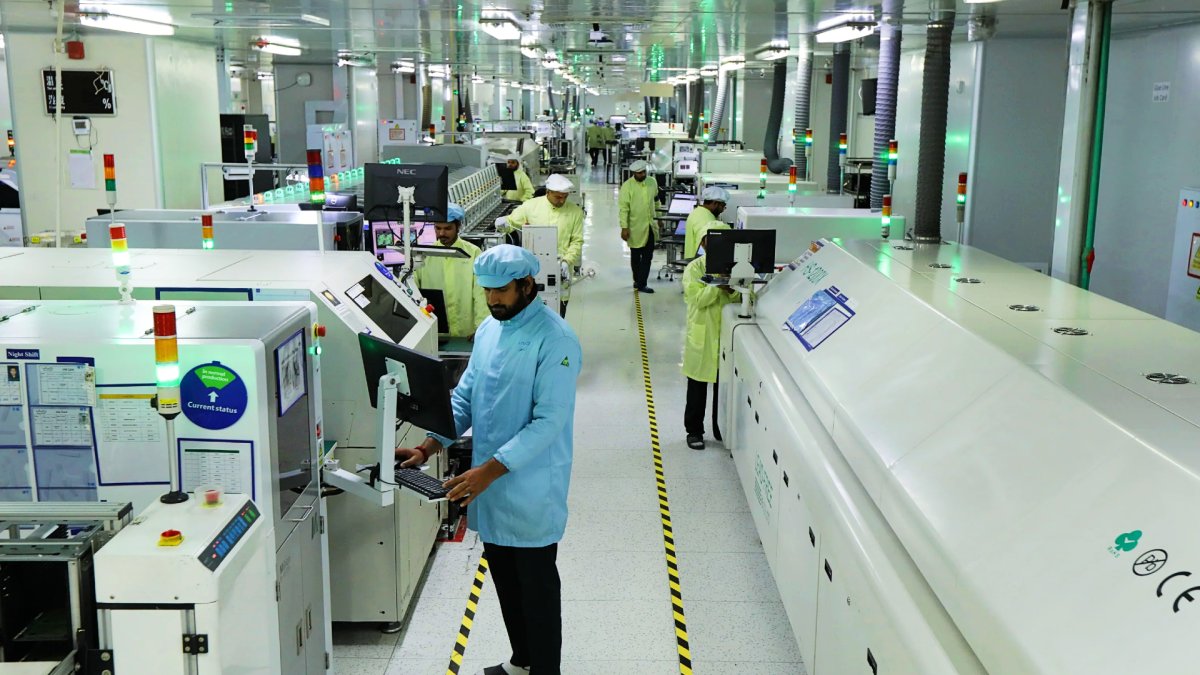
India on Thursday approved a manufacturing joint venture between China’s Vivo and local manufacturer Dixon Technologies, a move that could mark the next phase of the country’s smartphone manufacturing boom after Apple helped turn India into a global smartphone production hub.
The approval allows Vivo to proceed with a long-delayed manufacturing partnership first announced in December 2024, after New Delhi cleared the investment under investment rules introduced in 2020 that require extra government scrutiny of investment from countries sharing a land border with India — a category that includes China. The joint venture will acquire certain manufacturing assets from Vivo, manufacture part of the company’s smartphone orders in India, and can also produce electronic products for other brands, according to a stock exchange filing by Noida-based Dixon.
The 51/49 venture — majority-owned by Dixon, with Vivo holding the remaining stake — reflects a broader shift in how Chinese smartphone brands are expanding manufacturing in India through local partnerships. For an industry watching how governments referee the relationship between Chinese capital and domestic manufacturing, the structure, analysts believe, could become a template for similar arrangements across the industry, helping broaden India’s smartphone manufacturing story beyond Apple.
Over the past few years, India has emerged as a major global smartphone manufacturing hub as Apple and its suppliers expanded iPhone production in the country while diversifying supply chains beyond China. Government incentives have also helped attract global electronics manufacturers, boosting the country’s role in global smartphone production.
Apple spent years building its manufacturing footprint in India and today accounts for 57% of the country’s smartphone exports by volume, according to Counterpoint Research’s data shared with TechCrunch. Chinese brands, on the other hand, dominate India’s smartphone market sales with 72% of the market, but contribute less than 10% of exports, a gap that shows how much upside is still on the table if they start exporting from India the way Apple does.
Apple’s India manufacturing expansion has largely been driven by suppliers such as Foxconn and Tata. Chinese smartphone brands, meanwhile, are increasingly exploring partnerships with Indian companies after New Delhi tightened investment rules for neighboring countries following the 2020 border clashes with China. Several of those companies, including Oppo, Vivo, and Xiaomi, have also faced tax and regulatory investigations in India in recent years, which helps explain why ceding majority control to an Indian partner is now looking like the more sustainable path forward.
Local partnerships such as the Dixon-Vivo venture offer Chinese brands a more stable operating model, while aligning with India’s push for greater local participation in electronics manufacturing, said Tarun Pathak, research director at Counterpoint Research.
“The approval of this joint venture creates a win-win for both players,” Pathak told TechCrunch. He added that the majority-Indian-owned structure provides Vivo with greater policy alignment while giving Dixon the scale to deepen local value addition and pursue exports.
Vivo has manufactured and exported smartphones from India for years, but the approved venture marks a shift toward a majority Indian-owned manufacturing structure as the market leader deepens its footprint in the world’s second-largest smartphone market. The Chinese smartphone vendor retained the top spot in India’s smartphone market with a 23% shipment share in Q1, per Counterpoint.
For Dixon, India’s largest electronics manufacturing services company, the venture could add annualized manufacturing volumes of about 20 million to 22 million smartphones, based on Vivo’s current sales, according to comments by Managing Director Atul Lall during the company’s May earnings call. That’s a meaningful volume bump for a public company whose growth increasingly hinges on winning exactly these kinds of manufacturing contracts.
Dixon already manufactures smartphones for Xiaomi, suggesting the Vivo venture builds on an expanding role as a manufacturing partner for both global and Chinese smartphone brands in India, and reinforces its position as one of the more reliable bets in India’s electronics build-out.
Facts Only
* India approved a manufacturing joint venture between Vivo and Dixon Technologies on Thursday.
* The approval follows investment rules introduced in 2020 requiring extra government scrutiny for investments from land-bordering countries, including China.
* The joint venture allows Vivo to proceed with a long-delayed manufacturing partnership announced in December 2024.
* The venture involves Vivo acquiring certain manufacturing assets from Vivo and manufacturing part of smartphone orders in India.
* Dixon announced the venture in a stock exchange filing.
* The venture has a 51/49 structure, with Dixon holding a majority stake and Vivo holding the remaining share.
* Vivo has manufactured and exported smartphones from India previously.
* Dixon's venture could add approximately 20 to 22 million annualized smartphone manufacturing volumes based on Vivo's sales.
Executive Summary
India approved a manufacturing joint venture between China’s Vivo and local manufacturer Dixon Technologies. This agreement allows Vivo to proceed with a previously announced manufacturing partnership, which required clearance under investment rules introduced in 2020 that mandate extra government scrutiny for investments from land-bordering countries like China. The joint venture will involve acquiring manufacturing assets from Vivo, producing part of smartphone orders in India, and potentially producing electronic products for other brands, according to Dixon's filing.
The structure is a 51/49 venture, majority-owned by Dixon, with Vivo holding the remaining stake. This arrangement reflects a broader trend where Chinese smartphone brands utilize local partnerships to expand manufacturing in India. Analysts suggest this model could set a template for similar arrangements across the industry.
This development occurs against a backdrop where India has established itself as a global smartphone manufacturing hub, largely driven by Apple's expansion and supplier involvement. While Chinese brands dominate market sales, they contribute less to exports than Apple. The partnership is viewed by some as a stable operating model that aligns with India's goals for greater local electronics manufacturing participation.
Full Take
The approval signals a structural shift in how Chinese capital integrates into the Indian electronics manufacturing ecosystem, moving beyond simple sales dominance toward localized operational control. The arrangement, where an Indian entity holds majority control (Dixon), appears to be a mechanism designed to satisfy both governmental scrutiny regarding cross-border investment and local demands for value addition. This framework suggests a pattern of regulatory accommodation—where localization of ownership is rewarded with manufacturing access, creating a template that could redefine future foreign direct investment flows in the sector.
The dynamic highlights an asymmetry: while Chinese brands hold significant market share (72% of sales), their export contribution remains relatively low compared to Apple’s footprint. The joint venture attempts to bridge this gap by embedding operational control within India through a local partner like Dixon, who already services other global and Chinese brands. This suggests that the sustainability of future growth for these international players may increasingly depend on establishing deeply integrated, locally-owned supply chains rather than purely transactional partnerships.
The implication is that the narrative of India as a smartphone manufacturing hub will likely evolve from one focused on assembly to one focused on complex, vertically integrated production, driven by regulatory frameworks that incentivize deep local commitment. The next crucial pattern to observe is whether this specific joint venture structure becomes the standard mechanism for ensuring domestic value capture across various international technology investments.
Sentinel — Human
The text reads like a professionally synthesized news report, effectively weaving together market dynamics, regulatory context, and corporate strategy based on cited external data.