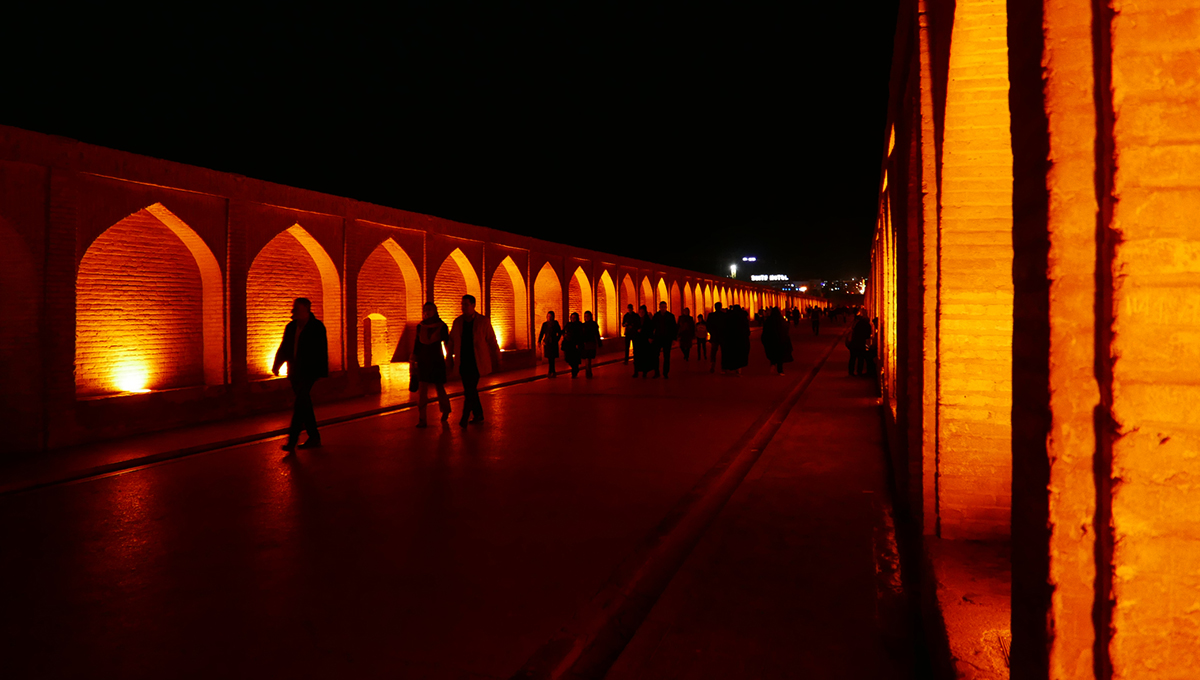
Managers who double down on the region and serve investors’ needs will stand better chances of harvesting success.
A verification email is on its way to you. Please check your spam or junk folder just in case.
If you do not receive this within five minutes, please try to sign in again. If the problem persists, please email: subscriptions@pei.group .Issues with signing in? Click here
Don't have an account? Register now
Managers who double down on the region and serve investors’ needs will stand better chances of harvesting success.
Nearly there!
A verification email is on its way to you. Please check your spam or junk folder just in case.
If you do not receive this within five minutes, please try to sign in again. If the problem persists, please email: subscriptions@pei.group.Copyright PEI Media
Not for publication, email or dissemination
Facts Only
The Middle East is positioned as a promising fundraising destination for private equity general partners (GPs).
Success in the region is contingent on GPs committing long-term and aligning with investor needs.
The article appears in a publication by PEI Media, a financial media group.
The content includes a verification email process for user registration or subscription.
The target audience includes private equity professionals and investors.
The region is described as an "oasis" for fundraising, implying untapped potential.
No specific dates, fund sizes, or institutions are mentioned in the provided text.
The analysis is framed as advice for fund managers rather than a market report.
The tone suggests that superficial engagement may lead to failure in the region.
The article is marked "Not for publication, email or dissemination," indicating internal or restricted distribution.
Contact information for subscription issues is provided (subscriptions@pei.group).
The focus is on managerial strategy rather than macroeconomic or political conditions.
Executive Summary
Full Take
**STEELMAN:** The narrative presents a compelling case for the Middle East as a high-potential market for private equity, emphasizing that success requires more than passive interest—it demands deep commitment and investor-centric strategies. This aligns with broader trends of capital flowing into emerging markets, where local expertise and adaptability often outperform generic approaches. The framing as an "oasis" is evocative, suggesting a rare opportunity amid global economic uncertainty.
**PATTERN SCAN:** The language leans into a subtle form of **ARC-0024 Ambiguity**—the "oasis" metaphor implies scarcity and opportunity without concrete evidence or data to support the claim. There’s also a hint of **ARC-0043 Motte-and-Bailey**: the broad assertion that "commitment leads to success" is hard to dispute (the motte), while the implied promise of outsized returns in the Middle East (the bailey) goes unproven. The restriction notice ("Not for publication") adds an air of exclusivity, which could serve as a **ARC-0012 Authority Game**—borrowing credibility from the idea of insider knowledge.
**ROOT CAUSE:** The paradigm here is the classic "emerging market opportunity" narrative, which often assumes that underpenetrated regions are inherently lucrative if only outsiders apply the right strategies. This overlooks structural risks (geopolitical instability, regulatory hurdles) and assumes homogeneity across the Middle East, which is a diverse region with varying levels of market maturity. The unstated assumption is that Western or global GPs can "crack the code" with sufficient effort, ignoring the possibility that local players may have inherent advantages.
**IMPLICATIONS:** For human agency, this narrative places the burden on GPs to "prove" their commitment, which could lead to overinvestment in the region without guaranteed returns. The beneficiaries are likely the investors and intermediaries who profit from increased capital flows, while the costs—failed funds, misallocated resources—may fall on less sophisticated LPs or local economies. Second-order effects could include a rush of poorly adapted strategies flooding the market, distorting valuations or crowding out local firms.
**BRIDGE QUESTIONS:**
What specific structural advantages does the Middle East offer that other emerging markets lack? Are these durable or transient?
How do local GPs perceive this influx of global capital—opportunity or competition? Are their voices represented in this narrative?
If "commitment" is the key to success, what does failure look like, and how often does it occur? Where are the case studies of GPs who tried and withdrew?
**COUNTERSTRIKE SCAN:** A coordinated influence campaign pushing this narrative might use vague but enticing language ("oasis," "harvesting success") to lure capital into the region, possibly benefiting specific financial or political actors. The actual content here is more restrained—it doesn’t overpromise or cite dubious data—but the lack of concrete examples or risk discussion leaves room for manipulation. The restriction notice could be a red flag if paired with more aggressive claims, but as presented, it aligns with standard subscription-based media practices. No structural alignment with a hypothetical attack playbook is detected.
**Patterns detected: ARC-0024 Ambiguity, ARC-0043 Motte-and-Bailey, ARC-0012 Authority Game**