Presented By: REBNY
Showing Up for Community Through the REBNY Fellows Civic Day of Service
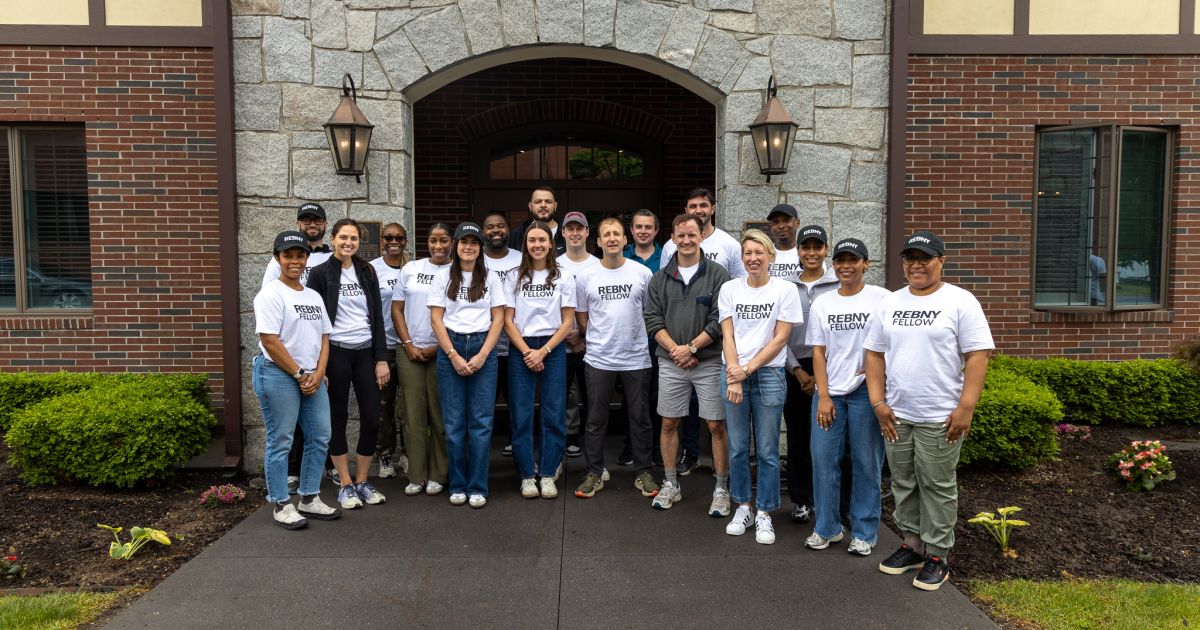
On a recent day at the Fisher House Foundation at the James J. Peters Veterans Administration Medical Center in the Bronx, real estate professionals traded notebooks and pens for garden tools as they gathered for an afternoon of hands-on service work.
They arrived as part of the Real Estate Board of New York (REBNY) Fellows Leadership Program, an initiative that prepares emerging leaders in the real estate industry to better understand New York City, their role within it and the civic responsibilities that come with leadership. Now in its sixth year, the program’s latest cohort of 23 rising professionals graduated in early June after six months of learning, leadership development, and meaningful engagement with the issues and institutions that matter most to the city.
The Civic Day of Service was one of those formative experiences, bringing Fellows together with Fisher House staff and community partners for volunteer work in support of veterans and their families. Fisher House provides free lodging for military and veteran families while a loved one receives medical care, helping them stay close during treatment. By the end of the day, Fellows had helped spruce up an outdoor space used by the James J. Peters Veterans Administration Medical Center community, while also preparing meals and assembling toiletry kits for people staying close to loved ones who are receiving medical care.
The day at Fisher House built on a six-month experience designed to support Fellows’ growth both professionally and personally. This year’s cohort learned from industry and civic leaders, participated in leadership training, developed capstone projects and built relationships with one another through shared experiences such as an overnight retreat in Poughkeepsie. Throughout the program, they were encouraged to stay curious and consider how the real estate sector can have a positive impact on the lives of New Yorkers.
“One of the things I value most about the Fellows program is that it gives aspiring leaders a chance to step back and ask what kind of impact they want to have,” said Yvonne Riley-Tepie, senior vice president of social impact at REBNY. “For real estate professionals in New York, that question has to include how we support the communities and institutions that make the city work.”
Across the cohort, the way Fellows approach that question is informed by a range of professional experiences. They come from various firms, disciplines and corners of the industry, bringing distinct perspectives on how real estate intersects with the city. Over the six-month program, they built relationships with one another that became part of the learning experience. The Civic Day of Service gave the group another setting to work together, outside the usual structure of panels, projects and professional conversations.
The timing of the service project also mattered.
Coming near the end of the six-month program, it gave Fellows a chance to put the program’s conversations about leadership, civic responsibility and the real estate industry’s role in New York into practice.
For the Fellows, Fisher House’s mission gave the day’s work a clear purpose. A refreshed outdoor area can give families a place to sit away from the clinical setting of a hospital. A meal can ease the burden of a long day. A care kit can help someone who arrived quickly or unexpectedly to support a loved one.
The project also reflected the coordination and generosity behind a successful service effort. Fisher Brothers, The Home Depot, New York Restoration Project, and Ariston Florists each helped make the day possible, bringing the materials, resources and equipment needed to complete the work at Fisher House.
For REBNY, the Civic Day of Service reflects a broader understanding of what leadership in the real estate world truly means. New York’s real estate industry helps define how people experience the city, from homes and workplaces to commercial corridors and public spaces. That responsibility extends beyond property lines. Strong communities also depend on service, partnership and support for the organizations that keep New York resilient.
The Fellows program is designed to help emerging leaders see that connection. Real estate professionals work in an industry that is deeply tied to the city’s daily life, its economy, its neighborhoods, and its public institutions. Understanding that role requires exposure to policy and markets, but it also requires time spent with organizations and people working directly in communities across New York.
The Civic Day of Service gave the cohort a direct way to support an organization doing vital work, while seeing firsthand how collaboration across sectors can strengthen communities across New York.
“As the latest cohort of REBNY Fellows now begin the next stage of their careers, the lessons from their time at Fisher House will stay with them,” said REBNY President James Whelan. “The day reflected the qualities the program aims to encourage in emerging leaders, including curiosity, humility, a commitment to service, and a stronger sense of responsibility to help move New York forward.”
By the end of their afternoon at the Fisher House, the Fellows had left their mark on a place built around care, hospitality and service. They also walked away with a deeper understanding of what the program seeks to instill: Stronger communities are built not only through the places the industry creates, but also through the people and partnerships it chooses to support.
Sentinel — Human
The text exhibits strong human characteristics through detailed narrative structure, embedded personal voices via quotes, and specific, verifiable details regarding named participants and organizational partnerships.