The Yongin megacluster needs roughly a quarter of Seoul's electricity and generates almost none of it locally.
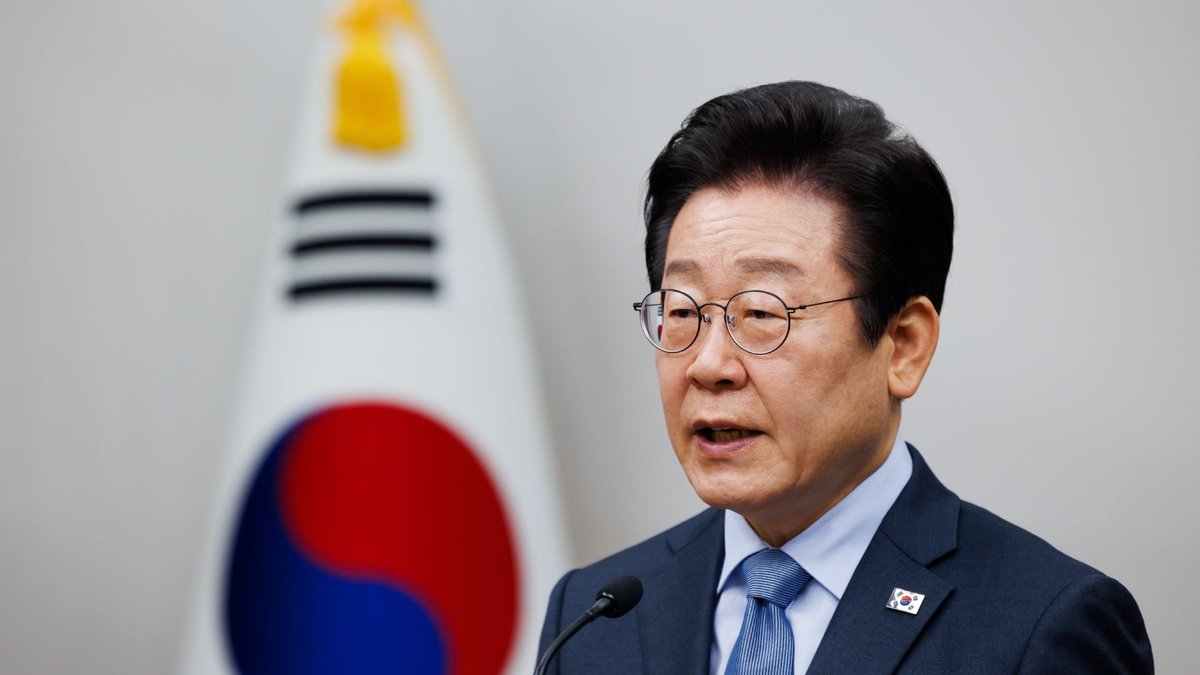
South Korean President Lee Jae-myung announced a ₩1,350 trillion (roughly $880 billion) 10-year public-private plan for semiconductors, AI data centers, and robotics on June 29. At the televised address in Seoul, he was flanked by Samsung Executive Chairman Lee Jae-yong and SK Group Chairman Chey Tae-won.
The ₩1,350 trillion total combines a $520 billion semiconductor program with AI data center and robotics spending, most of it corporate capital expenditure rather than direct state funding. Samsung's Device Solutions division booked ₩53.7 trillion in first-quarter operating profit and expects 2026 to out-earn its entire prior semiconductor history. Samsung and SK hynix have pulled fab completion dates forward by as much as 12 years, while the transmission lines and water pipelines that those fabs depend on remain years behind.
Gigawatts of power deficit
The Yongin Semiconductor National Industrial Complex, the Samsung and SK hynix megacluster in Gyeonggi Province, is estimated to require 15 to 16 GW at full operation, close to 25% of total Seoul-metropolitan power demand, against local supply of about 1.9 GW, according to a National Assembly Research Service report. As of a January briefing, however, about 6 GW of the roughly 15 GW the complex needs had no finalized supply plan, with Samsung reportedly needing 9 GW (6 GW secured) and SK hynix 6 GW (3 GW secured).
Power in South Korea is generated on the coasts, from nuclear and liquefied natural gas (LNG) on the east coast and renewables in the southwestern Honam region, while the fabs sit inland, near Seoul. Closing that distance falls to state utility KEPCO, which is pursuing a ₩37 trillion, roughly 1,153-km 345 kV network to move east-coast and Honam power to Yongin, targeted for 2036. KEPCO's track record on long-distance lines is problematic, though; its losses from delays on the Bukdangjin-Sintangjeong line reached ₩1.17 trillion ($810 million), and that single project took 22 years to complete, with site selection alone running past a decade.
The east-coast link that's supposed to carry about 8 GW toward the capital region has its own history of local opposition, too. The Donghaean-Dongseoul high-voltage direct current line, a 280-km run from Uljin to Hanam requiring 436 towers, has faced repeated delays, and Hanam's 2024 rejection of a KEPCO substation expansion threatened the plan outright. Meanwhile, SK hynix pulled the completion of its fourth Yongin fab forward by 12 years, from 2045 to 2033, as announced in the recent $712.5 billion SK hynix commitment, meaning fabs are arriving faster than the power lines that feed them.
KEPCO and the government plan six LNG plants inside the Yongin complex, starting at about 3 GW and scaling toward 10 GW, to bridge the supply gap until the transmission network is finished. Both Samsung and SK hynix hold RE100 commitments to reach 100% renewable electricity by 2050, and the ruling Democratic Party's own carbon-neutrality committee has demanded the LNG plan be cancelled.
Water shortages
Aside from power, a large memory fab consumes upwards of 100,000 tons of water per day, and the Yongin national complex is projected to need around 800,000 tons per day once fully built. The plan to supply this runs in phases: roughly 200,000 tons per day from about 2031, drawn from Paldang Dam surplus and treated wastewater, followed by new intake facilities and pipelines to reach 600,000 tons per day by 2034. However, SK hynix's accelerated fourth fab is now due in 2033, a year before the integrated pipeline that's being built to serve it.
Local water disputes have already delayed the buildout, with objections from Yeoju City and Hanam City stalling pipeline permits, and one groundbreaking was cancelled outright. The friction is worse for the new southwestern cluster near Gwangju, where water may prove harder to secure than power, because the Yeongsan and Seomjin river basins hold only about half the water of the Han basin that supplies Yongin. Meanwhile, existing Seomjin and Juam dam supply contracts are already fully allocated, and the four planned southwestern fabs are estimated to need around 430,000 m3 per day of industrial water. Government projections put the Yeongsan basin at an annual shortfall of roughly 219 million m3 by 2030, before any of the fabs draw a single drop.
Financed by the memory boom
Samsung reported preliminary second-quarter 2026 operating profit of ₩89.4 trillion ($58.4 billion) on ₩171 trillion in revenue on July 7, a roughly 19-fold year-on-year jump and a record for any tech company. Its Device Solutions chip division booked ₩53.7 trillion of the company's ₩57.2 trillion first-quarter operating profit, and DS president Kim Yong-kwan told a July 3 town hall that 2026 chip profit will exceed the cumulative total the division has earned across roughly 40 years in the business. SK hynix, meanwhile, posted a record ₩47.21 trillion operating profit for 2025, overtook Samsung as South Korea's most valuable listed company in June, and filed to raise about $29 billion in a Nasdaq listing whose proceeds are earmarked for Yongin, Cheongju packaging, and EUV tools.
Those numbers rest on contract prices that have run sharply higher through 2026, with commodity DRAM up around 90% in the first quarter and 50% to 60% in the second, as memory makers tilted wafer capacity toward HBM. The same dynamic underpins the government's confidence and its exposure. Bank of America has argued that fears of a memory-cycle peak are premature, noting the industrial cluster won't produce meaningful output until 2033 at the earliest. Morgan Stanley cautioned — also on July 7 — that the memory industry is nearing a peak in its rate of change, while stressing that this doesn't indicate a downturn. A plan financed by a price surge inherits the risk that the surge doesn't last until the fabs it funds come online.
The plan is ultimately the flagship of a president who took office nine months ago, in a country that removed and jailed his predecessor. Yoon Suk Yeol declared martial law in December 2024, was impeached within days, and was removed by the Constitutional Court the following April. A snap election last June brought Lee Jae-myung to office, and in February this year, Yoon was sentenced to life in prison for insurrection. Industrial policy has held across the turnover, with the Semiconductor Special Act passing the National Assembly with bipartisan support in May, but its dedicated ₩2 trillion account doesn't begin operating until 2027.
South Korea caps the workweek at 52 hours, and a proposed exemption for chip R&D staff was cut from the Semiconductor Special Act before passage. Industry and the conservative opposition backed the carve-out, citing TSMC's three-shift operations and longer hours at Chinese competitors, while the ruling party and a coalition of labor organizations opposed it as corporate favoritism.
A stopgap now lets firms run R&D staff up to 64 hours per week for limited periods with labor-ministry approval. Samsung's foundry holds about 7% of the contract chipmaking market against TSMC's 72%, and SK hynix supplies most of the HBM feeding Nvidia's AI accelerators, so the plan directs its capital toward memory and leaves Korea's weaker logic position largely untouched. Lee's single five-year term ends in 2030, three years before the plan's fabs are due to reach meaningful output.
Luke James is a freelance writer and journalist. Although his background is in legal, he has a personal interest in all things tech, especially hardware and microelectronics, and anything regulatory.
Sentinel — Human
The text demonstrates high complexity and context-heavy synthesis, strongly suggesting human journalistic analysis layered upon factual reporting rather than pure machine generation.