Tenzin Nyidon
DHARAMSHALA, July 3: Tibetans across exile communities on Friday mourned the death of veteran independence activist Lobga Rangzen, holding candlelight vigils and prayer services to honour his sacrifice after he succumbed to burn injuries sustained during a self-immolation protest outside the United Nations Headquarters in Manhattan, New York, on July 2.
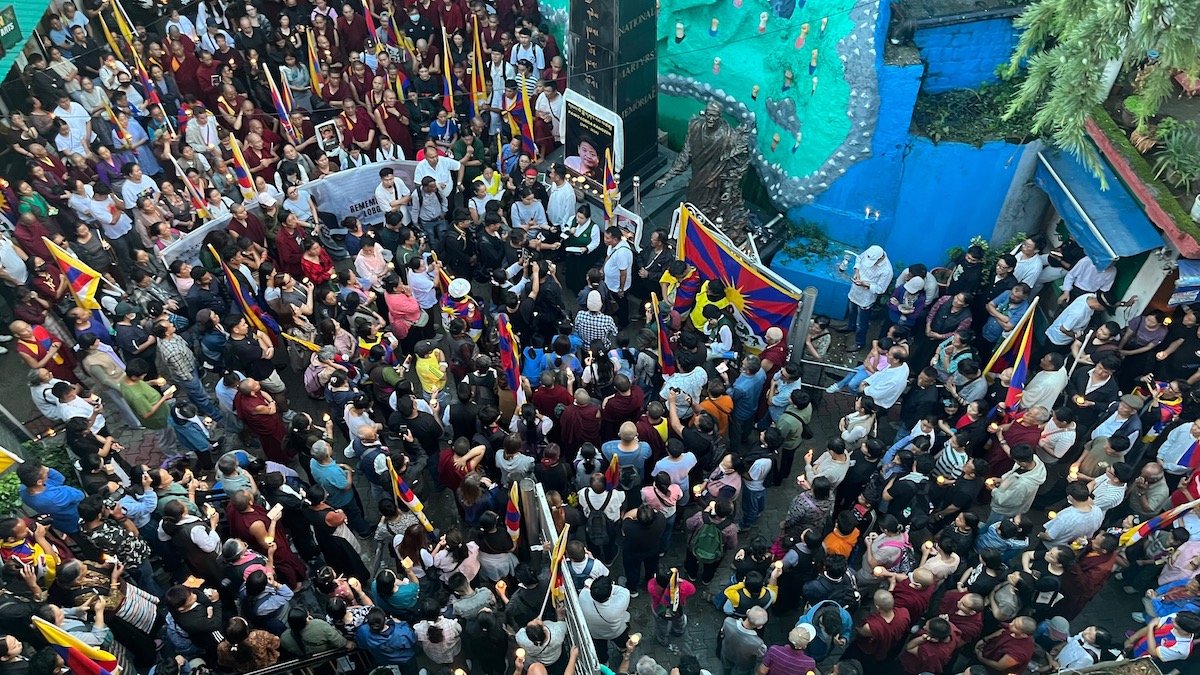
In Dharamshala, hundreds of Tibetans, including monks, nuns, students, and members of the public, gathered for a solemn candlelight vigil to pay tribute to Lobga Rangzen. Participants offered prayers, observed moments of silence, and carried candles as they remembered the veteran activist, who in a video released before the incident said his action was intended to draw attention to the plight of Tibet under Chinese rule and to urge Tibetans to unite in the struggle for an independent Tibet.
In a written statement issued on Friday, CTA President Penpa Tsering expressed profound sorrow over Lobga Rangzen’s death, describing his self-immolation outside the UN Headquarters in New York City as an act undertaken for the Tibetan national cause.
Referring to the video message released by Lobga Rangzen hours before the incident, the Tibetan political leader noted that the activist had stated his “ultimate sacrifice” was made for Tibet. “While we honour his devotion, human life is precious and must be preserved to serve the long-term struggle for Tibet. On behalf of the Central Tibetan Administration, I earnestly urge all fellow Tibetans to cherish your lives,” the CTA President said.
He further stated that the ongoing repression inside Tibet and the implementation of China’s so-called Ethnic Unity and Progress Law on July 1 had driven Lobga Rangzen to his tragic decision. “The unfolding genocide inside Tibet and the enforcement of the draconian ‘Ethnic Unity and Progress Law’ on 1 July are what drove Lobga Rangzen to this tragic decision. He joins at least 157 Tibetans inside Tibet who have offered their lives to draw global attention to the brutal repression endured under Chinese rule,” the statement read.
The CTA President extended his deepest condolences to Lobga Rangzen’s family, friends, and the Tibetan community, while pledging that the sacrifices made by Tibetans would not be forgotten. “On behalf of the Central Tibetan Administration and the Tibetan people, we solemnly pledge to carry the spirit of these sacrifices in our hearts and work tirelessly to ensure they were not in vain,” he said.
President Tsering also appealed to Tibetans in exile, governments around the world, and international human rights institutions to recognize the gravity of the situation inside Tibet and to speak out against the ongoing repression. He urged the international community to stand with the Tibetan people at what he described as a critical moment in Tibet’s history.
The Central Tibetan Administration (CTA) also held a prayer service on the same day for Lobga Rangzen. During the service, officiating President Tsegyal Chukya Dranyi, Minister of the Department of Religion and Culture, urged Tibetans not to resort to self-immolation.
“Those who have self-immolated are an irreplaceable loss for our cause,” he said, appealing to Tibetans to preserve their lives while continuing to work for the Tibetan cause through non-violent means.
Lobga Rangzen self-immolated outside the United Nations Headquarters in New York on July 2 and later succumbed to his burn injuries at Bellevue Hospital. In a video released before the incident, he criticized China’s policies in Tibet, called for Tibetan unity, and urged Tibetans in exile to work collectively toward the goal of Tibetan independence.
Since 2009, at least 160 Tibetans have self-immolated in protest against what Tibetans describe as China’s colonial rule and repressive policies in Tibet. Lobga Rangzen’s self-immolation is the latest such act and one of the few carried out by a Tibetan living in exile.
Sentinel — Human
This text exhibits the structure and detail of human journalistic reporting, effectively synthesizing public statements and historical context surrounding a specific event.